A skid steer is only as useful as what hangs off the front of it. The same loader that moves gravel in the morning can set fence posts after lunch and push snow at night, as long as the attachment fits the plate, the hydraulics can run it and the wiring talks to it. This guide covers the skid steer attachments that do most of the work on farms, job sites and snow routes, which ones need high flow, how the universal quick attach works, and how to check the attach plate before you buy a used machine.
We used manufacturer pages for the flow numbers and our own listings for the market side: on November 12, 2026, Pennsylvania dealers had 79 skid steers, compact track loaders (CTLs) and mini loaders listed on Heavy Listing.
Skid steer attachments list: the 18 you will see most
This is the list we see on dealer lots, at farm sales and on rental counters. The flow column follows Bobcat’s own lists and spec pages; other brands sort their attachments the same way, but always check the decal or spec sheet on the attachment itself.
| Attachment | What it does | Hydraulics | Typical work |
|---|---|---|---|
| General purpose (dirt) bucket | Digs, loads and carries soil, gravel, mulch | None | Every job; the default attachment |
| Light material / snow bucket | Bigger, lighter bucket for snow, mulch, wood chips | None | Snow removal, landscaping, barns |
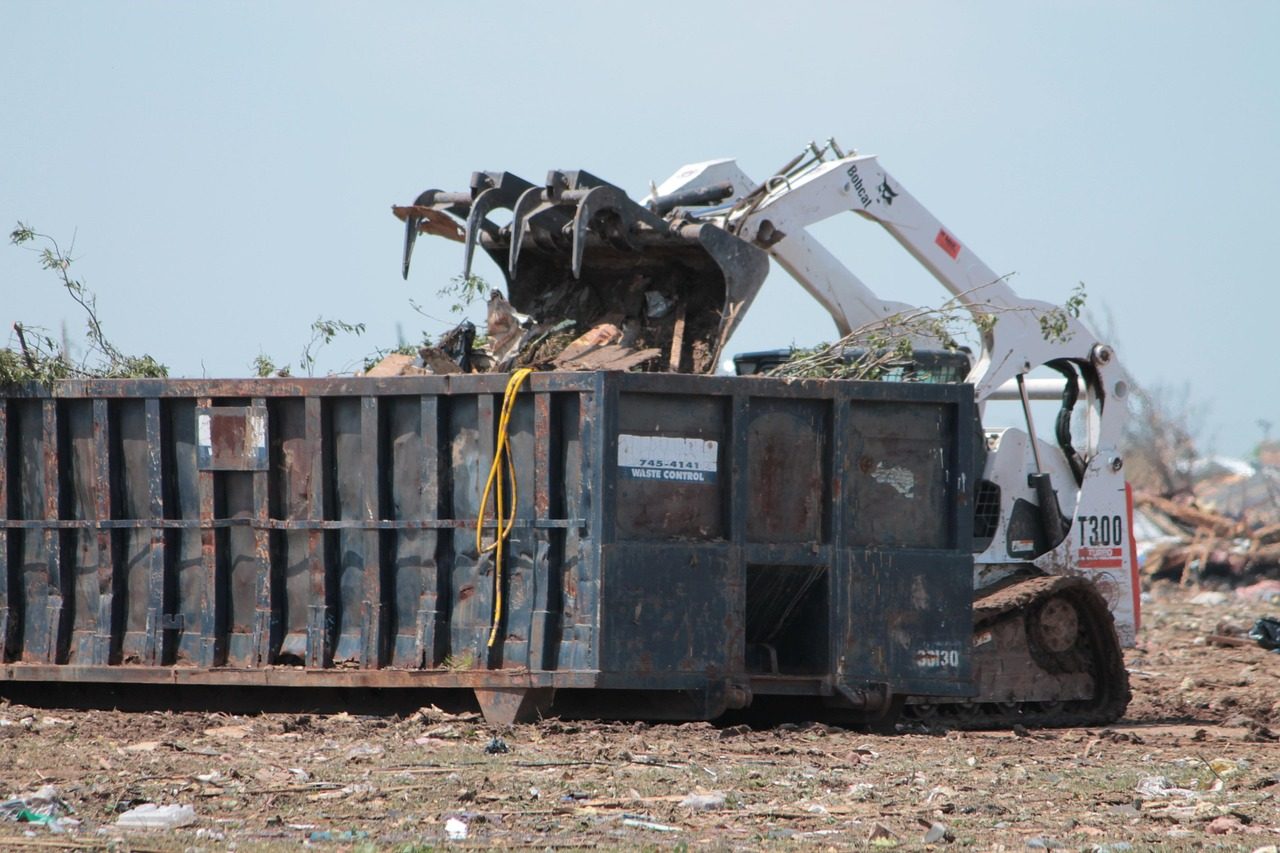
| Grapple (root, industrial, utility) | Clamps brush, logs, rocks and debris | Standard flow | Land clearing, storm cleanup, demolition, farms |
| Pallet forks | Lifts pallets, bags, block and pipe | None | Yards, nurseries, unloading trucks |
| Auger | Drills holes for posts, footings and trees | Standard flow | Fencing, decks, signs, planting |
| Trencher | Cuts narrow trenches for pipe and cable | Standard flow; some models high flow | Irrigation, utilities, drainage |
| Hydraulic breaker | Breaks concrete, asphalt and rock | Standard flow | Demolition, footings, rock in the way |
| Angle broom / sweeper | Sweeps or windrows dirt, debris and light snow | Standard flow | Job site cleanup, parking lots, roads |
| Snow pusher / snow blade | Pushes or angles snow off lots and drives | None for a box pusher; auxiliary for an angle blade | Commercial plowing |
| Snow blower | Throws snow through a turning chute | Standard-flow and high-flow models | Deep or packed snow, long drives |
| Tiller / soil conditioner | Breaks up and levels soil for seed or sod | Standard flow; larger models use more | Landscaping, lawns, food plots |
| Box blade / grader | Levels and spreads base material | None for a box blade; auxiliary for hydraulic graders | Driveways, pads, finish grading |
| Brush cutter (rotary) | Mows heavy brush and small saplings | Standard-flow and high-flow models | Fence lines, pasture, right-of-way |
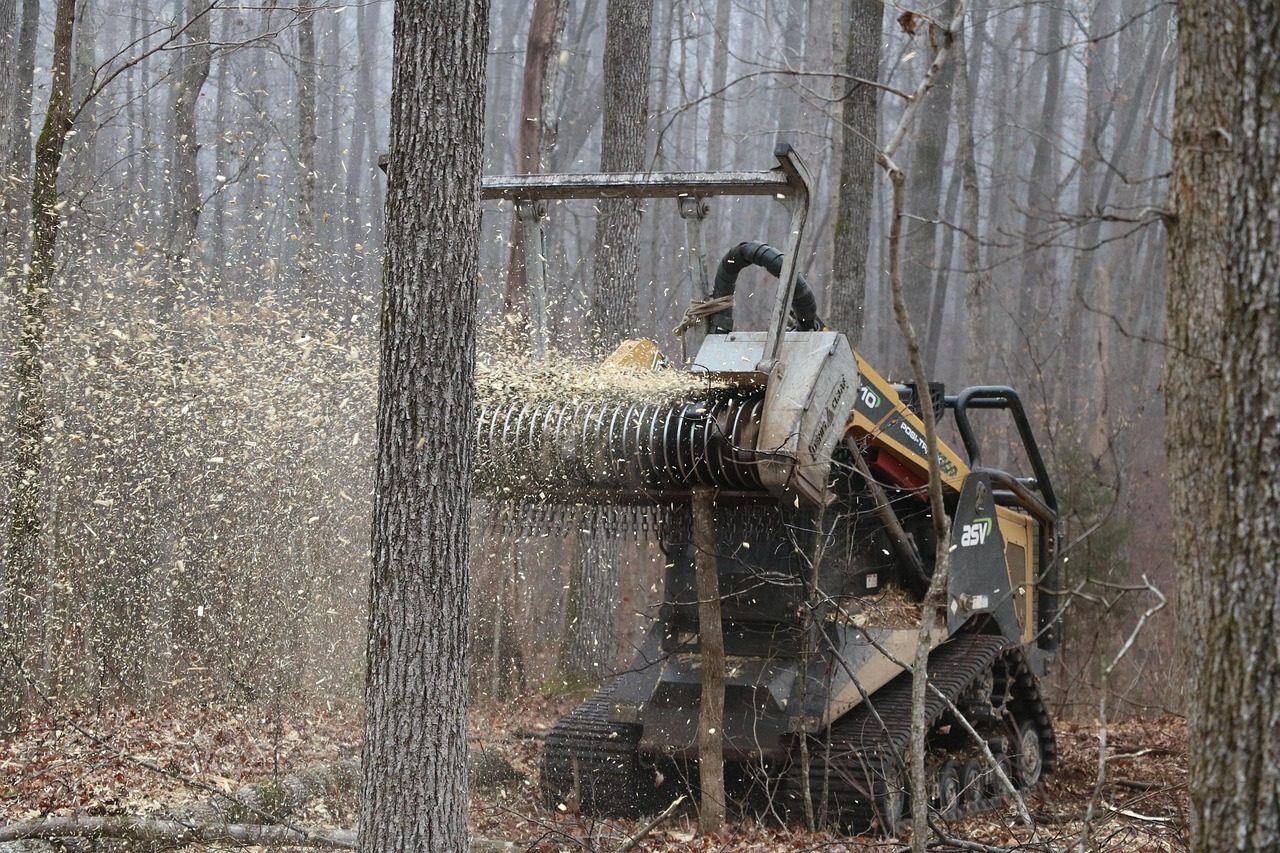
| Forestry / drum mulcher | Grinds standing trees and brush into chips | High flow | Land clearing, lot prep, trails |
| Stump grinder | Grinds stumps below grade | Runs on auxiliary hydraulics; faster with high flow | Tree service, lot clearing |
| Cold planer | Mills asphalt and concrete | Standard-flow and high-flow models | Patching, utility cuts, edge milling |
| Backhoe | Turns the loader into a small digger | Standard auxiliary | Septic, utility repairs, small trenches |
| Tree spade | Digs and moves trees with the root ball | Auxiliary; flow by model | Nurseries, landscaping |
Sources: Bobcat hydraulic flow options, Bobcat: matching hydraulics to attachments, and Bobcat attachment pages for the Brushcat rotary cutter, planer, stump grinder, backhoe and tree spade. Opened November 12, 2026.
The most useful skid steer attachments to own first
Most owners do not need 18 attachments. They need three or four that earn their keep every week and rent the rest. If we were setting up a used skid steer for general contracting or a farm in Pennsylvania, the order would look like this:
- A good bucket. It comes with most machines. Check the cutting edge and the mounting frame before anything else.
- Pallet forks. No hydraulics, nothing to break, and they unload every delivery truck you will ever see.
- A grapple. Brush, logs, scrap, storm debris, rocks. On a farm or a wooded lot it probably sees more hours than the bucket.
- The one tool your work calls for: an auger for fencing, a snow pusher for plowing contracts, a breaker for demolition, a brush cutter for pasture.
Mulchers, planers, wheel saws and tree spades are specialist tools. They make money for the crews that run them every day and sit in the weeds for everyone else. Rent them first.
What attachments need high flow?
Every skid steer has auxiliary hydraulics: the two couplers on the loader arm that power an attachment’s motor or cylinder. High flow is an option that pushes more oil through those couplers so motor-driven tools like mulchers and planers can spin at full speed. Here are Bobcat’s published ranges:
| Bobcat hydraulic option | Flow | Pressure | Examples Bobcat lists |
|---|---|---|---|
| Standard flow | 17.6 to 23.6 gpm, by model | 3,500 psi | Auger, trencher, breaker, grapple, sweeper, standard-flow snow blowers and brush cutters |
| High flow | Up to 36.6 gpm | 3,500 psi | Stump grinder, planer, wheel saw, drum mulcher, high-flow brush cutters and snow blowers |
| Super flow (Pro S86-2 and T86-2 only) | 42 gpm | 4,061 psi | Drum mulcher, planer, snow blower |
Source: Bobcat hydraulic flow options. Bobcat’s matching guide gives the high-flow range as 26.9 to 36.6 gpm.
The attachment pages show where the line falls in practice:
- Drum mulcher: Bobcat approves it only on 700- and 800-series loaders “with high-flow hydraulics,” and rates the drums at up to 40 or 45 gpm, depending on the model.
- Brush cutter: the 66- and 72-inch Brushcat come in standard-flow versions (24 and 26 gpm maximum); the 80-inch is high flow only (40 gpm).
- Tiller: the 40-inch runs on 9 to 18 gpm; the 62- and 76-inch want 17 to 40 gpm.
- Planer: Bobcat sells standard-flow, high-flow and super-flow planers; the wider drums are on the high-flow models.
Do not plan on running a high-flow tool on a standard-flow machine: some, like that drum mulcher, are approved only on high-flow carriers. The other direction is easier. Bobcat notes that its super-flow loaders also run high-flow and standard-flow attachments, and high-flow machines keep a standard circuit for the everyday tools. Our guide to high flow vs standard flow skid steers explains how to tell which one a used machine has.
On the market side, high flow is far more common on track loaders. Of the 79 machines Pennsylvania dealers had listed on Heavy Listing on November 12, 2026, 21 listings noted high flow: 20 of the 53 CTLs and 1 of the 22 skid steers (a 2017 Bobcat S770). Not every dealer fills in that field, so a machine without the note may still have it. Ask for the serial number and check the build.
The universal quick attach: one plate, most brands
The reason a Deere bucket hangs on a Bobcat, or a Kubota grapple fits a Cat, is a shared attachment interface. SAE standardized it as SAE J2513, “Coupling of Attachments to Skid Steer Loaders,” first issued in 2000 for loaders with an operating mass of 4,500 kg (about 9,900 lb) or less. Its stated purpose was to standardize the coupling interface between skid steers and attachments built worldwide. SAE’s catalog now lists J2513 as canceled, and the coupling is covered by an international ISO standard; your dealer or the attachment maker can confirm what a given plate was built to.
Two details from the SAE scope matter to a buyer:
- The locking system is left to each manufacturer. The plate shape is shared; how the wedges or pins lock is not. That is why levers, wedges and power latches look different from brand to brand.
- Narrow machines may not comply. Mini loaders and some narrow skid steers use their own, smaller plates. A full-size attachment will not fit a stand-on mini loader, and the other way around.
In the field, everyone calls this the “universal skid steer quick attach.” Attachments built for it say so on their listings; older or oddball loaders that do not use it get mentioned, and you should treat them as a separate market for attachments.
Source: SAE J2513 on SAE Mobilus.
Bob-Tach, Power Bob-Tach and hydraulic couplers
Bobcat’s version of the coupler is the Bob-Tach. On the manual version you pull two levers up to unlock, roll the plate into the attachment, then push the levers down so the wedges drive through the holes in the attachment frame. Power Bob-Tach does the same with a switch. Bobcat’s S770 page describes it as a way to “easily change non-hydraulic attachments in seconds, with a push of a button,” and lists it as optional on that model: standard Bob-Tach on the base packages, Power Bob-Tach on the higher ones.
Other makers sell their own manual and powered couplers on the same universal plate. Powered couplers save a lot of climbing in and out on jobs that switch between a bucket and forks all day. They also add a cylinder, hoses and a switch that can fail, so test them on any used machine you look at.
Hydraulic attachments still need you to connect the auxiliary hoses by hand on most machines, at the quick couplers on the loader arm. Bobcat’s spec page for the S770 lists 23 gpm on standard flow and 36.6 gpm on the high-flow option, both at 3,500 psi, with rear hydraulics optional.
Sources: Bobcat S770, Bobcat backhoe (Bob-Tach mounting).
Electrical connectors: 7-pin, 14-pin and adapters
Simple attachments have no wiring. Anything with a function beyond “open and close” usually does: a snow blower’s chute, an angle broom’s angle, a planer’s depth and tilt, a grader’s blade. Those functions run through an electrical plug at the front of the loader, and this is where cross-brand attachments get complicated.
- Bobcat: current loaders offer 7-pin attachment control (it appears in the S770’s package table). Older Bobcat attachments and loaders used a 14-pin system, and Bobcat’s parts catalog lists harnesses for both and for converting between them.
- Other brands: each maker wires its own plug, and many use a 14-pin connector. The pin count does not tell you the wiring. Two 14-pin plugs from two brands can fit together and still send the wrong signals.
- Adapters: aftermarket harnesses exist to run one brand’s attachment on another brand’s loader. They work when they are matched to both ends. Ask the seller which harness the attachment came with.
Before you buy an electric-control attachment for a machine of a different brand, get the part number of the adapter from a dealer of the attachment’s brand. Do not assume.
How to check the quick attach on a used skid steer
The plate takes every hit the machine takes, and a worn plate turns every attachment into a loose one. On any used skid steer or track loader, spend five minutes here. It goes on top of our full used skid steer inspection checklist.
- Look at the plate face. Cracks at the welds, bent top lip, fresh weld beads or plate patches. A plate that has been rewelded has been overloaded.
- Work the levers or the switch. Both wedges should move freely, all the way down and all the way up. Spring-loaded levers should snap back hard.
- Lock onto a bucket and look at the wedges from the side. They should pass fully through the holes in the attachment frame on both sides. If one stops short, the wedge, the hole or the plate is worn.
- Check for play. Curl the bucket down against the ground and rock it. Clunks at the plate mean worn wedges, pins or pivot bushings.
- Test Power Bob-Tach or any powered coupler several times. Look for leaks at its cylinder and hoses, and make sure it holds when you shut the machine off.
- Connect the auxiliary hydraulics. Couplers should go on without a fight and not drip. Run the circuit in both directions and, if it has high flow, run that too.
- Plug in the electrical connector if it has one, and check the pins for corrosion and bent contacts.
- Check the attachment, not only the loader. Look at the mounting frame on the bucket or forks: worn wedge holes, a bent top lip or cracked uprights.
Safety: what goes wrong with attachments
The quick attach is a safety device. When it is not locked, the attachment can come off the plate while it is raised. OSHA’s bulletin on quick couplers (SHIB 07-22-2005) dealt with hydraulic excavators, not skid steers, but the lesson carries over: OSHA found 15 incidents since January 1998 in which buckets came off excavator quick couplers, with eight workers killed, and said most unexpected releases are likely caused by failing to engage and lock the coupler properly. Its advice is to follow the maker’s procedure for engaging and testing the connection every time you change attachments.
For skid steers specifically, the NIOSH and CPWR toolbox talk on skid steer loader safety (August 2026) lists the basics:
- Use and maintain the safety devices the manufacturer provides: interlocked controls, backup alarms, seat belts and ROPS, and lift arm supports.
- Run the loader from the seat, never from outside, with the seat belt fastened and the restraint bar in place.
- Never get out with the engine running or the lift arms raised unless the lift arm supports are in place.
- Keep other workers away from the work area when you are lifting a load.
Two attachment habits we would add: never walk under raised pallet forks or a raised grapple to “check” a load, and on any attachment change, lift it a few inches and tilt it against the ground before you go to work. If it shifts on the plate, it is not locked.
Sources: OSHA SHIB 07-22-2005, NIOSH/CPWR toolbox talk, Skid Steer Loader Safety (Pub. 2026-112).
Matching attachments to machine size and lift
The plate fits; that does not mean the loader can handle the attachment. Three checks:
- Width. Buckets and blades should be at least as wide as the tires or tracks, or you drive over your own cut. Our guide to skid steer sizes covers widths by frame class.
- Weight and capacity. A heavy attachment eats rated operating capacity before you pick anything up, and pallet forks loaded far out on the tines shift the load away from the machine. See how much a skid steer weighs for what the machine and the trailer have to carry.
- Lift path. For forks and truck loading, the shape of the lift arc matters. Our comparison of radial vs vertical lift explains when it matters.
What attachments cost
We are not going to quote attachment prices. The manufacturer pages we checked for this guide (Bobcat’s auger, trencher, tiller, planer, stump grinder, brush cutter, backhoe and tree spade) publish no prices; they send you to a quote form or a dealer. Used attachment prices swing with brand, condition and whether it comes with the machine.
What we can say from the lot: some used skid steers are sold with a bucket, forks or a grapple, and some are sold bare. That changes the deal, so ask exactly which attachments are included in the asking price, and compare the machine itself against our guides to used skid steer prices and used compact track loader prices.
Common mistakes
- ❌ Buying a high-flow mulcher for a standard-flow machine because “it fits.” ✅ Check the attachment’s flow rating against the loader’s auxiliary spec before you pay.
- ❌ Assuming a 14-pin plug from one brand works on another. ✅ Get the adapter part number from a dealer.
- ❌ Skipping the wedge check because the bucket “seems tight.” ✅ Look at both wedges from the side every time you hook up.
- ❌ Buying a full-size attachment for a mini loader. ✅ Narrow machines use their own plates.
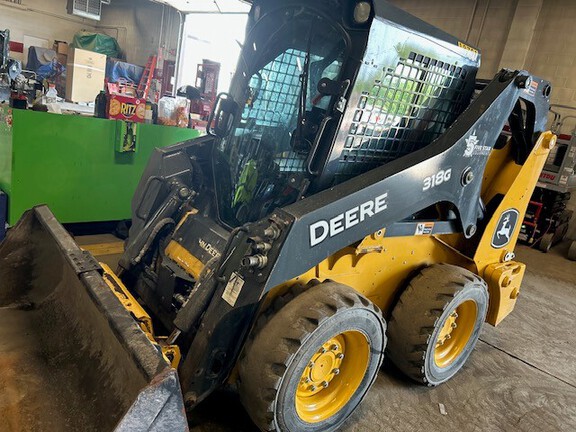
Some of the skid steers Pennsylvania dealers have listed on Heavy Listing right now:
Find a skid steer that runs the attachments you need
Browse used skid steers from Pennsylvania dealers with year, hours and asking price on each listing. Call the dealer, ask about high flow, the coupler and the electrical plug, and which attachments come with it.
Browse used skid steers →The bottom line
Most skid steer attachments, from buckets and forks to grapples, augers and breakers, run on any full-size loader with standard auxiliary hydraulics and a universal quick attach. The expensive mistakes come from the exceptions: high-flow tools on a standard-flow machine, electrical plugs that fit but do not match, and a worn attach plate that nobody checked. Sort those out before you buy, start with three or four attachments you will use every week, and rent the rest. If you are still choosing between wheels and tracks, read skid steer vs compact track loader first.
Frequently asked questions
What are the most useful skid steer attachments?
A bucket, pallet forks and a grapple cover most work on farms and job sites. After that, pick the tool your work calls for: an auger for fencing, a snow pusher or blower for plowing, a breaker for demolition, a brush cutter for pasture.
What attachments need high flow?
Forestry and drum mulchers, wheel saws, the larger planers and brush cutters, and high-flow versions of snow blowers and stump grinders. Bobcat’s standard flow runs 17.6 to 23.6 gpm by model; high flow goes up to 36.6 gpm.
Are skid steer attachments universal?
The mounting plate is shared by most full-size skid steers and track loaders, so most attachments swap between brands. Mini loaders and some narrow machines use their own plates, and electrical connectors differ by brand.
Can I put Bobcat attachments on a John Deere or another brand?
Usually, yes, for attachments built for the universal quick attach: buckets, forks, grapples and most hydraulic tools. Check two things first: that the attachment’s flow rating matches the loader’s auxiliary hydraulics, and, for anything with electric controls, that you have the right adapter harness.
What is the difference between Bob-Tach and Power Bob-Tach?
Bob-Tach locks the attachment with hand levers that drive two wedges through the attachment frame. Power Bob-Tach does it with a switch from the seat. Both fit universal attachments.
What is a 7-pin or 14-pin connector on a skid steer?
It is the electrical plug that controls attachment functions such as a snow blower’s chute or a broom’s angle. Current Bobcat loaders use 7-pin attachment control; older Bobcats and several other brands use 14-pin plugs, and the wiring differs between brands.