
Most skid steer problems show up the same way: the machine won’t move, it moves on one side only, it feels weak on a pile, the arms drift down, or a new noise starts coming from the chain case. The cause sits in a handful of systems, and the cheap failures are far more common than the expensive ones. A seat bar switch, a clogged filter or a loose track gets blamed on the drive pump every week.
This guide goes system by system through the common skid steer problems and the track loader problems that only compact track loaders (CTLs) have. For each one: the symptoms, the likely cause, what to check first and how big the bill tends to be. Service intervals come from Bobcat’s published maintenance schedules and John Deere’s track guide. We do not quote repair prices: the manufacturers do not publish them, and shop rates vary too much to be useful.
Skid steer won’t move: start with the interlocks
A loader that starts and runs but will not drive or lift is, more often than not, a safety system doing its job. Every modern skid steer and CTL locks out the drive and the loader arms until it is satisfied an operator is seated and restrained. Bobcat’s Interlock Control System (BICS), for example, “requires the operator to be seated in the loader with the seat bar in place and the engine running,” and on many models the drive and the lift and tilt only unlock after the operator presses a “Press to Operate Loader” button. The same machines list a traction lock, lift lock and tilt lock.
Check these in order, all of them free:
- Seat bar fully down. A bent bar, a packed hinge or a sensor knocked out of line can leave the system thinking the bar is up.
- Seat switch. Machines with a seat sensor lock out when the operator lifts off the seat. A worn cushion or a broken wire does the same thing with somebody sitting on it.
- Press to operate or the traction lock. If the panel shows the traction lock on, the drive is locked. Some models need the button pressed again after the seat bar goes up.
- Parking brake. On some machines it releases electrically. A dead release solenoid or a blown fuse holds the brake on.
- Display and fault codes. Write down every code before you clear anything. A low-voltage battery or a corroded ground can confuse the controller and trip a lockout.
Bobcat’s schedule treats this as a daily job: every 10 hours, check the seat bar and control interlocks, and confirm the lift and tilt “MUST NOT operate with seat bar raised.” When a used machine drives with the bar up, someone bypassed the system. That is a safety problem first and a clue about the rest of the maintenance second.
Hydrostatic drive and drive pumps
Skid steers and CTLs steer by running the left and right sides at different speeds. A hydrostatic pump for each side, usually built as one tandem unit behind the engine, sends oil to a drive motor on that side. When the interlocks check out and the machine still won’t move, or moves weakly, the problem is in this loop or what feeds it.
| Symptom | Likely cause | Check first | Cost level |
|---|---|---|---|
| No drive either side, loader arms work | Drive belt to the pump broken (on belt-driven designs), drive lockout, charge pressure problem | Belt, codes, hydraulic oil level, charge filter | Low to medium |
| Drive weak once the oil gets hot | Internal wear in the pumps or motors, plugged cooler, wrong or worn-out oil | Clean the cooler, oil condition, a pressure test by a shop | Medium to high |
| One side weak or slow | That side’s pump section, drive motor, or (skid steer) chain; linkage or joystick adjustment | Control calibration, motor case leaks, chain case | Low to high |
| Creeps with controls in neutral | Neutral adjustment on the pump or the controls | Neutral calibration per the service manual | Low |
| Whine or growl from the pump | Low oil, air in the system, restricted suction, worn pump | Oil level, foam in the sight glass, suction hose | Low to high |
Sources: Bobcat S510 service schedule, Bobcat T590 product page. Cost levels are Heavy Listing’s general estimate, not quotes.
Bobcat checks the engine-to-pump drive belt every 250 hours and changes the charge filter at 500 and the hydrostatic filter and oil at 1,000 (full table below). A machine that skipped those for years is the one whose pumps go first. Weak drive that only appears hot is the classic sign of internal wear, and it is the most expensive answer on this page, so get a pressure test before anyone orders a pump.
Skid steer chain cases and drive chain noise
On most wheeled skid steers, each drive motor turns a sprocket inside an oil-filled chain case, and chains carry the power to the front and rear axles on that side. Drive chain noise usually comes from slack chains or worn sprockets, and it gets worse with every direction change.
- Clunk when you shift between forward and reverse. Chain slack or sprocket wear. Many machines have a way to take up slack; once it is used up, chains and sprockets get replaced as a set.
- Grinding or rattling that follows ground speed. A chain riding on a worn sprocket, or an axle bearing on the way out.
- One wheel dead while the other wheel on that side turns. A broken chain. The machine may still limp around on the other axle.
- Oil at the axle seals. A leaking axle seal lets water and dirt into the chain case. Ignore it, and the chains, sprockets and bearings wear out together.
Bobcat’s S510 schedule calls for checking the chain case oil level every 50 hours and replacing the oil every 1,000 hours or 12 months. When the drain plug comes out, fine glitter is normal wear; chunks, chain pin pieces or a gray sludge are not. Cost runs low for oil and seals, medium for chains and sprockets, high when axle bearings and splines have been ground down with them.
CTL final drive motors, sprockets and rubber tracks
A compact track loader has no chain case. The drive motor on each side turns the drive sprocket, usually through a planetary reduction, and the track takes it from there. Track loader problems therefore live in the motor, the planetary, the sprocket and the undercarriage.
Bobcat’s T590 schedule lists “Hydrostatic Motor Carrier: replace fluid” every 500 hours or 12 months, plus checks on the sprocket nuts or bolts and the track tension every 50 hours. Deere’s track guide notes that its outboard planetary reservoirs “require periodic maintenance” and tells owners to look for oil leaking from rollers, hoses and travel motors and fix it immediately.
- Oil around the drive hub. A leaking final drive seal. Cheap to fix early, expensive if the gears run dry or full of dirt.
- Grinding or a ticking that matches track speed on one side. Bearings or gears in the final drive, or a roller with a failed bearing. Jack the side up or listen closely while driving slowly.
- Track jumps teeth or keeps coming off. Too loose, worn sprocket teeth or idler, or a lot of spin turns on rough ground. Deere says worn sprockets can let the track skip and derail.
- Machine feels heavy and wears tracks fast. Track too tight. Deere’s wording: “excessive tightness can accelerate component wear, and looseness can cause de-tracking.”
Tension is set with a grease cylinder on most machines; the correct sag is in each model’s manual, and Deere says to check it weekly or as needed. Deere also says to replace rubber tracks once 40 percent of the original tread depth remains, and lists conditions rubber tracks are not built for: sharp or angular rock, demolition fill with concrete and rebar, landfills and long high-speed roading.
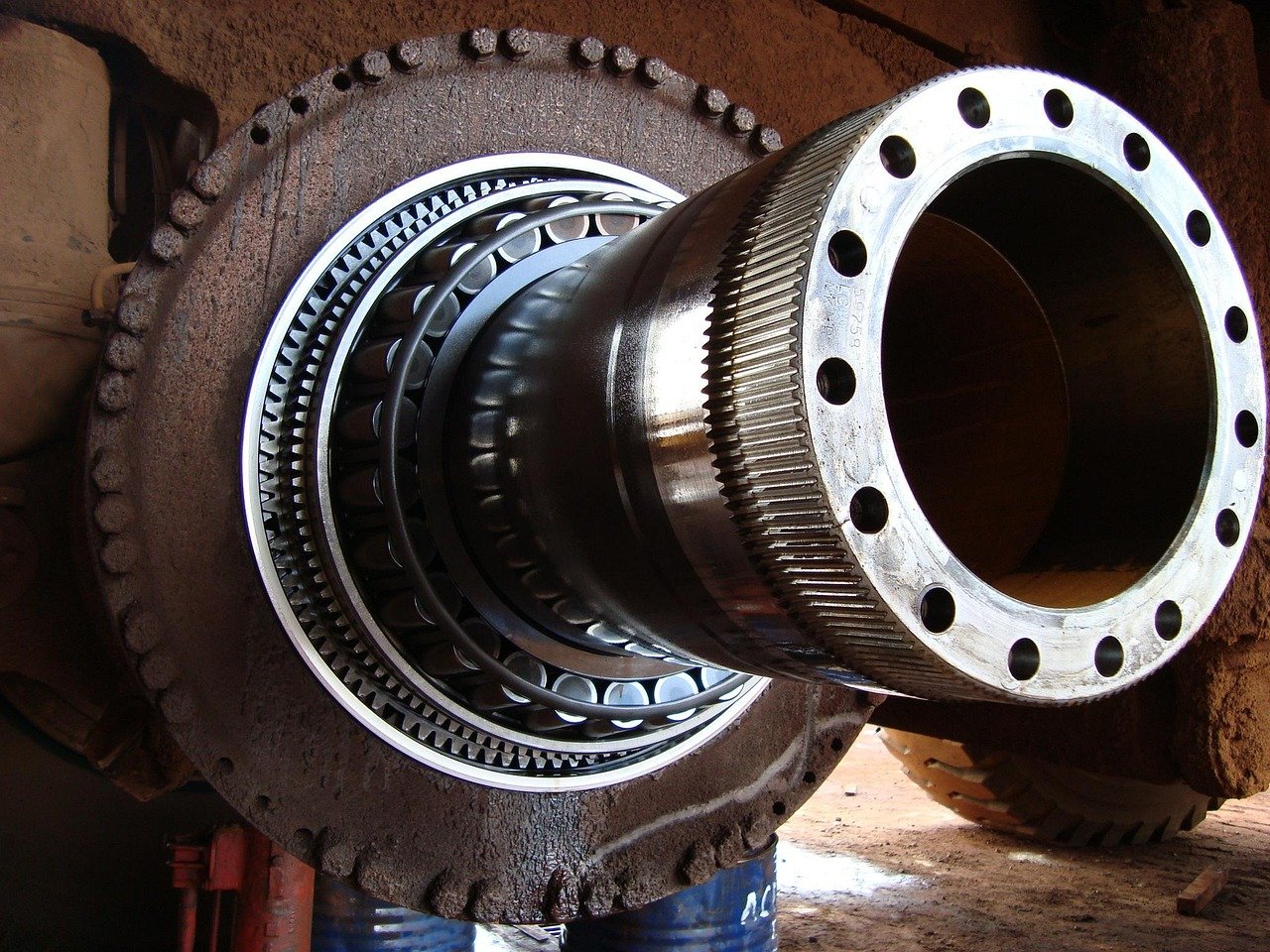
Undercarriage parts are the main running cost of a CTL, which is a big part of why our skid steer vs compact track loader comparison comes out the way it does.
Hydraulics not working: lift, tilt and auxiliary
“Hydraulics not working” can mean three different things, and each has a different short list.
| Symptom | Likely cause | Check first | Cost level |
|---|---|---|---|
| No lift or tilt, engine runs | Interlock lockout, lift or tilt lock solenoid, fuse, very low oil | Seat bar, press to operate, codes, oil level | Low |
| Arms lift slowly or stall with a full bucket | Worn gear pump, relief valve set low or stuck, engine down on power | Oil level and temperature, relief pressure test | Medium |
| Arms or bucket drift down with the engine off or controls in neutral | Cylinder seals leaking past the piston, leaking control valve section | Drift test with a loaded bucket, then isolate cylinder vs valve | Medium |
| Attachment will not run | Coupler not fully seated, auxiliary not switched on, wrong flow mode | Couplers, aux switch, high-flow setting | Low |
| Attachment slow or overheats the machine | Attachment needs more flow than the machine makes, worn pump, case drain issue | Attachment flow rating vs machine flow | Low to medium |
| Oil running down a cylinder | Rod seal, often after a pitted or scored rod | Rod surface; a bad rod means the seal will fail again | Low to medium |
Auxiliary complaints are often a mismatch, not a failure. A mulcher or cold planer built for high flow will crawl on a standard-flow machine. Our guide to high flow vs standard flow skid steers explains how to match the two. Bobcat’s schedule asks for a daily hydraulic oil level check and an every-50-hours check of hoses and tubelines; hoses tend to fail where they rub, and a worn cover shows long before the hose lets go.
Pins, bushings and the quick attach
Skid steers work their loader arms constantly, often with side loads from grapples and pallet forks, and the pivots pay for it. Bobcat lists greasing the lift arms, lift links, cylinder ends, quick attach pivots and wedges every 10 hours. A machine that got greased once a month wears its pins and bushings much faster.
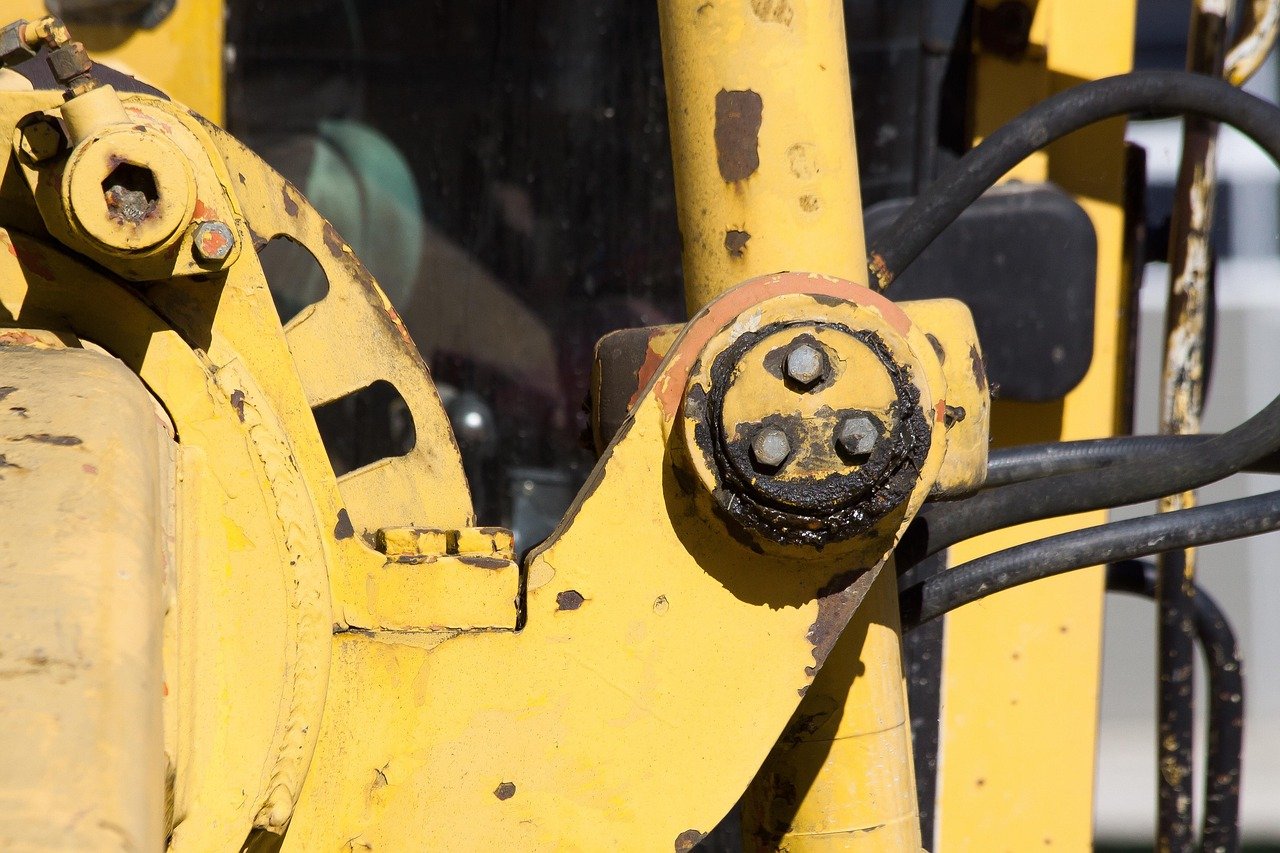
- Clunk at the start of every lift or tilt. Play in pins and bushings. Low cost if caught early.
- Bucket that wobbles side to side. Worn quick attach pivots or cylinder end bushings.
- Pins that walk out or retaining bolts that keep shearing. The bore is worn oval. That is a line boring or weld-and-machine job, medium to high cost.
- Attachment loose on the plate. Worn or bent wedges. Fix it before the machine works: a loose attachment can come off.
Skid steer losing power: engine and cooling
When a skid steer is losing power, separate the engine from the hydraulics first. If the engine bogs or the speed drops hard every time you push into a pile or lift, the engine is either short of air, fuel or cooling, or the hydraulics are loading it more than they should.
- Air filter. Most machines show a restriction warning on the display. A plugged filter means black smoke and no power.
- Fuel filter and water. Bobcat’s schedule says to drain trapped water from the fuel filter every 10 hours, replace the main filter every 250 to 500 hours depending on the model, and shorten filter life when fuel comes from uncontrolled storage tanks. Water in the fuel is common on machines fueled from farm tanks.
- Plugged cooler. Radiator and hydraulic oil cooler packed with dust, chaff or mulch. The machine overheats, many models derate power to protect themselves, and hot oil makes the drive and lift feel weak. Bobcat lists cleaning the coolers every 10 hours. Cheapest fix on this page. A slipping fan belt does the same.
- Internal engine wear. Blue smoke that stays, heavy blow-by and oil use point to rings or valves. That is the high-cost end.
Tier 4 machines: DPF, DEF and regeneration
Most skid steers and CTLs built in the last decade have a Tier 4 Final engine with a diesel particulate filter (DPF), and some, mostly larger models, also use diesel exhaust fluid (DEF). Their problems look like engine problems: a derate, a warning light, a machine that will not rev.
- Regeneration requests that keep coming back. Usually short, light-load running that never lets the filter clean itself, or an upstream fault making extra soot.
- Power derate with a DEF warning. Low or contaminated fluid, a frozen line in a Pennsylvania winter, or a failed sensor or pump.
- Plugged DPF. Needs a forced regeneration with the dealer’s tool, or cleaning and possibly replacement. Medium to high.
❌ Buying a machine with a “delete” or emissions bypass to avoid these issues. ✅ Ask for the regeneration and fault history. Tampering with emissions controls is illegal under the Clean Air Act, and a deleted machine can be hard to sell or finance. Our guide to Tier 4 Final on used equipment covers what each system does and what to ask the seller.
Electrical problems
Electrical faults are behind a large share of “won’t move” and “hydraulics not working” calls, because the lockouts, brakes and many valves are electrically controlled.
- Battery and grounds. Bobcat lists checking battery cables and connections every 100 hours. Low voltage can make controllers act strange long before the starter stops turning.
- Harnesses at pivot points. Wires that run past the cab tilt hinge, the seat and the loader arms get pinched and rubbed through.
- Connectors and switches. Seat switch, seat bar sensor, joystick switches and solenoid plugs corrode, especially on machines that work in manure or road salt.
- Joystick or controller faults. On electro-hydraulic machines, a failed joystick or controller can take out drive or loader functions. Read the codes; this is dealer software territory.
Symptom, cause and what to check: quick table
| Symptom | Most likely cause | What to check first |
|---|---|---|
| Skid steer won’t move, engine runs | Interlock, traction lock, parking brake | Seat bar, seat switch, press to operate, codes |
| No drive, arms work fine | Drive belt, charge pressure, drive lockout | Belt, charge filter, oil level |
| Weak drive when hot | Pump or motor wear, plugged cooler | Clean cooler, then pressure test |
| Pulls to one side | One drive side weak, control calibration, chain (skid steer) | Calibration, motor leaks, chain case |
| Clunk on direction change | Slack chains or worn sprockets | Chain case oil and chain slack |
| Losing power under load | Air or fuel restriction, overheating, DPF/DEF derate | Air filter, fuel filter water, cooler, display warnings |
| Lift and tilt dead | Interlock or lock solenoid, very low oil | Seat bar, fuses, oil level |
| Arms drift down | Cylinder piston seals or control valve | Drift test, then isolate |
| Attachment slow | Flow mismatch or worn pump | Attachment flow rating, high-flow switch |
| CTL track comes off | Loose track, worn sprocket or idler | Sag against the manual, sprocket teeth |
| CTL grinding on one side | Final drive bearings or gears, failed roller | Oil at the hub, rollers turning freely |
Sources: Bobcat S510 service schedule, Bobcat T590 service schedule, John Deere CTL rubber tracks guide.
Service intervals that prevent most of this
Intervals differ by model and serial number, so the operator manual for the exact machine wins. As an example of what a manufacturer expects, here are Bobcat’s published schedules for one skid steer and one track loader:
| Item | Bobcat S510 (skid steer) | Bobcat T590 (CTL) |
|---|---|---|
| Grease arms, links, cylinders, quick attach | Every 10 h | Every 10 h |
| Clean radiator and oil cooler | Every 10 h | Every 10 h |
| Check seat bar and interlocks | Every 10 h | Every 10 h |
| Chain case oil level | Every 50 h | Not applicable |
| Track tension, sprocket nuts | Not applicable | Every 50 h |
| Engine oil and filter | 500 h / 12 months (100 h severe) | 250 h / 12 months (100 h severe) |
| Hydraulic charge filter | 500 h / 12 months | 500 h / 12 months |
| Drive motor carrier fluid | Not applicable | 500 h / 12 months |
| Hydraulic filter and reservoir oil | 1,000 h / 12 months | 1,000 h / 12 months |
| Chain case oil change | 1,000 h / 12 months | Not applicable |
| Coolant | 1,500 h / 24 months | 24 months |
Sources: Bobcat S510 Operation & Maintenance Manual, service schedule; Bobcat T590 Operation & Maintenance Manual, service schedule. “Whichever comes first.” Bobcat notes filter and oil life can be shorter in dust, extreme temperatures or with fuel from uncontrolled tanks.
How to use this when buying a used skid steer
Every problem above leaves a trace you can see on a lot or at an auction preview. Our used skid steer inspection checklist walks through the full inspection; this list is about turning symptoms into money:
- ❌ Assuming a machine that won’t move needs a pump. ✅ Test the interlocks and read the codes. A machine sold as “no drive” may only have a lockout fault.
- ❌ Taking “it just needs a chain” at face value. ✅ Ask for the chain case oil history and look at the drain plug. Chains rarely fail alone.
- ❌ Testing drive only when the oil is cold. ✅ Warm it up for 10 to 15 minutes, then push into a pile. Hot-oil weakness is the pump and motor warning.
- ❌ Pricing a CTL without the undercarriage. ✅ Check tread against Deere’s 40 percent rule, sprocket teeth and every roller, and get a quote for what is close to done.
- ❌ Ignoring service records. ✅ Match them against the intervals above. Three hydraulic oil changes on paper make a 3,000-hour machine a different machine.
Hours tell you how much of this to expect. Of the 22 skid steers Pennsylvania dealers listed on Heavy Listing on November 12, 2026, seven showed 3,000 hours or more and three passed 5,000; the highest, a 2015 New Holland L220 at 9,813 hours, was priced at $12,500. Of the 53 CTLs, nine had 3,000 hours or more and none reached 4,000. At those hours, assume pins, chains or undercarriage have been done once or are due. Our study of how many hours is a lot on heavy equipment shows what is normal by age. Then compare the asking price, less your repair estimate, with our used skid steer prices and used compact track loader prices.
Size matters too: a small-frame loader that spent years on work meant for a large frame wears faster. Our guide to skid steer sizes shows what each frame class is built for.
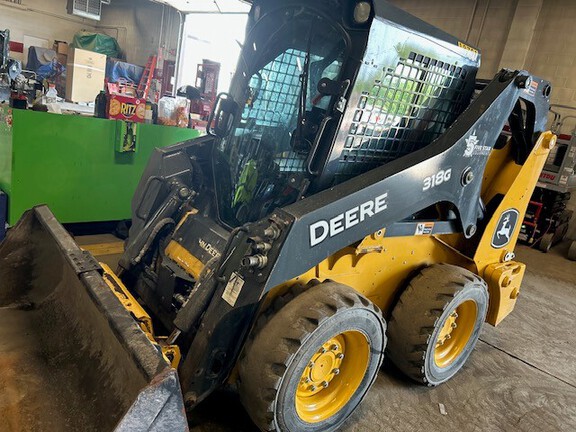
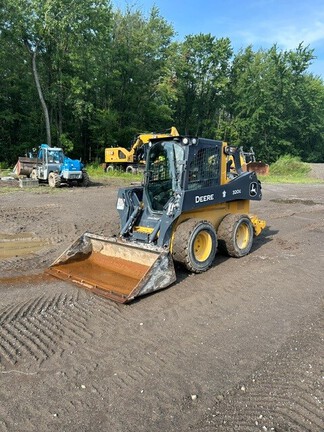
Skid steers Pennsylvania dealers have listed on Heavy Listing right now:
Shop used skid steers with the history in hand
Every listing shows year, hours and the dealer’s asking price. Pick a few, call the dealer for service records and a cold start, and use the table above to know what you are looking at.
Browse used skid steers →The bottom line
Most skid steer problems start cheap: a seat bar switch, a dirty cooler, water in the fuel, a dry pin, a loose track. They get expensive when nobody fixes them, and the drive pumps, chain cases and final drives pay the bill. Work from the cheap checks up, read the codes before you replace parts, and when you buy used, price the machine by what its symptoms will cost, not by its paint.
FAQ
Why won’t my skid steer move but the engine runs?
Most often an interlock: seat bar not fully down, seat switch not seeing an operator, traction lock or parking brake on, or a “press to operate” button not pressed. Check those, the codes and the oil level before suspecting the pump.
Why is my skid steer losing power?
Start with the air filter, water in the fuel filter and a packed radiator or oil cooler. On Tier 4 machines, look for a DPF or DEF warning. If the engine is fine but drive or lift is weak when hot, suspect the hydraulics.
What causes drive chain noise on a skid steer?
Slack chains, worn sprockets or low or dirty chain case oil. A clunk on every direction change is the classic sign. Bobcat’s S510 schedule checks chain case oil every 50 hours and changes it every 1,000 hours or 12 months.
Why are my skid steer hydraulics not working?
No lift or tilt: interlocks, lock solenoids, fuses, oil level. Arms drifting down: cylinder seals or the control valve. Slow attachment: a flow mismatch more often than a failure.
What are the most common compact track loader problems?
Track tension set wrong, worn sprockets, rollers with failed bearings, final drive seal leaks and torn or worn-out tracks. Deere recommends replacing rubber tracks when 40 percent of the tread depth remains and checking sag weekly or as needed.