
Skid steers and compact track loaders live a hard life. They get rented by the day, lent to the neighbor, run with a grapple through a fence line and parked wet all winter. Two machines of the same year can be far apart in condition, and the hour meter will not tell you which is which. This used skid steer inspection checklist covers what to look for when buying a used skid steer or compact track loader (CTL): paperwork, cold start, loader arms, quick attach, drive system and a 20-minute test run.
It works at a dealer’s lot, a farm sale or an auction preview. Print the checklist table near the end and mark each line pass, watch or fail.
Paperwork and the hour meter
Do this on the phone, before you drive anywhere. Ask for:
- The serial number. It should match the plate on the frame and the paperwork. A ground-off or missing plate ends the conversation.
- Ownership and liens. Who holds the bill of sale, and is money owed on it? A lien search on the serial number is cheap insurance.
- Service records, including chain case oil and hydraulic filters, with the hours each job was done.
- Whether the hour meter or display was ever replaced. On compact loaders the meter often lives in a display that can be swapped.
- How it was used. Landscaping, snow, demolition, mulching, barn cleaning and rental each wear a different part of the machine.
Hours deserve a second look. On November 10, 2026, one of the 22 skid steers listed by Pennsylvania dealers on Heavy Listing, a 2015 model, showed 0 hours: the reading was simply not given. The used ones that did show hours ran from 422 to 9,813. Our study of how many hours is a lot on heavy equipment found a typical used skid steer runs about 190 hours a year and a CTL about 280. A 6-year-old skid steer with 1,200 hours is normal; with 4,000, it has worked about three times harder than most.
Then check the hours against the wear. Worn pedals, a polished seat bar and shiny handles on a machine that claims 900 hours do not add up.
The cold start
Ask the seller not to start it before you arrive, and put your hand on the engine cover when you get there. If it is warm, ask why.
- Cranking. In cold weather, let the glow plugs cycle. Then it should fire in a few seconds.
- Smoke. A puff at startup is normal. Blue smoke that stays means burning oil. Heavy black smoke under load points to fuel or air problems. White smoke that does not clear once warm is a question for a mechanic.
- Noise. Knocks, ticking that follows engine speed, a squealing belt. The pump should hum, not whine or growl.
- Warning lights. On at key on, out after start. Ask about any that stay on.
Engine, fluids and blow-by
With the engine off on level ground, open the rear door and tilt the cab if the model allows.
- Engine oil. Milky oil means coolant is getting in; thin oil that smells of diesel is a fuel problem.
- Coolant and cooler. Oil in the coolant is bad news. A cooler packed with chaff or dirt, common on farm and mulching machines, shows how often it was cleaned.
- Hydraulic oil. Dark, foamy or burnt-smelling oil in the sight glass is a warning; milky means water.
- Blow-by. Once warm, and only if the engine has an open breather tube, look for heavy fumes pushing out in pulses. Many newer engines route the breather back into the intake, so ask for an oil sample instead.
- Emissions. On Tier 4 machines, ask about DPF, DEF or regeneration trouble.
Hydraulics and cylinders
A skid steer is mostly hydraulics: drive pumps and motors, lift and tilt cylinders, and the auxiliary circuit for attachments. Leaks are common, so look for the ones that matter.
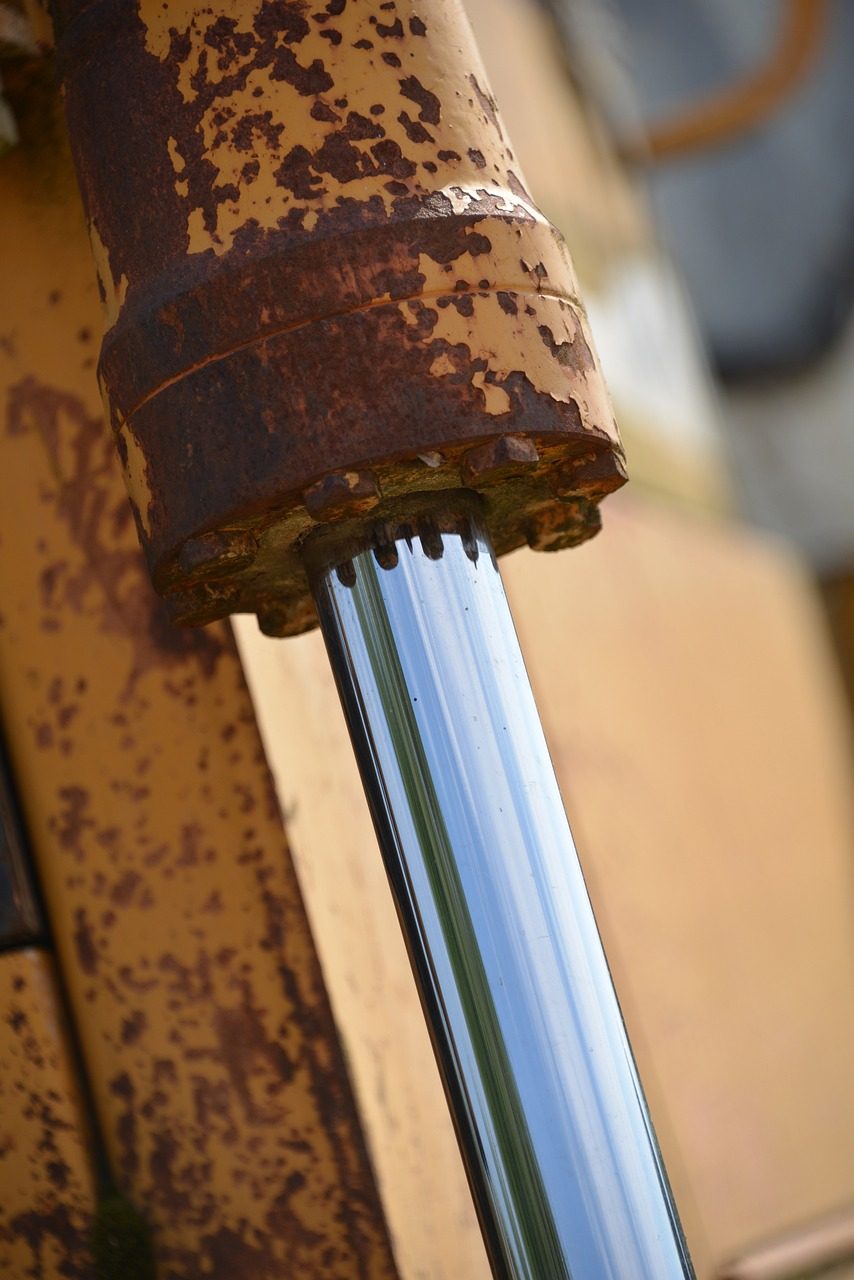
- Cylinder rods and seals. Pitting, scratches and rust on the lift and tilt rods chew up the seals, and the leak comes back. A light film on the rod is normal; oil running down the barrel is a leaking seal.
- Hoses. Check the runs along the arms and through the pivots for rubbing and cracks. Fresh oil in the belly pan means a leak above it.
- Auxiliary couplers. They should connect without a fight and not drip. Broken couplers tell you how attachments were handled.
- High flow. A high-flow machine may have run a mulcher or cold planer, which is hard on the pump and cooling system. Ask what ran on it.
Loader arm pins and bushings
Hard use shows here first. With the bucket flat on the ground and the engine running, have someone work the lift and tilt controls back and forth in small movements while you watch each pivot from the side, at a safe distance:
- Arm pivots at the rear. Movement in the joint before the arm moves means worn pins and bushings.
- Cylinder ends and quick attach pivots. Same check at both ends of each cylinder and where the plate pins to the arms.
- Grease. Fresh grease at every fitting is a good sign. Dry, rusty pins are not.
- Arms and cross tube. Cracks, bends and weld repairs where the arms meet the cross tube and around the cylinder mounts. Sight down both arms: they should be straight and even.
Worn pins and bushings alone are not a deal breaker: get a shop quote and take it off the price. Cracked or bent arms are a different story.
Quick attach plate: cracks and wedges
The quick attach takes every hit the bucket takes. Inspect it with nothing attached:
- Cracks at the corners of the plate, the top lip and the pivot welds.
- Wedges or locking pins. Engage the levers (or the power quick attach switch) and watch both wedges drop fully through the attachment’s holes. Worn, bent or sticky wedges can let an attachment come loose.
- Levers and springs. Manual levers should snap over center and stay there.
- Fit. Hook up the bucket and look for daylight or rocking between plate and attachment.
Skid steers: drive motors, chain cases and tires
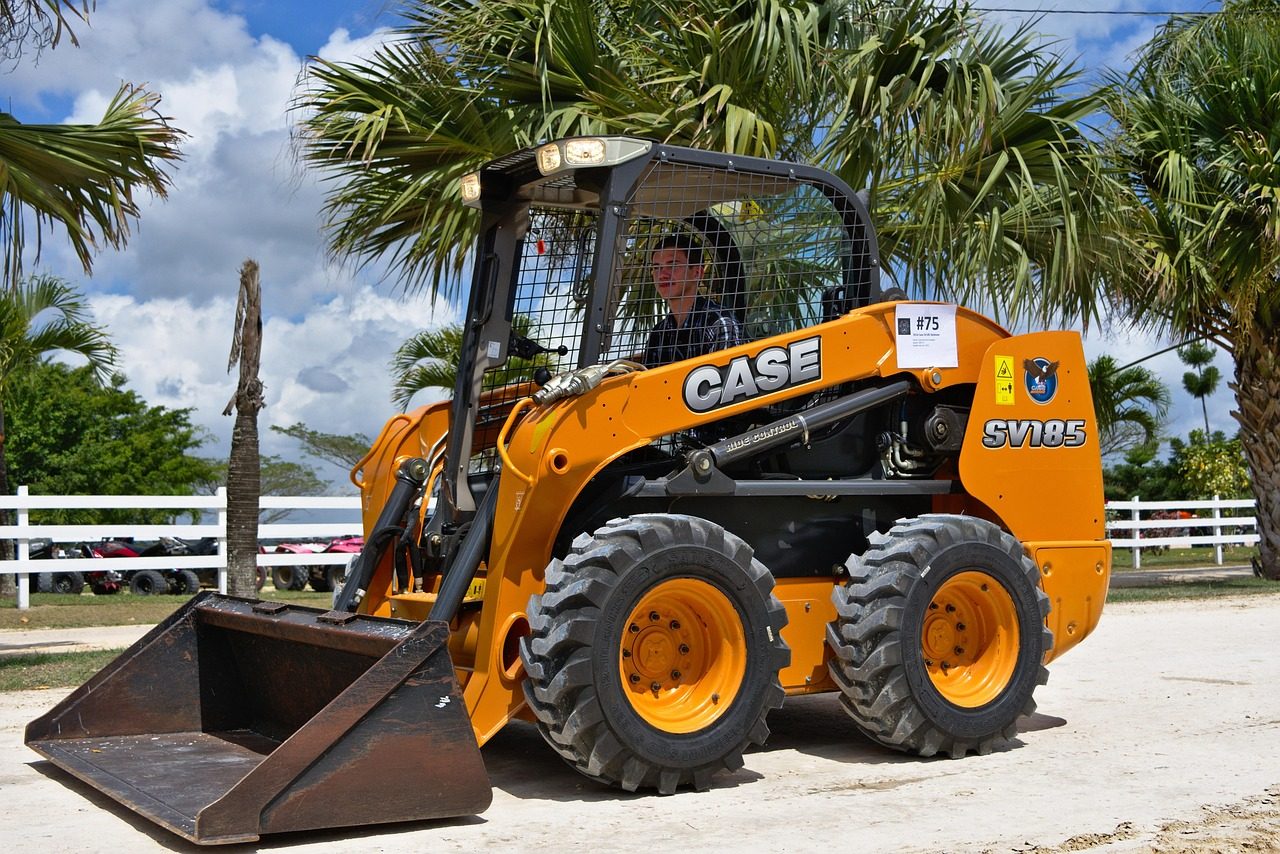
On most wheeled skid steers, a hydraulic drive motor on each side turns the axles through chains in an oil-filled chain case. A neglected machine hides expensive problems here.
- Chain case oil. Ask when it was changed. If the check plug can be pulled, look at the level and for metal in the oil.
- Chain slack. A clunk every time you shift between forward and reverse can mean stretched chains or worn sprockets.
- Axles and drive motors. Oil where the axles leave the chain case, a wobbling wheel, a leaking motor, or a machine that pulls weakly on one side.
- Tires. Uneven wear, cut sidewalls, loose wheel nuts, and mismatched sizes on the same side, which make the drive fight itself. Ask whether they are air, foam filled or solid.
Compact track loaders: tracks, rollers, idlers, sprockets and tension
On a used compact track loader inspection, the undercarriage is where the money is. Check both sides, ideally after a wash:
- Rubber tracks. Lug height, cracks across the lugs, torn edges and steel cords showing. Check the guide lugs on the inside too.
- Rollers and idlers. Each should turn, run true and stay dry. Flat spots and wobble mean bearings or seals are going.
- Sprockets. Hooked, pointed or chipped teeth. A new track on a worn sprocket wears faster.
- Tension. Usually set with a grease cylinder. Check the sag against the manual. An adjuster with no travel left, or grease weeping from it, needs an explanation.
- Frame and final drives. Cracks in the track frame, packed rock or wire, oil around the drive motor hub, or grinding when it travels.
Our skid steer vs compact track loader guide explains why tracks cost more to run. If the tracks or rollers are close to done, ask the dealer the price of a new set for that model, or get a shop quote, and take it off your offer. The undercarriage section of our used excavator inspection checklist goes deeper on wear patterns.
Cab, ROPS, seat bar and safety interlocks
On most machines, the seat bar and operator presence system lock out the lift, tilt and drive when the bar is up or the seat is empty. Test it, every time.
- Seat bar. Engine running, bar up: the arms, tilt and drive should not work. Bar down: they should. If they work with the bar up, the interlock is broken or bypassed.
- Seat belt and seat switch. The belt latches and is not cut; lifting off the seat locks the system out where the machine has a seat switch.
- Parking brake. Set it and try to drive gently. The machine should not move.
- ROPS and FOPS. Bends, cracks, drilled holes or welds on the cab frame. A damaged protective structure gets replaced, not repaired.
- Cab tilt, heat, A/C, lights and wipers. They matter on a January snow job in Pennsylvania.
Controls: hand/foot vs joystick
| Control type | How it works | What to check |
|---|---|---|
| Hand and foot (mechanical) | Levers drive and steer; pedals run lift and tilt | Linkage play, sticky pedals, levers that do not return to neutral |
| Pilot joysticks (hydraulic) | Low-pressure pilot oil moves the main valves | Smooth, even response, no creep in neutral |
| Electro-hydraulic joysticks | Electronic joysticks, often with selectable patterns | Fault codes, pattern switch, speed and response settings |
Whatever the type, the machine should sit still with the controls released. Test the handle switches too.
The test run, step by step
Warm the hydraulic oil for 10 to 15 minutes. Then, on open ground with nobody in front of the machine:
- Interlocks. Seat bar up: nothing moves. Bar down: everything works.
- Drive straight forward and in reverse, in both speeds. It should track without correcting.
- Turn in place both ways. Both sides should pull evenly; listen at the chain cases or final drives.
- Change direction several times and listen for clunks.
- Lift a full bucket to full height. The engine should not stall or bog hard, and the arms should not hesitate.
- Drift test. Hold a loaded bucket just off the ground for two minutes. If it settles noticeably, a cylinder or valve may be leaking inside.
- Push into a pile. Drive power and engine speed should hold.
- Auxiliary hydraulics. Run an attachment both directions, and on high flow if it has it.
- Second walkaround. Hot oil under pressure finds the weak spots.
Signs of hard use
- Welds, repair plates and small patches of fresh paint on the arms, cross tube, quick attach and rear frame. A repaint around one pivot often covers a repair.
- A bent belly pan or rear door, from being backed into things or high-centered.
- Mulching or demolition clues: wood chips packed behind panels, an extra-heavy door guard, high-flow couplers.
- Wear that does not match the hours on the pedals, seat, handles and steps.
Printable used skid steer and CTL inspection checklist
“Watch” means it works but will need money soon: get a price for it.
| Item | Pass | Watch | Fail |
|---|---|---|---|
| Serial number matches plate and paperwork; no lien | ☐ | ☐ | ☐ |
| Hours believable for age and wear; records seen | ☐ | ☐ | ☐ |
| Cold start: starts easily, no lasting smoke, lights out | ☐ | ☐ | ☐ |
| Engine oil, coolant, hydraulic oil clean | ☐ | ☐ | ☐ |
| No heavy blow-by (or oil sample OK) | ☐ | ☐ | ☐ |
| Cylinder rods smooth, seals dry | ☐ | ☐ | ☐ |
| Hoses and couplers OK, no fresh leaks | ☐ | ☐ | ☐ |
| No play in arm pins and bushings, greased | ☐ | ☐ | ☐ |
| Arms and cross tube straight, no cracks or welds | ☐ | ☐ | ☐ |
| Quick attach: no cracks, wedges lock fully, tight fit | ☐ | ☐ | ☐ |
| Skid steer: chain cases quiet, no metal, no axle leaks | ☐ | ☐ | ☐ |
| Skid steer: tires matched, even wear, no cuts | ☐ | ☐ | ☐ |
| CTL: tracks and guide lugs OK, no cords showing | ☐ | ☐ | ☐ |
| CTL: rollers, idlers and sprockets OK; tension OK | ☐ | ☐ | ☐ |
| Seat bar and seat interlocks lock out lift, tilt and drive | ☐ | ☐ | ☐ |
| Parking brake holds; ROPS/FOPS undamaged | ☐ | ☐ | ☐ |
| Controls return to neutral, no creep | ☐ | ☐ | ☐ |
| Drives straight, turns evenly, no clunk | ☐ | ☐ | ☐ |
| Full bucket to full height, no drift | ☐ | ☐ | ☐ |
| Auxiliary (and high flow) hydraulics work | ☐ | ☐ | ☐ |
| Second walkaround: no new leaks | ☐ | ☐ | ☐ |
If something on this list fails, our guide to common skid steer problems goes system by system through the symptoms, the likely causes and what to check first.
What problems cost to fix
We are not going to quote repair prices. They change by brand, model, region and shop, and a number from a forum is no use on your machine. Here is how we would sort what you find:
- Small and expected: tires, bucket edge, a leaking hose or coupler, quick attach springs, a cracked window. Add them up.
- Get a shop quote before you offer: pins and bushings, a leaking cylinder, tracks, rollers or sprockets, chain case work, a weak drive motor.
- Walk away unless the price already reflects it: cracked frame or arms, a damaged ROPS, lasting blue smoke or heavy blow-by, a weak pump, bypassed interlocks, or paperwork problems.
Then compare the adjusted number with similar machines in our guides to used skid steer prices and used compact track loader prices, which show what Pennsylvania dealers ask by year and hours.
Common mistakes
- ❌ Looking at a machine that was warmed up before you arrived. ✅ Ask for a cold start, or a cold-start video.
- ❌ Trusting the hour meter alone. ✅ Compare it with the wear on pedals, seat, pins and tracks.
- ❌ Skipping the seat bar test. ✅ A bypassed interlock is a liability and tells you how the machine was treated.
- ❌ Testing with an empty bucket. ✅ Lift a full one to full height and hold it.
Inspecting at an auction
Auctions usually sell as is, and you may not be allowed to run the machine. Use the preview for the paperwork, pins, quick attach and undercarriage, and start it if allowed. Our guide on how to buy at an equipment auction covers previews and bidding, and the auction calendar lists upcoming Pennsylvania sales.
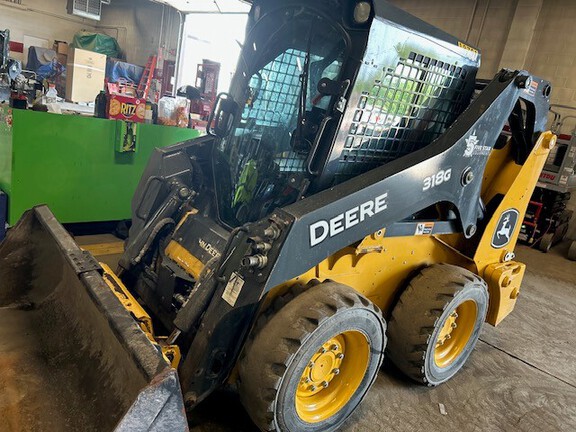
Some of the skid steers Pennsylvania dealers have listed on Heavy Listing right now:
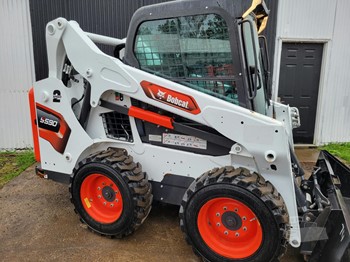
Find a skid steer or track loader worth inspecting
Browse used skid steers and compact track loaders from Pennsylvania dealers, with year, hours and asking price on each listing, then call the dealer to set up a cold start and a test run.
Browse used skid steers →The bottom line
A good used skid steer inspection follows the money and the safety systems. Get the paperwork and hours straight, start it cold, then work through the hydraulics, arm pins, quick attach, and the chain cases or undercarriage. Run it hard, walk around it again, and take shop quotes for everything in the “watch” column into the negotiation.
Frequently asked questions
What should I look for when buying a used skid steer?
Serial number and hours, a cold start, leaks at the cylinders and hoses, play in the arm pins, cracks and wedges on the quick attach, the chain cases and tires, a working seat bar interlock, and a test run with a loaded bucket.
How many hours is too many on a used skid steer?
It depends on age. A typical used skid steer runs about 190 hours a year, so compare the hours with the age and check that the wear matches the meter.
How do I inspect a used compact track loader?
Everything on the skid steer list, plus the undercarriage on both sides: tracks and guide lugs, rollers, idlers, sprockets, tension and final drives.
How do I check the chain case on a skid steer?
Ask when the oil was changed, look for metal in it if the plug can be pulled, check for leaks at the axles, and listen for a clunk when you change direction.
What if the seat bar does not stop the loader arms?
The interlock is broken or bypassed. Fix it before the machine works, and look harder at how it was maintained.