
A used excavator can look clean in photos and still hide a worn undercarriage, a tired pump or a cracked boom. The only way to know is to see it, start it and run it. This used excavator inspection checklist walks you through what to check before you go, on the walkaround, at a cold start and in a full function test, so you know what you are paying for, or when to walk away.
It works at a dealer’s lot, a private sale or an auction inspection day. If you only remember one thing: spend your time where the big repair bills are, not in the cab.
Before you go: paperwork and questions
Half of a good inspection happens before you see the machine. Ask the seller for:
- The serial number (PIN). Make sure it matches the plate on the machine and the paperwork. A missing or altered plate is a reason to walk away.
- Proof of ownership. Ask who owns it and whether there is a loan or lien on it. A UCC lien search and a theft registry check on the serial number are quick and worth doing.
- Service records. Oil changes, repairs and major work, with the hours for each.
- The hours, and whether the meter is original. Many listings leave hours out: 17 of the 52 used excavators on our price guide did not show them online. Our guide on how many hours is a lot shows what is normal for an excavator of each age.
- What it did and where. Utility trenching, demolition and quarry work wear a machine differently.
- A cold start. Ask them not to run it before you arrive. A warm engine hides starting problems and smoke.
Bring a flashlight, rags, gloves and your phone for photos. If you can, bring someone who has run an excavator: one operates while the other watches and listens.
How to inspect a used excavator: the walkaround
Walk all the way around with the flashlight before you climb in. Look at:
- Boom and stick. Cracks, fresh paint over welds and repair plates, especially near the boom foot, the cylinder mounts and where the boom meets the stick. Fresh paint on one small spot often covers a repair.
- Pins and bushings. With the bucket resting on the ground, have the operator gently feather the boom, stick and bucket controls back and forth while you watch each joint from a safe distance. Movement at the pin before the part moves, or a clunk, means worn pins and bushings. Dry pins with no fresh grease suggest greasing was skipped.
- Cylinders. Check the chrome rods for scoring, pitting and rust. A light film of oil on a rod is normal; oil that collects or drips at the seal means it is leaking.
- Hoses and lines. Cracks, rubbing, mismatched replacement hoses and oil on the frame. Fresh oil means a leak, and a freshly washed machine can hide one.
- Swing area. Oil around the swing motor and gearbox is a leak to price. Ask when the swing bearing was last greased.
- Counterweight, frame and blade. Cracks and dents from hard impacts. On a mini excavator, check the blade, its cylinder and pins too.
Excavator undercarriage inspection: where the money is
On a used excavator, the undercarriage is one of the most expensive systems to fix, so give it more time than anything else. Check both sides:
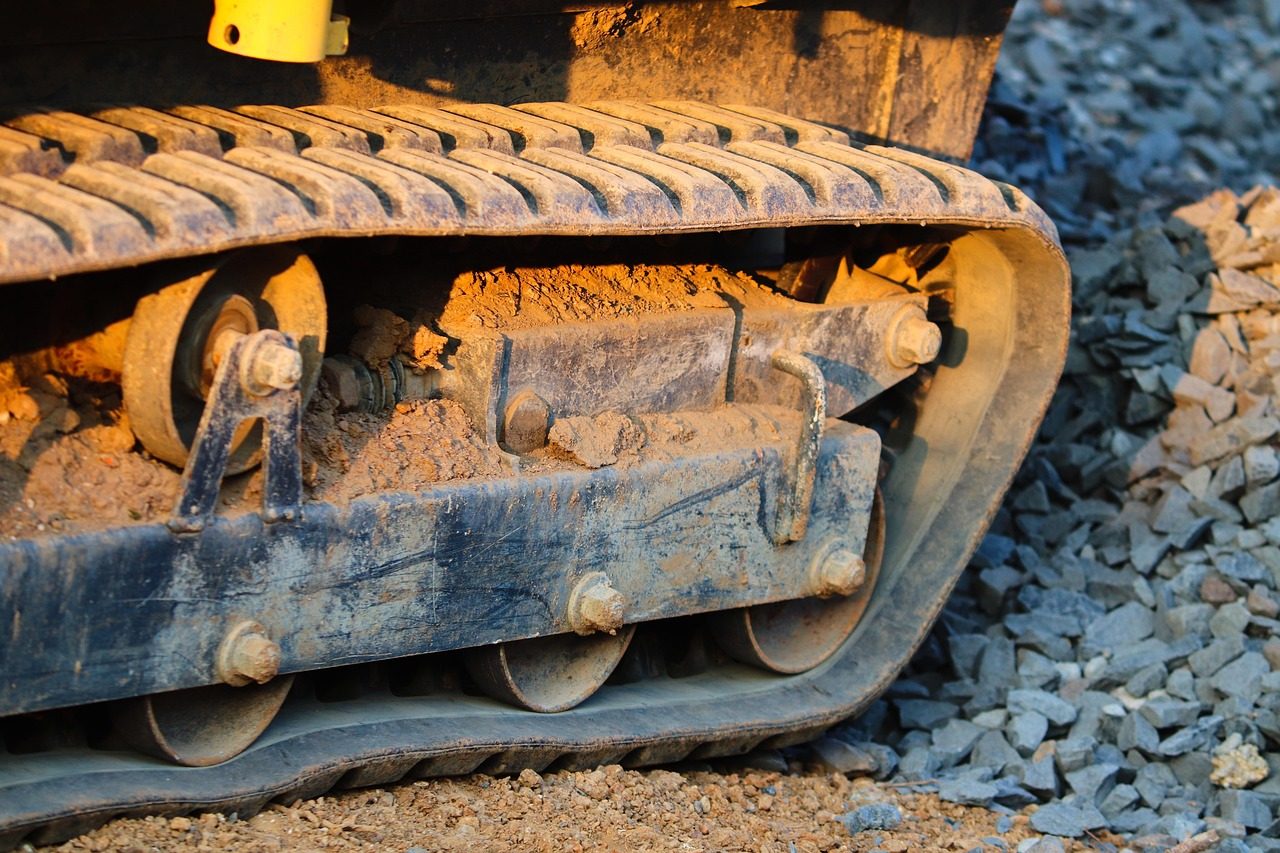
- Track chains and shoes. Worn grousers (the raised bars on the shoes), cracked or bent shoes, loose or missing bolts, and worn pins and bushings in the chain.
- Sprockets. Teeth worn to a sharp, hooked point mean the sprocket and the chain have worn together.
- Rollers and idlers. Flat spots, oil leaking from the seals, and carrier rollers on top that do not turn.
- Track tension. Too loose or too tight both speed up wear. Tracks that sag a lot, or an adjuster that has no travel left, mean the chain is near the end. Grease leaking from the adjuster is worth a question.
- Final drives. Oil around the final drive housing and the travel motor. A leak here, or a grinding noise when you travel, can mean an expensive repair.
- Rubber tracks. Common on mini excavators. Deep cuts, missing lugs and exposed steel cords.
- Track frame and wear pattern. Cracks and bends in the frame. One side much more worn than the other points to how the machine was used, or to an alignment problem.
A worn undercarriage does not mean you skip the machine. It means you get a quote for parts and labor and take it off your offer. A dealer or an undercarriage specialist can measure the wear and tell you how much life is left.
Bucket, teeth and attachments
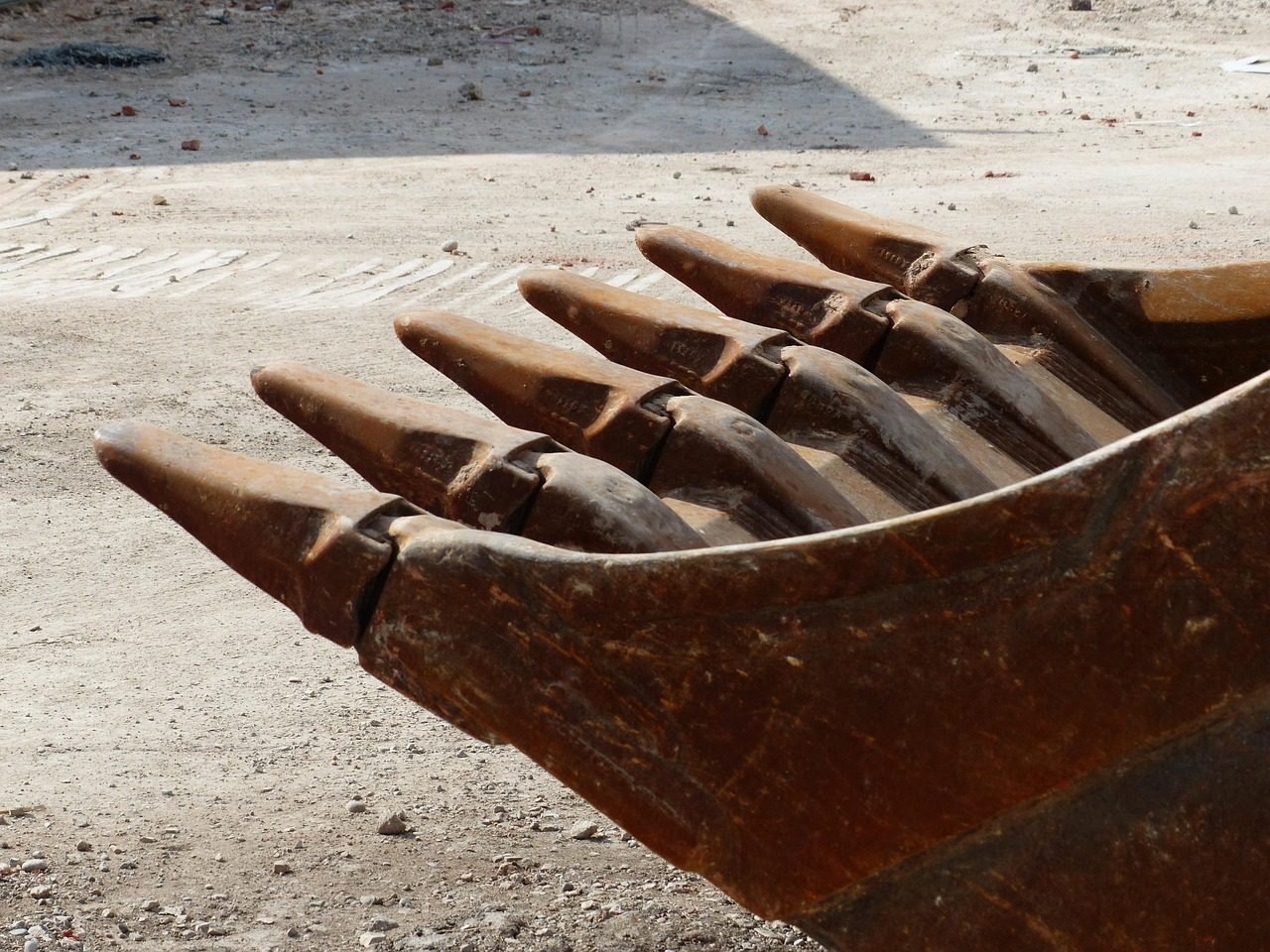
- Bucket, teeth and adapters. Look for cracks, worn or patched cutting edges and worn sides. Worn teeth are routine; cracked adapters cost more.
- Quick coupler. Check that it locks fully and that its safety pin or locking device works. Stay out of the area in front of the bucket while it is tested.
- Thumb and auxiliary hydraulics. If the listing includes a thumb, a hammer or other attachments, test them and check the auxiliary lines for leaks.
- What is included. Get the list of buckets and attachments in writing.
What to check in the cab
- Warning lights and fault codes. At key on, the warning lights should come on and then go out once the engine runs. A light that stays on, or active codes on the display, needs an explanation. Ask the dealer to read stored codes on newer machines.
- Hydraulic lockout. With the lockout lever engaged, the controls should do nothing. If the machine moves, that is a safety problem to fix before it works.
- Cab structure and guards. Check the glass, the doors and the protective structure (ROPS, TOPS or FOPS, depending on the machine). A protective structure that is bent, drilled or welded should be replaced, not patched.
- Controls and safety items. Joysticks and pedals should move smoothly and return to center. Check the seat belt, the horn and the travel alarm.
- Heat, A/C and wipers. Small items that matter through a Pennsylvania winter or summer.
- Hours and wear. Check the meter against what you were told. A seat, pedals and joysticks worn far more than the hours suggest is a reason to question it.
Under the hood: engine and fluids
Check fluids with the machine on level ground and the engine off. For the hydraulic oil, put the machine in the position shown on the decal or in the manual, because the level changes with the cylinder positions.
- Engine oil. Check the level and look for milky oil, which can mean coolant getting in, or a fuel smell.
- Coolant. Check the level, and look for oil in the coolant and leaks around the radiator and hoses.
- Hydraulic oil. Check the level and color. Dark, burnt-smelling or foamy oil is a warning, and milky oil means water in the system.
- Filters, belts and coolers. A dirty air filter on a “freshly serviced” machine, cracked belts or a radiator packed with dirt tell you how well it was looked after.
- Emissions equipment. On newer Tier 4 machines, ask whether the diesel particulate filter, the DEF system or the regeneration have given trouble.
The cold start
This is the one part of the inspection you cannot redo once the engine is warm. Watch and listen for the first few minutes:
- How it starts. It should start without long cranking.
- Smoke. Some smoke right at startup is normal on many diesels. Heavy black smoke can point to fuel or air problems, blue smoke to burning oil, and white smoke that does not clear to coolant or fuel problems.
- Noises. Knocking, ticking, or a whine or growl from the pump area that gets worse under load.
- Blow-by, later. Once the engine is warm, and only if it has an open breather tube, check for heavy, pulsing fumes. On many newer engines the breather is routed back into the intake, so leave this to a mechanic or a fluid analysis.
Find excavators worth inspecting
Browse used excavators from Pennsylvania dealers with the year, hours and asking price on each listing, then call the dealer to set up a cold start.
Browse used excavators →The function test: run every movement
Let the hydraulic oil reach working temperature first. Then test each function on its own and then several at once:
- Travel. Drive forward and back in both speeds. It should track straight, and both tracks should pull evenly. Turn both ways and listen at the final drives.
- Swing. Swing a full turn each way. It should be smooth, without jerks, clunks or play, and it should stop where you stop it.
- Swing bearing. With the stick out, press the bucket down until the front of the tracks lifts slightly, and watch where the upper structure meets the undercarriage. Rocking or a clunk at the bearing means wear.
- Boom, stick and bucket. Run each one through its full range. Movements should be smooth and reasonably quick, with no hesitation.
- Combined functions. Swing while you lift the boom and curl the bucket. A healthy machine does this without bogging down.
- Under load. Dig a few buckets of firm material if you can. Listen for the engine bogging and watch for the hydraulics slowing down. A machine that is slow everywhere can point to a tired pump.
- Drift. Raise a loaded bucket a little off the ground, away from people, and hold it still for a minute or two. If the boom or stick creeps down on its own, a cylinder or valve may be leaking inside.
Afterward, shut down and walk around the machine again. Leaks often show up only after the oil is hot and under pressure.
When should you bring in a professional?
Our view: on anything bigger than a mini excavator, or any machine you cannot see run, a few extra steps are worth it.
- Fluid analysis. A lab test of the engine and hydraulic oil can reveal internal wear you cannot see. One sample is a snapshot, so ask whether the seller has past results to compare.
- Third-party inspection. An independent inspector or a mechanic who knows the brand can check what you cannot, such as hydraulic pressures and engine diagnostics.
- Dealer inspection report. Many dealers already have one. Ask for it, and ask what was repaired before the machine was listed.
Inspecting at an auction
Auctions give you less time and usually sell “as is”. Use the inspection day for the walkaround, the undercarriage, the fluids and a start if allowed. Our guide on how to buy at an equipment auction covers inspection days and bidding, and the auction calendar lists upcoming sales in Pennsylvania.
Turning what you find into a price
An inspection is not pass or fail. List what needs fixing, get rough quotes for the big items and negotiate with them:
- Worn teeth, a cracked window, a leaking hose: small, but they add up.
- Worn undercarriage, leaking cylinders or worn pins and bushings: get a quote and take it off the price.
- Cracked structure, a weak pump, a leaking final drive, an engine that smokes heavily or a problem with the paperwork: walk away unless the price reflects a major repair.
Then compare the adjusted number with similar machines. Our guide to used excavator prices shows what Pennsylvania dealers ask by size, age and hours. You can also browse all used equipment on Heavy Listing.
Printable used excavator inspection checklist
- ☐ Serial number matches the plate and paperwork
- ☐ Ownership confirmed, no lien
- ☐ Service records and hours reviewed
- ☐ Boom, stick and frame free of cracks and suspicious welds
- ☐ No play in pins and bushings, pins greased
- ☐ Cylinder rods clean, no leaking seals
- ☐ Hoses in good shape, no fresh leaks
- ☐ Track chains, shoes and sprockets checked on both sides
- ☐ Rollers and idlers turn and do not leak
- ☐ Track tension and adjuster OK
- ☐ Final drives dry, no grinding when traveling
- ☐ Bucket, teeth, coupler and attachments checked
- ☐ Warning lights go out after start, no active fault codes
- ☐ Hydraulic lockout works
- ☐ Engine oil, coolant and hydraulic oil look clean
- ☐ Cold start: starts easily, no heavy smoke
- ☐ Travel straight in both speeds
- ☐ Swing smooth both ways, no play at the swing bearing
- ☐ Boom, stick and bucket smooth and quick, also combined
- ☐ No drift with a loaded bucket held up
- ☐ Second walkaround after the test: no new leaks
- ☐ Repairs listed and priced for the negotiation
Common mistakes
- ❌ Inspecting a machine that is already warm. ✅ Ask for a cold start.
- ❌ Trusting a freshly washed machine. ✅ Look for leaks again after the function test.
- ❌ Spending the visit in the cab. ✅ Spend the most time on the undercarriage, the hydraulics and the structure.
- ❌ Testing functions cold and one at a time. ✅ Get the oil hot and run combined functions under load.
- ❌ Treating what you find as pass or fail. ✅ Price the repairs and negotiate.
- ❌ Skipping the paperwork. ✅ Match the serial number and confirm ownership before you pay.
The bottom line
A good used excavator inspection follows the money: paperwork first, then the undercarriage, the hydraulics and the structure, then a cold start and a full function test with hot oil and a load in the bucket. Write down what you find, price the repairs and compare with similar machines. If something major is unclear, a fluid analysis or a professional inspection costs far less than a wrong purchase.
Ready to look at machines?
Browse used excavators and mini excavators from Pennsylvania dealers and contact the dealer to set up an inspection.
Browse used excavators →Frequently asked questions
What should I check when buying a used excavator?
The paperwork and serial number, the undercarriage and final drives, the hydraulics (cylinders, hoses, pump), the boom and stick for cracks, the pins and bushings for play, the engine at a cold start, and every function under load, including combined movements and drift.
What is the most expensive thing to fix on a used excavator?
Major engine and hydraulic pump repairs, final drives and a worn undercarriage are among the biggest bills. That is why those areas deserve the most time in an inspection, and why a fluid analysis can be worth it.
How do I check excavator hydraulics?
Check for leaks and the oil level and color, run every function with the oil hot, alone and combined, then do a drift test with a loaded bucket and look for new leaks.
How do I check an excavator undercarriage?
On both sides, check the shoes and grousers, sprocket teeth, rollers and idlers, final drives and track tension. For the remaining life, have a dealer or undercarriage specialist measure it.
Should I get a used excavator inspected by a professional?
For a large purchase, yes. An inspection or fluid analysis finds internal wear you cannot see, and the report helps you negotiate.