If you buy used iron in Pennsylvania, you have plenty of equipment auctions to choose from. In a single month you can bid on skid steers in Shippensburg, wheel loaders in Seven Valleys and tri-axle dump trucks in Marietta, often from your phone in the cab. Finding a sale is easy. Knowing which one is worth a day off the job, what the final invoice will really say, and how you will get the machine home is harder.
This guide covers the equipment auctions in PA that run on a regular schedule, the three formats you will run into, every cost that lands on top of the hammer price, and a checklist for auction day. Heavy Listing lists both auctions and dealer equipment, so we have no reason to steer you to one or the other. Start with the live calendar below. It updates as auctioneers publish their dates.
Upcoming equipment auctions in Pennsylvania
These are the next construction, farm and truck auctions on our calendar. Each one links to the auctioneer’s own catalog, where the bidding actually happens.
McGrew’s 11/10 Tractor & Construction Equipment Auction
Kurtz Trading November 11th Equipment Auction
McGrew’s 11/17 Timed Online Auction
McGrew’s 11/17 No Reserve Dealer Equipment Auction
Shetron November Construction & Farm Equipment Auction
Hess Ring 4 Timed Auction (December)
See every date in the full auction calendar, or browse by month, for example equipment auctions in December 2026.
Who runs equipment auctions in PA?
Most heavy equipment sold at auction in Pennsylvania goes through a short list of regional auctioneers. They are not interchangeable: each has its own rhythm, its own mix of equipment and its own rules for bidding and removal.
| Auctioneer | Where | What they sell | How often |
|---|---|---|---|
| McGrew Auction Company | Seven Valleys (York County) | Tractors, construction equipment, attachments; dealer consignments | Monthly live sale plus timed online sales |
| Shetron Auction & Equipment | Shippensburg | Construction and farm equipment in two rings: machines, then attachments and smalls | Monthly, usually a Wednesday near the end of the month |
| Hess Auctioneers | Marietta (Lancaster County) | Heavy trucks, trailers, construction, landscaping and aerial equipment, several rings at once | A handful of large sales a year |
| PA Auction Center | East Earl (Lancaster County) | Heavy equipment, skid loaders, forklifts, trucks, trailers, lawn and garden, tools | Monthly consignment sale |
| Kurtz Trading | Littlestown (Adams County) | Construction and farm equipment and attachments | Periodic on-site and virtual auctions |
Smaller houses, such as Marion Auction in Chambersburg and Chesney Auctioneering in Belleville, run seasonal consignment sales. They are worth watching if you farm or build in central Pennsylvania, because a local sale usually means a short haul home.
Live, online or timed: which auction format is it?
The word “auction” covers three very different ways to buy. Knowing which one you are walking into changes how you prepare.
Live auctions with online bidding
An auctioneer calls the sale on site, ring by ring, and online bidders compete in real time through a bidding platform. Most of the big monthly sales in PA work this way. You can stand next to the machine or bid from home, but the pace is fast. A skid steer can sell in under a minute, so have your number ready before your lot comes up.
Online-only (virtual) auctions
The sale may still be called live, but every bid comes in online, and the equipment can sit at several different yards. Check where each unit is before you bid. Pickup and hauling costs depend on it.
Timed online auctions
Each lot has a closing time, usually days after bidding opens, much like an eBay listing. Many timed sales use a “soft close”: a bid in the last few minutes extends the clock. Attachments, parts and smaller equipment often sell this way.
Example:
❌ Wrong: “It’s online, so I’ll throw a bid in the night before it closes and pick it up whenever.”
✅ Right: “I checked the closing time, the soft-close rule, the pickup address and the removal deadline before I bid.”
How bidding works on auction day
The mechanics are simple, but first-timers trip on the details. Once you are registered you get a bidder number, in person or tied to your online account. Every bid you place is a binding offer under that number. New to bidding? Follow our step-by-step guide to buying at an equipment auction.
The auctioneer opens each lot and moves up in increments. On a live sale, the ring crew (bid spotters) watch the crowd and call out bids, and the clerk records the winning number. Online, you click to bid at the current increment, or set a maximum and let the platform bid for you up to that amount, where the platform offers it.
Two habits will save you money. First, decide your number before the lot opens, not while the price is climbing. Second, watch a few lots sell before yours comes up, so you get a feel for the pace and how far the auctioneer jumps between bids.
What you really pay at an equipment auction
The hammer price is only the start. Before you set a maximum bid, add up everything that will appear on the invoice:
- Buyer’s premium: a percentage the auction house adds to the winning bid. It varies by auctioneer and is often tiered, so the rate on a $5,000 attachment can differ from the rate on a $90,000 excavator. See what Pennsylvania auctioneers charge in Buyer’s Premium Explained.
- Online bidding fee: some platforms add a separate fee when you win online instead of in person.
- Payment surcharge: check which payment methods are accepted. Some terms add a fee for paying by credit card.
- Sales tax: Pennsylvania charges 6% state sales tax, plus 1% in Allegheny County and 2% in Philadelphia. Equipment used predominantly in farming can be exempt with a completed Pennsylvania Exemption Certificate (REV-1220), so bring it if it applies to you.
- Loading and hauling: loading may be free or charged per unit. Hauling is on you.
- Storage: miss the removal deadline and daily storage fees usually apply.
Tax rates and exemptions are set by the state, not by the auctioneer. The Pennsylvania Department of Revenue sales tax page is the source to check, and your accountant is the person to ask about your own situation.
Rather skip the buyer’s premium?
Dealers on Heavy Listing sell directly. You call them, negotiate and buy, with no buyer’s premium on top of the price you agree.
Browse equipment for sale →How to prepare before auction day
- Register early: most auctioneers require registration and a deposit or card on file before you can bid. Online bidders often need approval a day or more ahead.
- Read the terms of sale: premium, payment methods, payment deadline, removal deadline, and whether the sale is absolute (no reserve) or subject to the seller’s approval.
- Study the catalog: note lot numbers, hours, serial numbers and photos. Run the serial numbers past a dealer or the manufacturer if you want service history.
- Inspect in person if you can: the preview is the only time you can put your hands on the machine. Start the engine, cycle the hydraulics, and look for leaks, worn pins and bushings, and undercarriage wear.
- Set a hard maximum per lot: write it down, all costs included, and stick to it.
- Line up transport: know the machine’s weight and dimensions, and book a hauler before the sale, not after.
What to check at an auction preview
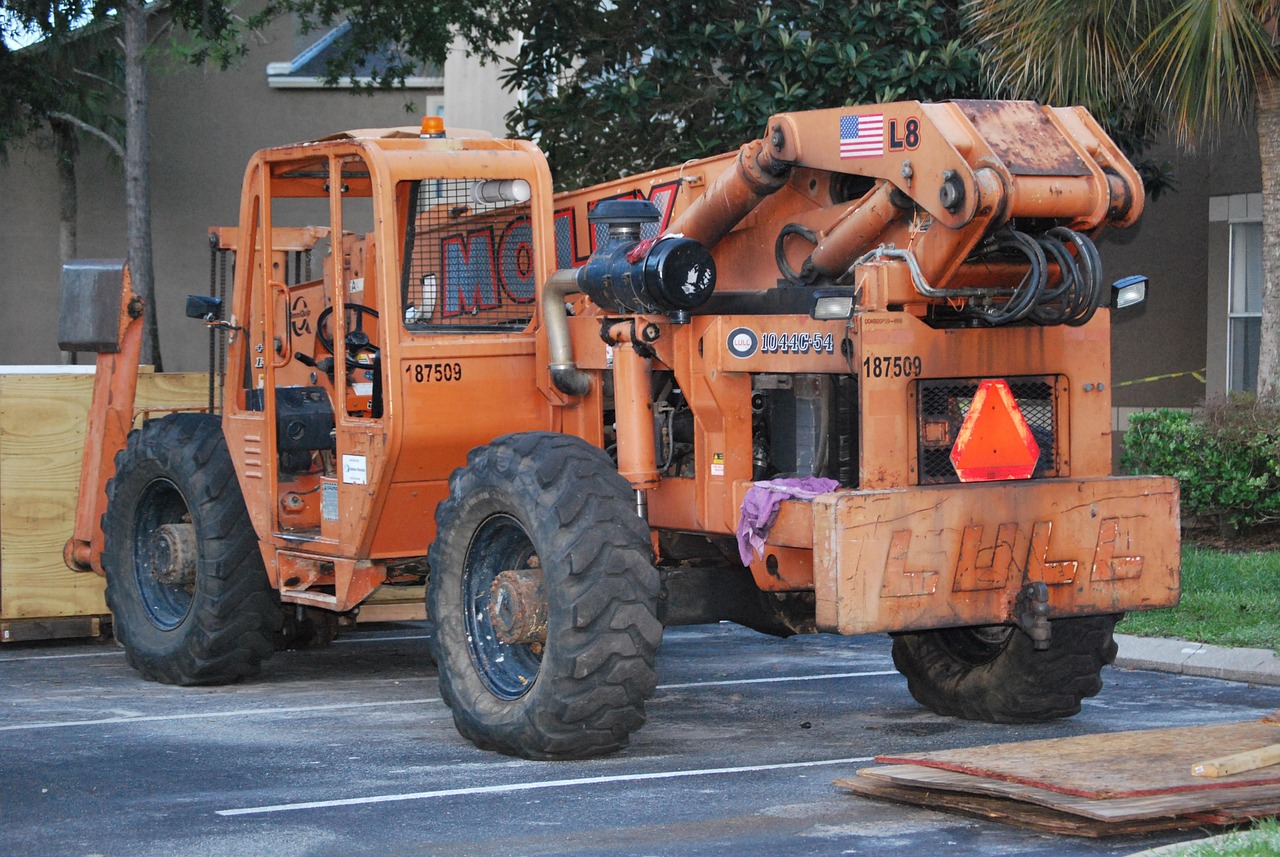
Most equipment at auction sells as-is, where-is. That makes the preview your only chance to find problems. Spend your time on the ones that cost real money:
- Engine: a cold start if they will let you, blow-by, smoke color, and any warning codes on the display.
- Hydraulics: slow or jerky cylinders, leaks at fittings, and the condition of the hoses.
- Undercarriage: on tracked machines, rollers, idlers, sprockets and track tension. A new undercarriage can eat a big share of what the machine is worth.
- Pins and bushings: play in the loader arms, boom and bucket linkage.
- Cab and electrics: gauges, lights, the display and the controls all working.
- Hour meter versus wear: if a machine shows low hours but worn pedals, seat and controls, ask why.
If you cannot make the preview, ask the auctioneer for a walk-around video or a cold-start clip. If nobody can tell you how the machine runs, bid as if it needs work.
After you win: payment, paperwork and pickup
Winning the lot starts a short clock. Payment is usually due the day of the sale or within a day or two, by the methods listed in the terms. Wire transfers can take time to clear, so set them up with your bank before the sale if you plan to use one.
Once you pay, you get an invoice or bill of sale. For titled units such as trucks and trailers, ask the auctioneer how title transfer and tax are handled. It is not always the same process as for a loader or a tractor. Keep the paperwork with the machine; you will need it for insurance and, later, when you sell.
Then comes pickup. Check the loading hours, bring the right trailer and straps, and confirm your hauler has the address of the yard where the unit actually sits.
Auction or dealer: which is right for you?
Auctions can deliver a good price. They are not always the cheapest or the safest way to buy, and the right answer depends on how soon you need the machine and how much risk you can carry. A quick comparison:
| Equipment auction | Buying from a dealer | |
|---|---|---|
| Price | Set by bidders; can be below market on a slow day | Asking price, usually negotiable |
| Fees | Buyer’s premium, online fees, tax | Tax; no buyer’s premium |
| Inspection | Preview days only; as-is | Any time, often with service records |
| Timing | You buy on the auctioneer’s schedule | You buy when you need it |
| After the sale | Pay and remove within days | Delivery may be arranged |
| Financing and warranty | Arrange your own financing; no warranty | Financing and warranty may be available |
Plenty of buyers use both. They watch the auction calendar for deals and price the same machine with dealers in Pennsylvania before they bid. If the expected auction price and the dealer’s price end up close, the dealer’s inspection access and warranty options can be worth the difference.
Common mistakes at equipment auctions
1. Bidding on emotion
Two bidders who both “need” the machine can push the price past what a dealer would charge. Write your maximum on the catalog page and do not go past it, not even by one increment.
2. Forgetting the removal deadline
Auctions usually give you a few days to pick up. Miss it and storage fees start, and some terms let the auctioneer resell the unit.
3. Ignoring the location on virtual sales
A machine in a virtual auction can sit three hours from the auctioneer’s yard. The haul can wipe out whatever you saved on the bid.
4. Not reading “subject to” lots
Some lots sell only if the seller approves the final bid. You can win the bidding and still go home without the machine.
Running an auction in Pennsylvania?
If you are an auctioneer or a dealer who runs equipment sales, your auctions can appear on the Heavy Listing auction calendar for free, with a link to your catalog. Featured placement puts your sales at the top of the calendar and on our home page.
The bottom line on equipment auctions in PA
Equipment auctions in PA are a real option for contractors and farmers who do their homework. The buyers who come out ahead are the ones who know the format before they register, price the full invoice instead of the hammer, and see the machine before they bid.
- ✓ Check the calendar and pick sales close enough that hauling does not eat the savings.
- ✓ Set a written maximum that already includes premium, fees and tax.
- ✓ Compare against dealer prices before auction day, so you know what “a deal” actually is.
Find your next machine at the right price
Compare upcoming auctions with dealer listings across Pennsylvania, in one place, before you commit to a bid.
See the auction calendar →Frequently asked questions
Where can I find heavy equipment auctions in Pennsylvania?
Regional auctioneers such as McGrew Auction Company (Seven Valleys), Shetron Auction & Equipment (Shippensburg), Hess Auctioneers (Marietta) and PA Auction Center (East Earl) hold regular sales. The Heavy Listing auction calendar lists upcoming dates with links to each catalog.
Can I bid online at Pennsylvania equipment auctions?
Yes. Most large sales in PA accept online bidding through a platform linked from the auctioneer’s website, and many also run timed online-only auctions. Register and get approved before the sale.
What is a buyer’s premium?
It is a fee the auction house adds to the winning bid, usually a percentage. It varies by auctioneer and price range, so check the terms of each sale before you bid.
Do I pay sales tax at a Pennsylvania auction?
Generally yes: 6% state sales tax, plus local tax in Allegheny County and Philadelphia. Equipment used predominantly in farming may be exempt with a valid exemption certificate.
Are auction prices lower than dealer prices?
Sometimes, but not by default. Once you add the buyer’s premium, fees and hauling, an auction win can cost about the same as a negotiated dealer price. Compare the all-in numbers.
How long do I have to pick up equipment after an auction?
It depends on the auctioneer, but it is usually a few days. After the deadline, storage fees typically apply.