High flow vs standard flow skid steer: the option is one line on a spec sheet and one switch in the cab, but it decides which attachments the machine can really run. Put a forestry mulcher or a cold planer on a standard-flow loader and it will turn, slowly, while the oil heats up and the job drags. Buy high flow you never use and you paid for hardware that sits idle.
This guide explains what the gpm and psi numbers mean, how to turn them into hydraulic horsepower, what the main manufacturers publish for standard and high flow, which attachments need which, and how to confirm that a used machine really has high flow before you pay for it. If you are still choosing the machine size first, start with our guide to skid steer sizes.
What gpm and psi mean on the auxiliary circuit
The auxiliary hydraulics are the couplers on the front of the loader arms that feed oil to an attachment’s motor or cylinders. Two numbers describe that circuit:
- Flow, in gallons per minute (gpm). How much oil the pump sends to the attachment. Flow sets speed: how fast a mulcher drum or a planer drum spins.
- Pressure, in pounds per square inch (psi). How hard the oil can push before the relief valve opens. Pressure sets force: how much torque the motor has before it stalls in a stump or a thick patch of asphalt.
Standard flow is the circuit every skid steer ships with. CASE puts the typical standard-flow range at 17 to 24 gpm and high flow at 30 to 38 gpm, both at roughly 3,000 to 3,500 psi. Current large-frame models now push past both ends of that range, as the table further down shows.
High flow adds a second pump section or a larger pump so the couplers get more oil at the same pressure. Some makers also sell a high-pressure tier above it (Bobcat Super Flow, Cat XPS, CASE Enhanced High Flow), which we cover in its own section.
Hydraulic horsepower: the number that actually matters
Flow alone does not tell you what an attachment can do. Multiply flow by pressure and you get the power available at the couplers:
Hydraulic hp = gpm × psi ÷ 1,714
You can check the formula against Bobcat’s own sheet. The S770 lists 23 gpm standard and 36.6 gpm high flow at 3,500 psi:
- Standard: 23 × 3,500 ÷ 1,714 = 47 hp. Bobcat publishes 47 hp.
- High flow: 36.6 × 3,500 ÷ 1,714 = 74.7 hp. Bobcat publishes 74.7 hp.
That is the jump high flow buys you on a 92 hp machine: roughly 28 more horsepower at the attachment. It is also why a high-flow attachment on a standard-flow loader feels weak. The attachment was sized for 70 to 90 hp of hydraulic power and gets less than 50.
Keep in mind that the formula gives theoretical power at the stated flow and pressure; real output is lower once you count pump and motor losses. And every hydraulic horsepower comes out of the engine. A machine cannot put 90 hp into a mulcher and drive up a hill at full speed at the same time.
Standard vs high flow by model: manufacturer numbers
These figures come from the manufacturers’ own spec pages, sheets and brochures. Labels differ between brands (Deere publishes “pump flow”, Bobcat and Kubota “auxiliary flow”, Cat “loader hydraulic flow”), so read them as close but not identical measures. Where the maker does not publish hydraulic horsepower, we calculated it with the formula above and marked it.
| Model | Standard flow | High flow | Pressure | Hydraulic hp (std / high) |
|---|---|---|---|---|
| Bobcat S770 (wheels) / T770 (tracks) | 23 gpm | 36.6 gpm | 3,500 psi | 47 / 74.7 (Bobcat, S770 sheet) |
| Bobcat T870 (tracks) | 23 gpm | 36.6 gpm | 3,500 psi relief at couplers | 47 / 74.7 (calculated) |
| John Deere 332G (wheels) / 333G (tracks) | 25.0 gpm | 41.1 gpm | 3,450 psi at couplers | 50 / 83 (Deere) |
| John Deere 333 P-Tier (tracks) | 25 gpm | 44 gpm | 3,500 psi at couplers | 51.1 / 89.9 (Deere) |
| Cat 289D3 (tracks) | 23 gpm at 3,335 psi | 32 gpm at 4,061 psi (High Flow XPS) | See flow column | 44 / 76 (Cat) |
| Cat 299D3 XE (tracks) | 23 gpm at 3,335 psi | 40 gpm at 4,061 psi (XE) | See flow column | 44 / 94 (Cat) |
| Kubota SVL97-2 (tracks) | 23.1 gpm | 40.0 gpm | 3,553 psi | 48 / 83 (calculated) |
| CASE TV450B (tracks) | 24.2 gpm | 39.5 gpm; or 35.0 gpm at 4,000 psi (EHF) | 3,450 psi | 49 / 80; EHF 82 (calculated) |
Sources: Bobcat S770, Bobcat T770, Bobcat T870, Deere 332G sheet, Deere 333G sheet, Deere 333 P-Tier sheet, Cat specs for the 289D3/299D3 family and 299D3 XE, Kubota SVL97-2 brochure, CASE TV450B. Current model specs; older model years of the same name can differ.
Standard flow is nearly the same everywhere, 23 to 25 gpm. The real spread is in the high-flow column, from 32 gpm on the Cat 289D3 to 44 gpm on the Deere 333 P-Tier. And the wheeled and tracked twins share the same hydraulics, so the high flow vs standard flow decision is separate from the skid steer vs track loader decision.
Super Flow, XPS and Enhanced High Flow: the high-pressure tier
Ordinary high flow raises flow at the same pressure. The top tier raises pressure too, which adds torque at the attachment motor:
- Bobcat Super Flow: 42 gpm at 4,061 psi on the S86 and T86, against 36.6 gpm at 3,500 psi for their high flow and 23 gpm at 3,500 psi standard, according to Bobcat’s launch release (September 2022). By the formula that is about 99.5 hp of hydraulic power. Bobcat aims it at pavement milling and land clearing.
- Cat High Flow XPS: Cat’s high-flow option on the 289D3 and 299D3 XE runs at 4,061 psi, which is why a 40 gpm Cat reaches 94 hp while a 40 gpm loader at 3,500 psi would land near 82 hp.
- CASE Enhanced High Flow (EHF): 35.0 gpm at 4,000 psi on the TV450B. CASE says it is only offered on larger machines with the engine power to feed it.
So an attachment rated for 4,000 psi will make its full torque only on a machine that delivers that pressure. Deere’s MK76 mulching head is rated at 6,000 psi maximum, so read the attachment’s pressure rating, not just its flow range.
Sources: Bobcat press release, Sept. 22, 2022, CASE: Go With the Flow.
Attachments that need high flow
The cleanest way to see the split is one manufacturer’s attachment catalog. John Deere publishes the required flow for each of its skid steer and track loader attachments. Compare these ranges with the 23 to 25 gpm a standard circuit delivers:
| Attachment (Deere model) | Flow range | Max pressure | Needs |
|---|---|---|---|
| Cold planers CP18G / CP24G / CP30G | 29 to 41 gpm | Not listed | High flow |
| Cold planer CP40G | 25 to 44 gpm | 4,000 psi | High flow |
| Mulching heads MH60D / MH72D | 24 to 45 gpm | 4,000 psi | High flow and severe-duty door |
| Mulching head MK76 | 30 to 45 gpm | 6,000 psi | High flow and severe-duty door |
| Snow blowers SB72M / SB84M | 27 to 35 gpm | Not listed | High flow |
| Snow blower SB84S (dual auger motors) | 35 to 45 gpm | Not listed | High flow |
| Rotary cutters RS72 / RX72 / RX84 | 30 to 45 gpm | Not listed | High flow |
| Stump shredder SS30 | 20 to 45 gpm | 4,000 psi | Low end of its range on standard; full speed needs more flow |
| Trenchers TR36B / TR48B / TR60B, high-flow motors | 27 to 35 or 36 to 44 gpm | 3,500 psi | High flow |
| Auger drive PA40 | 28 to 42 gpm | 3,500 psi | High flow |
Source: John Deere compact construction attachments catalog. Deere lists all four skid steer mulching heads as “requires high-flow machine and severe-duty door”.
CASE’s list lines up with this: cold planers, many snow blowers, rock saws, small mulchers and chipper/shredders on high flow; larger cold planers, larger mulchers and large rock saws on enhanced high flow.
Buyers often miss this: many high-flow attachments also need a case drain line: a third, smaller hose (3/8 in. on the Deere mulchers and planers) that returns leakage oil from the motor housing to the tank. Without a matching case drain coupler on the loader, the motor seal can blow. And mulchers and forestry heads usually need extra cab protection on top of high flow: Deere’s severe-duty door, or a forestry kit on other brands.
Attachments that run fine on standard flow
Most of what a skid steer does all day needs little or no auxiliary flow:
- Buckets and pallet forks: no auxiliary hydraulics at all, unless the bucket is a 4-in-1.
- Grapples and 4-in-1 buckets: they move cylinders, which need pressure more than flow.
- Augers: Deere’s PA15B drive runs on 6 to 17 gpm and the PA30B on 15 to 30 gpm. Only the big PA40 wants high flow.
- Brooms: Deere’s angle brooms and pick-up brooms run on 15 to 25 gpm.
- Brush cutters: Deere’s RC60B, RC72B and RC78B rotary cutters run on 15 to 25 gpm.
- Smaller snow blowers: the SB72E and SB84E are listed as standard flow, 15 to 27 gpm.
- Trenchers with standard motors: 14 to 22 gpm on the TC36 and TC48.
For a full list of what bolts onto the quick-attach plate and what each one needs, see our guide to skid steer attachments.
Do I need high flow? A quick test
Look at the attachments you will run in the next two or three years, not just this season. CASE puts it bluntly: having high flow and not needing it is better than needing it and not having it. We agree when the price gap is small, and less so when it means buying an older or higher-hour machine to get the option.
- ❌ “I’ll rent a mulcher a few times a year, standard flow will do.” ✅ Ask the rental yard what flow their mulching heads need before you count on it. Deere lists every one of its skid steer mulching heads as high flow only.
- ❌ Buying a standard-flow machine to move into snow removal with a big blower. ✅ Check the blower’s flow range first: Deere’s 84-inch blowers split into standard-flow (SB84E) and high-flow (SB84M, SB84S) models.
- ❌ Assuming more gpm always helps. ✅ Match the attachment’s flow range. Flow above its maximum can overspeed the motor or get dumped over a relief valve as heat.
- ❌ Comparing loaders by engine hp alone. ✅ Compare hydraulic hp at the couplers: gpm × psi ÷ 1,714.
- ❌ Paying extra for high flow on a machine that will only dig, grade and carry pallets. ✅ Put that money into hours, condition or a better undercarriage.
The rule of thumb: if the attachment list includes a mulcher, cold planer, stump grinder, high-flow trencher or a large two-stage snow blower, buy high flow. If it is buckets, forks, grapples, augers, brooms and a mid-size blower, standard flow does the job.
What high flow costs to own
High flow is a factory option, and a few makers also sell it as a field kit. New-machine option prices vary by dealer, so we do not quote one here. On the used market, the option tends to come on the larger, better-equipped machines, which makes a clean price comparison hard.
Our own data shows that. Of the 79 skid steers, compact track loaders and mini loaders listed by Pennsylvania dealers on Heavy Listing on November 12, 2026, 21 listings (20 track loaders and one skid steer) flag high flow. Their median asking price was $37,500. The 33 track loaders that do not flag it had a median of $36,900. That is not a “high flow is free” result: the flagged group mixes many age and hour profiles, and most listings without the flag simply do not say. For age and hour effects on price, see our used compact track loader prices.
Running costs are where high flow shows up. When a mulcher or planer pulls 80 to 90 hydraulic hp, the engine works near its rated load for hours, so fuel use per hour goes up compared with bucket work, and the oil gets hotter. That means:
- Clean coolers and radiator screens, especially in mulching, where chips pack the cooling package.
- Hydraulic oil and filters on the manufacturer’s schedule, not stretched.
- More attention to the coupler seals and case drain, which see the highest flow.
A machine that spent its life on a mulcher has used its hydraulic system much harder than one that ran a bucket. Ask what it ran. Our guide to common skid steer problems covers the hydraulic failures that follow.
How to confirm high flow on a used skid steer
“High flow” in a listing is a claim, not a test. Some dealers fill the field from a standard options list; some machines had the option and lost a part of it, and some had a kit added that never worked right. Check it yourself:
- Get the serial number and ask a brand dealer for the factory build. The build record shows whether high flow left the factory on that machine. Compare it with the spec for that exact model year; older units of the same model name can have different numbers than today’s sheet.
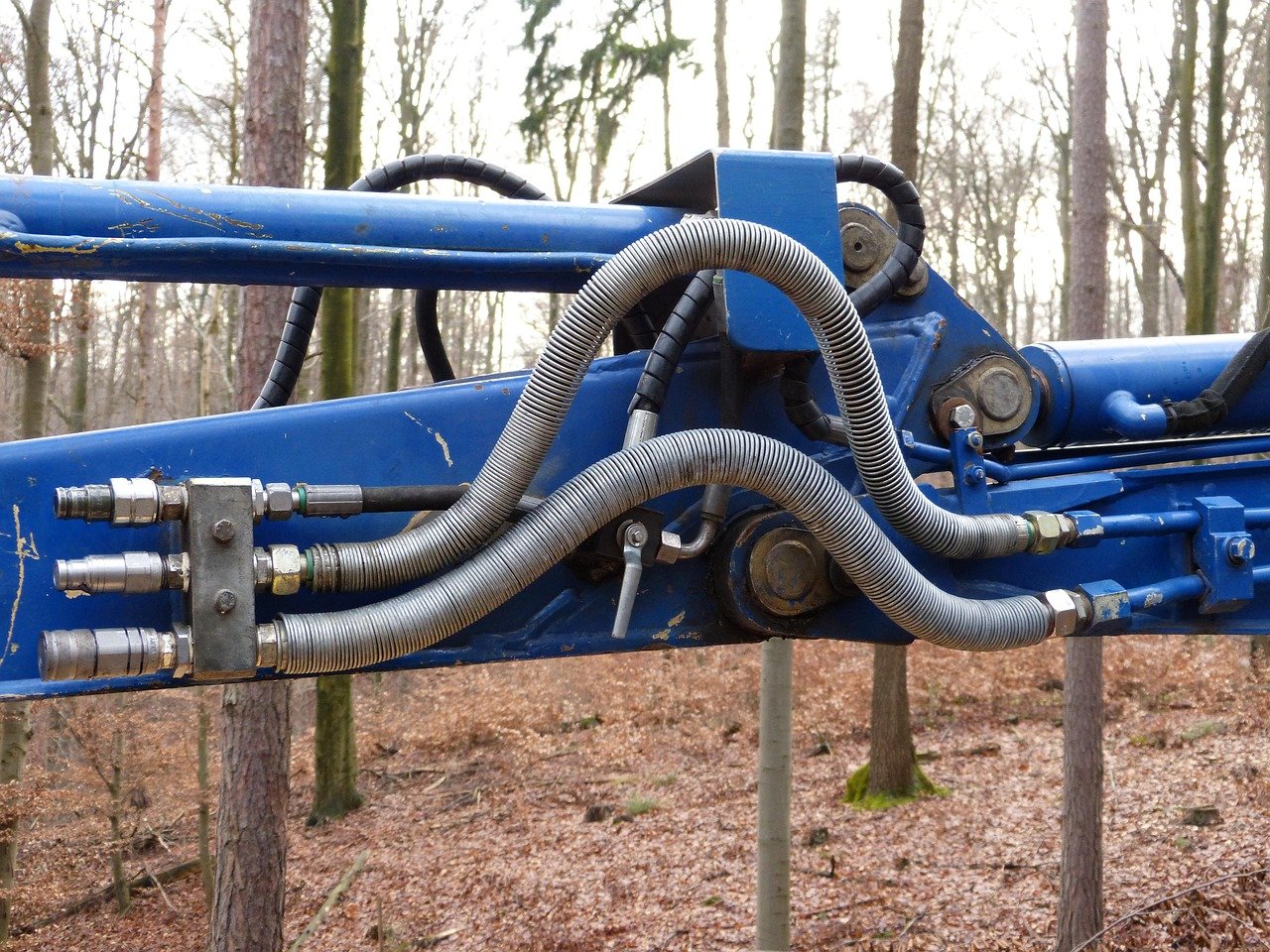
- Look at the couplers. High-flow machines usually have extra or larger couplers on the loader arm. Kubota’s SVL97-2 high-flow manifold carries both 1/2 in. and 3/4 in. couplers. Look for a case drain coupler as well, since most high-flow attachments need one.
- Check the cab. There should be a high-flow switch or a display menu that turns it on. If the switch is there but does nothing, the valve, wiring or pump section may be missing or dead.
- Put a flow meter on it. A hydraulic tester with a load valve, connected between the couplers, shows real gpm at the stated pressure with the engine at full throttle and the oil warm. A tired pump will show less flow as you load it. If you are spending real money on a high-flow loader for mulching or milling, this test is worth paying a mechanic for.
- Run a high-flow attachment. If the dealer has one, hook it up and watch for stalling, slow recovery or a fast climb in oil temperature.
Fold these checks into the full used skid steer and CTL inspection checklist, which covers hours, pins, drive and the rest of the hydraulic system.
High-flow loaders for sale in Pennsylvania
On November 12, 2026, the 21 listings that flag high flow all came from Littlestown, PA listings whose dealer fills in that field; other dealers’ listings do not say either way. Most are compact track loaders:
| Model | Listings | Asking prices |
|---|---|---|
| Bobcat T770 (tracks) | 7 | $25,000 to $49,500 |
| Bobcat T870 (tracks) | 1 | $39,500 |
| Bobcat T590 (tracks) | 2 | $29,500 and $34,500 |
| Bobcat S770 (wheels) | 1 | $29,500 |
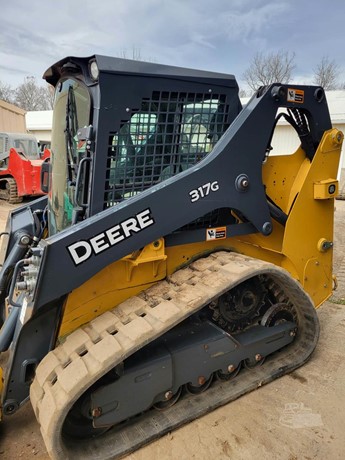
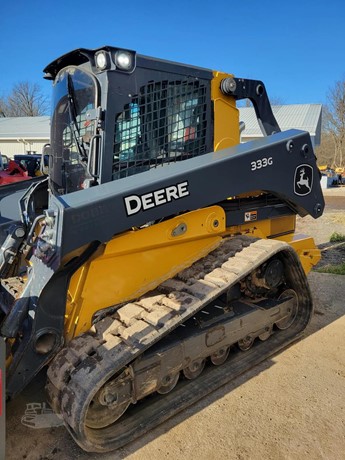
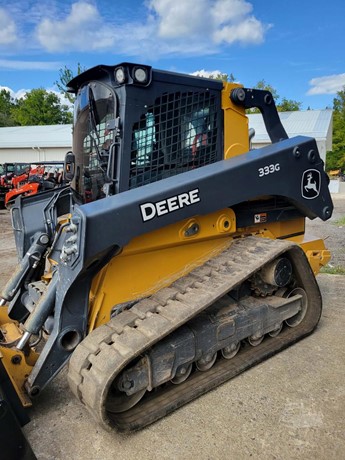
| John Deere 333G (tracks) | 2 | $29,500 and $34,500 |
| Kubota SVL97-2, SVL95-2, SVL90-2 (tracks) | 4 | $22,500 to $52,500 |
| CASE TV450B, TR340B, TR320 (tracks) | 3 | $34,500 to $45,500 |
| Cat 259D3 (tracks) | 1 | $34,500 |
Source: Heavy Listing inventory, Pennsylvania dealers, November 12, 2026. “High flow” as stated in the dealer’s listing; confirm with the dealer and the checks above.
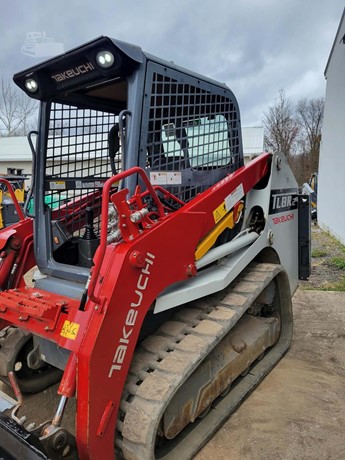
Only one wheeled skid steer in the set flags high flow. If you need high flow on wheels, widen the search or ask dealers directly, since many listings leave the field blank. Some of the track loaders listed right now:
Find a high-flow track loader near you
Browse used compact track loaders from Pennsylvania dealers, check the specs and contact the dealer directly to confirm the hydraulics.
Browse used track loaders →The bottom line
In the high flow vs standard flow skid steer choice, start from the attachments, not the machine. Write down every tool you expect to run, look up its flow range and pressure, and compare that with the gpm and psi at the loader’s couplers. If any of them needs 30 gpm or more, buy high flow and make sure it has the case drain and guarding to match. If none of them do, standard flow is cheaper to buy, easier on the machine, and does the job. Lift path is the other spec that decides what a loader is good at; see radial vs vertical lift.
Frequently asked questions
How many gpm is high flow on a skid steer?
On the current models in this guide, high flow runs from 32 gpm (Cat 289D3, at 4,061 psi) to 44 gpm (John Deere 333 P-Tier). Bobcat’s S770 and T770 deliver 36.6 gpm and the Kubota SVL97-2 40 gpm. Standard flow on the same machines is 23 to 25 gpm.
Can I run a high-flow attachment on a standard-flow skid steer?
Some will turn, but slowly and with little power, and the oil runs hot. CASE warns it can damage the attachment or the loader. Check the attachment’s minimum flow: if it is above what your loader delivers, do not run it.
What is Super Flow on a Bobcat?
Super Flow is Bobcat’s top hydraulic option on the S86 and T86: 42 gpm at 4,061 psi, against 36.6 gpm at 3,500 psi for high flow. The higher pressure adds torque for milling and land clearing.
How do I calculate skid steer hydraulic horsepower?
Multiply flow in gpm by pressure in psi and divide by 1,714. A Bobcat S770 on high flow gives 36.6 × 3,500 ÷ 1,714 = 74.7 hp, the same figure Bobcat publishes.
Does a forestry mulcher need high flow?
Yes, in practice. John Deere lists all of its skid steer mulching heads as requiring a high-flow machine and a severe-duty door, with flow ranges from 17 to 45 gpm. Mulchers also need a case drain line.
Is high flow worth it on a used skid steer?
It is if you will run a mulcher, planer, stump grinder, high-flow trencher or large snow blower, and if the system tests out with a flow meter. Do not pay extra for it on a machine that will only run buckets, forks and grapples.