
Compact track loader tracks wear out faster than any other part of the machine and cost more than most to replace. A worn set on a used CTL is money you will spend in the first season, so it belongs in the price you offer. This guide covers how long CTL tracks last and what shortens their life, when to replace them, how to check rubber track tension the way the manufacturers describe it, which tread pattern fits which work, and what to look at in the rollers, idlers and sprockets before you buy used. Manufacturer figures come from their own published guides and sheets, linked below. Where nobody publishes a number, we say so.
What the undercarriage on a compact track loader is made of
On each side of a CTL you have:
- The rubber track: rubber over continuous steel cords and metal cores (Bobcat calls them “imbeds”). Tread lugs face the ground; guide lugs on the inside keep it on the rollers.
- The drive sprocket: turned by the drive motor through a final drive, its teeth pull the track around.
- The front idler: guides the track and moves to set its tension.
- The rollers: carry the machine’s weight along the bottom of the track.
- The tensioner: on most machines a grease cylinder behind the idler. Grease in to tighten, out to loosen.
- The track frame: holds it all, and packs with mud, rock and wire if nobody cleans it.
These parts wear together. Track maker Camso’s CTL track guide explains that sprockets, idlers and rollers are heat-treated, and wear speeds up once that hard layer is gone. A new track on a worn undercarriage “will drastically reduce your overall track life.” Remember that when a listing says “new tracks.”
How long do compact track loader tracks last?
No manufacturer we checked publishes an average track life for real work. The closest thing is Bobcat’s track buying guide, which rates its patterns by hours “based on usage in moderate working conditions”:
| Bobcat track pattern | Hour rating | Bobcat lists it as best for |
|---|---|---|
| H-pattern | 400+ | General use: rock, concrete, mud, slopes |
| Hex pattern | 600+ | Turf, golf courses, landscaping |
| Multi-bar lug | 800+ | Sand, dirt, wet ground, hard flat surfaces |
| Zig zag | 800+ | Snow, mud, clay, slopes |
| Standard C-pattern | 800+ | General construction, dirt, mud |
| Premium C-pattern | 1,000+ | Construction, rock, demolition (not snow) |
Sources: Bobcat Compact Loader Tracks buying guide (PDF). Ratings apply to Bobcat-brand tracks.
Warranties are a second reference. John Deere backs its CTL rubber tracks for 18 months or 1,500 hours, whichever comes first (Deere rubber track guide). Kubota’s limited warranty covers SVL rubber tracks for 12 months or 1,000 hours, against 24 months or 2,000 hours for the machine. Warranties cover defects, not wear, so they are not a life expectancy.
The work decides where your tracks land.
Deere lists what rubber tracks are “not designed or recommended for”: sharp or angular rock, soil with concrete and rebar, landfill work and long high-speed roading. It says hard-road travel should never exceed 10 percent of a day’s operation, and that fuel, oil, salt, fertilizer and manure damage the rubber.
Bobcat’s CTL maintenance guide adds that the spin turn, one track stopped while the other drives, puts “extreme lateral force” on the track, sprocket and rollers, and calls the three-point turn “the single most effective technique change for extending track and undercarriage life.”
A landscaper in topsoil and a demolition crew on broken concrete can buy the same track and get very different hours. On a used machine, the kind of work it did tells you more about the tracks than the hour meter.
Signs it is time to replace CTL tracks
Deere’s guide gives the clearest replacement rules we found:
- Tread depth: “replace rubber tracks when 40 percent of the tread depth remains when compared to a new set of tracks.”
- Exterior damage: cracks, missing lugs and exposed steel cables are “the first indication” a track should go.
- Worn sprockets: a track running loose on worn teeth can skip and derail.
- Tension that will not hold: rubber tracks lose tension over time; one that goes slack days after adjustment points to the track or the tensioner.
For the 40 percent rule you need the new lug height for that track, which the dealer or track maker can give you. Measure with a tread depth gauge at several points on both tracks, not just the spot that looks best. Then walk the inside of each track and look for cracks across the lugs or along the edges, steel cords showing anywhere, torn or missing guide lugs, and metal cores bent or bare. Light chipping is normal on a working machine. Exposed cords and missing cores are not.
How to check rubber track tension on a CTL
Tension is set by sag: how far the track hangs between the rollers. Every manufacturer we checked puts the correct figure in each model’s operator’s manual. In Bobcat’s words: “The correct deflection range for each model is specified in the Operation and Maintenance Manual.” We could not open an official manual with a sag figure for a current CTL, so we do not print one. Use the manual for your model and serial number, or ask the dealer.
The method is close to the same across brands. This is the general procedure in Camso’s guide, which also says to follow the machine maker’s instructions:
- Drive forward a short distance so tension evens out around the undercarriage.
- Level the bucket and lower it to the ground.
- Use bucket down pressure to raise the front about 8 inches.
- Measure from the inside edge of the track to the bottom of the middle roller.
- Compare with the manual and adjust with grease at the tensioner.
Camso gives 25 mm (about 1 inch) of sag for small machines and 50 mm (about 2 inches) for large ones as general guidelines only. Deere says its adjustment takes a box-end wrench and a grease gun, “in just minutes per side.” Block the machine before working near it, and loosen the grease valve slowly: the grease is under high pressure.
How often: Bobcat makes tension part of the daily pre-start walk-around, and its T590 service schedule lists “Track Tension” at every 50 hours. Deere says weekly or as needed. Bobcat warns that packed material can change effective tension “within a single shift,” so check again after a day in clay.
Too tight or too loose: per Deere, “excessive tightness can accelerate component wear, and looseness can cause de-tracking.” Bobcat adds that a loose track can ratchet, “where drive lugs repeatedly skip the sprocket.”
❌ Cranking the track tight so it never comes off. It stays on and takes the idler bearings and sprocket with it.
❌ Measuring sag with the undercarriage full of mud. Clean first, then measure.
✅ Checking sag on the walk-around and writing it down. A track that needs grease every few days is telling you something.
Track patterns: which tread fits your work
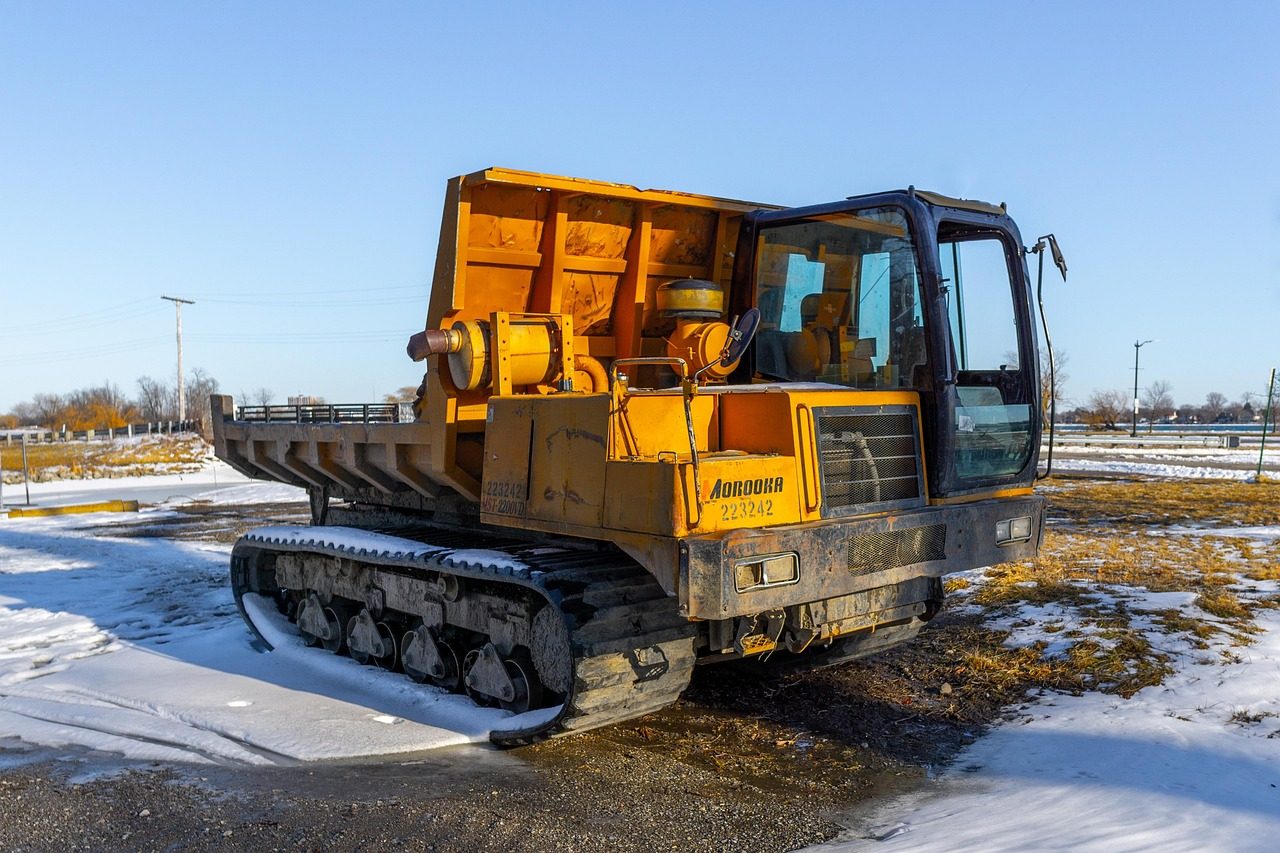
Pattern changes traction, ride and wear life. Bobcat’s chart above is the most detailed comparison we found. Deere sorts its two main patterns the same way: a block (H) pattern for dirt, clay, concrete, asphalt, rock and gravel, and a bar (zig zag) pattern for dirt, clay, mud and snow. Bobcat rates its zig zag best for snow but not for demolition or turf, and its turf-friendly Hex pattern as not recommended for very wet ground.
On a used machine, note the pattern. A turf track on a machine you plan to run in rock will not last, and its replacement belongs in your offer.
Track sizes: what “450 x 86 x 56” means
A rubber track size is width in millimeters, pitch in millimeters and number of links. John Deere’s parts store lists track T445525 as an H-block pattern, 450 mm wide, 86 mm pitch, 56 links, fitting the 333E, 333D, CT332, 329E and 329D. The size is usually molded on the track, so you can read it on a used machine and price a replacement before you make an offer.
Many models offer more than one width. Deere’s sheets list the 317G with 320 or 400 mm tracks (8,423 or 8,683 lb) and the 333G with 400 or 450 mm. Wider tracks spread the load on soft ground and add weight; our chart of how much a compact track loader weighs lists every model.
Rollers, idlers and sprockets: the rest of the bill
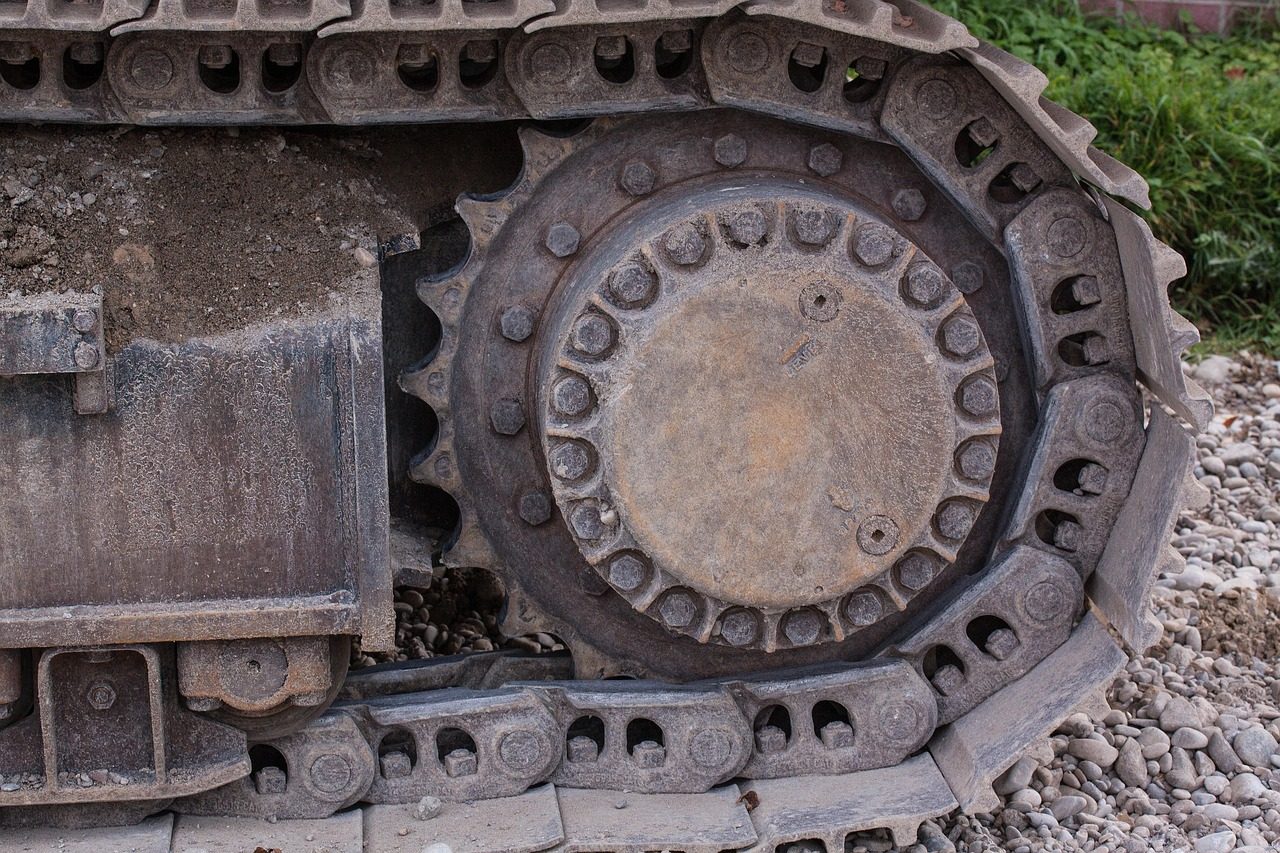
The steel parts decide how long the next track lasts. Deere says to check sprockets and rollers for excessive wear or “flat spotting,” a sign of material buildup or a seized bearing, and to fix any oil leak from rollers, hoses or travel motors right away. Part by part:
- Sprocket: pointed, hooked, chipped or thin teeth. Bobcat’s T590 schedule also checks the sprocket bolts every 50 hours.
- Rollers: flat spots, rollers that do not turn, wobble, or oil at the seal.
- Front idler and tensioner: worn flanges, bearing play, cracks, or a cylinder that will not hold grease.
- Final drives: oil around the motor hub, or grinding that matches travel speed on one side. Our guide to common skid steer and CTL problems covers the symptoms.
No manufacturer we checked publishes wear limits or hour intervals for replacing these parts. The limits live in the service manual or a dealer’s undercarriage check, which is worth paying for on a high-hour machine.
What to check on the tracks of a used compact track loader
Our used skid steer and CTL inspection checklist covers the whole machine. For the undercarriage, the short version:
- Ask for it clean, or for photos of both tracks inside and out. Mud hides cracks and leaks.
- Read the track size, brand and pattern on the track.
- Measure the lugs on both tracks and compare with a new one.
- Look for cords, cracks and missing guide lugs. Any exposed cord means you are pricing a track.
- Check sprockets, rollers and idlers. New tracks on hooked sprockets are not new for long.
- Drive it straight both ways and listen for grinding that matches track speed.
- Ask for the history: when the tracks were replaced, at what hours, what else was done with them, and what work the machine did.
Of the 53 compact track loaders Pennsylvania dealers listed on Heavy Listing on November 19, 2026, the median showed 2,033 hours and nine had more than 3,000. With Bobcat rating its tracks at 400 to 1,000+ hours in moderate work, most of those machines are probably not on their first set. That is fine: a machine that got tracks, sprockets and rollers at 2,500 hours can beat a 1,500-hour machine with all of it due. Ask for the invoice. Our study of how many hours is a lot on heavy equipment puts those numbers in context.
Find a track loader and look at the undercarriage first
Browse compact track loaders from Pennsylvania dealers, with year, hours, price and location on every listing. Ask the dealer for photos of both tracks and the sprockets before you drive out.
Browse compact track loaders for sale →How much do worn tracks take off the price?
We found no official public price for replacement CTL tracks that we could use. Bobcat’s online parts store blocked us and Deere’s loads prices by dealer. Third-party prices vary widely by brand, size and OEM versus aftermarket, so we do not print a number. The bill grows if sprockets, rollers or idlers go with the tracks, plus labor. Read the size off the track, get a written quote for that exact track from a dealer, and subtract it if the tracks are near the 40 percent line or show cords or cracks.
Median asking prices of CTLs from Pennsylvania dealers on Heavy Listing on November 19, 2026, by hours:
| Hours | Machines | Median asking price |
|---|---|---|
| Under 1,000 | 8 | $62,400 |
| 1,000 to 1,999 | 17 | $45,500 |
| 2,000 to 2,999 | 19 | $34,500 |
| 3,000 and up | 9 | $34,500 |
Source: Heavy Listing data, 53 compact track loaders with asking prices from Pennsylvania dealers, November 19, 2026. Medians mix brands, sizes and years.
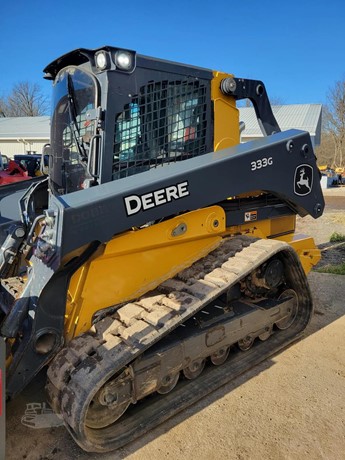
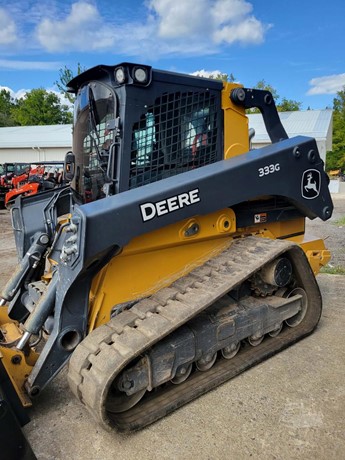
Past 2,000 hours the median stops falling, so condition separates one machine from the next, and the undercarriage is a big part of condition. A 2019 John Deere 333G with 3,945 hours at $34,500 and a 2017 Kubota SVL95-2 with 3,910 hours at $22,500 can each be a good deal or a poor one depending on what is under them. See our used compact track loader prices by brand and year, and the cheapest compact track loaders on the market.
How to make CTL tracks last longer
- Clean the undercarriage every day. Camso says to remove clay, mud and gravel before it hardens, especially at the sprockets and front idlers, and never to clear packed material by driving.
- Use three-point turns instead of spin turns.
- Keep roading under 10 percent of the day (Deere), slower and cooler when you can.
- Let the hydraulics fill the bucket instead of spinning the tracks into the pile.
- Alternate direction on side slopes so both tracks wear evenly.
- Store it right: Deere says to move a parked machine monthly and keep tracks out of direct sun.
If most of your work is on pavement, wheels may make more sense: see our skid steer vs compact track loader comparison, or our guide to the tracked skid steer for over-the-tire tracks on a wheeled machine.
The bottom line
Compact track loader tracks last from a few hundred hours to more than a thousand, depending mostly on the ground and the operator. Replace them at 40 percent tread or when cords, cracks or missing lugs appear, set sag to your operator’s manual, and check it often. On a used machine, judge the tracks, sprockets, rollers and idlers together, and get a quote for anything close to done before you agree on a price.
Compare track loaders from Pennsylvania dealers
See every compact track loader PA dealers have listed on Heavy Listing, with year, hours and asking price. Shortlist two or three and ask each dealer about the undercarriage.
See compact track loaders for sale →FAQ
How long do skid steer tracks last?
On a compact track loader, Bobcat rates its rubber tracks at 400+ to 1,000+ hours in moderate conditions, depending on the pattern. Rock, demolition debris, roading on pavement and spin turns shorten that.
When should I replace the tracks on my CTL?
John Deere recommends replacing rubber tracks when 40 percent of the original tread depth remains, or sooner with cracks, missing lugs or exposed steel cables. A track that skips on the sprocket also needs the sprocket checked.
How tight should CTL tracks be?
Set the sag to the figure in your operator’s manual, measured with the front raised from the inside of the track to the bottom of the middle roller. Camso’s rough guide is about 25 mm for small machines and 50 mm for large ones; the manual wins.
How often should I check track tension?
Bobcat includes it in the daily pre-start walk-around and at every 50 hours in its T590 schedule. John Deere says weekly or as needed. Check again after working in clay or mud.
What does 450x86x56 mean on a rubber track?
450 mm wide, 86 mm pitch, 56 links. Match all three, and confirm fitment for your model and serial number with the dealer.
Are worn tracks a reason not to buy a used track loader?
Not by themselves. Get a quote for the exact track size, add any sprocket, roller or idler work, and take it off your offer. Walk away if the seller will not let you see the undercarriage clean.