Excavator sizes go from a 9 ton midi that rides on a gooseneck to a 94 ton mass excavation machine that has to travel on a multi-axle lowboy with a permit. Makers, dealers and rental yards all sort them the same way: by operating weight, usually in metric tons. On most brands the model number tracks that weight, so a Cat 320 is roughly a 20 ton machine and a Deere 350 P-Tier a 35 to 37 ton one.
This guide gives you an excavator size chart by class, from midi to mass excavation, with dig depth, reach, bucket size and power for current Cat, John Deere, Komatsu and Case models. Every spec comes from the manufacturer’s own spec sheet or product page. Then it answers the question buyers actually ask: what size excavator do I need for trenching, basements, site work, demolition or loading trucks? At the end, what each class means for hauling and which sizes Pennsylvania dealers had in stock on Heavy Listing on November 25, 2026.
Excavator size chart: midi to mass excavation
The ranges below come from the current models in the class tables further down. One metric ton is 2,205 lb, so a “20 ton” excavator weighs about 44,000 lb, not 40,000. Depth and reach are for the configurations listed in the class tables, usually with the longest arm the maker shows.
| Size class | Operating weight | Max dig depth | Reach at ground level | Bucket range | Net power | Typical jobs |
|---|---|---|---|---|---|---|
| Mini, under 6 t | Under about 13,000 lb | See our mini excavator sizes guide | Landscaping, laterals, tight access | |||
| Midi, 6 to 10 t | 18,700 to 20,800 lb | 13 ft 5 in to 15 ft 3 in | 22 ft 1 in to 24 ft 6 in | 0.12 to 0.66 yd³ | 68 to 72 hp | Utility trenches, house basements, small site work |
| Small standard, 13 to 20 t | 29,000 to 43,100 lb | 18 ft 0 in to 21 ft 8 in | 26 ft 8 in to 30 ft 2 in | 0.27 to 1.62 yd³ | 98 to 133 hp | Sewer and water main, commercial basements, road crews |
| Standard, 20 to 30 t | 49,800 to 60,600 lb | 21 ft 9 in to 25 ft 0 in | 31 ft 9 in to 35 ft 3 in | 0.55 to 2.58 yd³ | 157 to 201 hp | Site development, deep utilities, demolition |
| Large, 30 to 50 t | 69,200 to 111,300 lb | 25 ft 7 in to 30 ft 2 in | 36 ft 9 in to 43 ft 3 in | 0.66 to 5.00 yd³ | 257 to 443 hp | Truck loading, big basements, pipeline |
| Mass excavation, 50 t and up | 111,900 to 207,400 lb | 24 ft 2 in to 31 ft 9 in | 37 ft 11 in to 48 ft 3 in | 1.92 to 9.29 yd³ | 367 to 542 hp | Quarries, mass earthmoving, loading off road trucks |
Ranges built from the manufacturer figures in the class tables below. Net power is as each maker publishes it (Cat ISO 9249, Deere net or net rated, Komatsu and Case SAE J1349, Case’s two largest ISO 14396 net, Deere’s 670 and 870 net peak), so treat it as a guide, not a like for like comparison. Bucket ranges cover every bucket in each maker’s table, including cleanup and ditching buckets.
Read the chart from left to right and you see the pattern. Weight climbs steeply from one class to the next, but dig depth grows only a few feet per step, and barely at all between large and mass excavation machines. There is also a gap: Cat, Deere, Komatsu and Case sell almost nothing between about 10 and 13 metric tons, so a midi is followed by a 13 ton machine. What you buy with size is mostly bucket, power and stability: a large excavator does not dig much deeper than a standard one, it moves dirt faster and lifts more at the same reach.
How the makers draw the lines
No standard defines these classes, and each brand files the same size of machine under a different name. That matters when you compare spec sheets or search listings:
- Cat splits its US lineup into Mini (up to the 310), Small (313, 315, 317), Medium (320 through 330) and Large (336 through 395) excavators.
- John Deere calls everything from the 85 to the 350 P-Tier a “Mid-Size Excavator” and starts “Large Excavator” at the 510 P-Tier, a 111,885 lb machine.
- Case lists “Midi Excavators” from 16,072 to 20,305 lb and puts every machine from 28,900 lb up, starting with the CX140E, under “Large Excavators”.
- Komatsu uses Small, Mid-size and Large tabs. Its own pages call the PC290LC-11 “a mid-size hydraulic excavator” and the PC360LC-11 a “large excavator”.
So a 36 ton machine is “large” at Cat and “mid-size” at Deere. For buying, ignore the labels and compare weight. The classes in this guide follow weight in metric tons, which also lines up with how most model numbers are built.
Sources: Cat group pages on h-cpc.cat.com; Deere excavators; Case excavators; Komatsu excavators.
Midi excavators: 6 to 10 tons
The midi class is where compact and full size meet. These machines still fit under the legal width on a trailer, but they dig 13 to 15 ft and load a dump truck. Our mini excavator guide covers this class in detail, including Bobcat, Kubota and Takeuchi models, so here are just four reference points.
| Model | Operating weight | Max dig depth | Reach at ground level | Bucket range | Net power |
|---|---|---|---|---|---|
| Komatsu PC88MR-11 | 18,739 to 19,224 lb | 15 ft 0 in | 23 ft 5 in | 0.12 to 0.26 yd³ | 67.9 hp |
| John Deere 85 P-Tier | 19,445 lb | 14 ft 10 in | Not published | 0.40 to 0.66 yd³ | 67.6 hp |
| Case CX90E | 20,305 lb | 13 ft 7 in to 14 ft 8 in | 22 ft 1 in to 23 ft 2 in | Not published | 72 hp |
| Cat 308 CR | 18,754 to 20,771 lb | 13 ft 5.7 in to 15 ft 2.8 in | 22 ft 9.6 in to 24 ft 5.7 in | Not published | 69 hp |
Sources: Komatsu PC88MR-11; Deere 85 P-Tier spec sheet; Case CX90E specifications; Cat 308 CR. Ranges show standard and long arm.
Midis are the most common “first big excavator” for contractors stepping up from a 5 ton machine. They dig a house basement and a sewer lateral in one day without a lowboy. If you work mostly in yards and streets, this may be as big as you need.
Small standard excavators: 13 to 20 tons
This is the class Cat calls Small and Deere still calls Mid-Size. It is the jump from compact work to real production. Weight roughly doubles against a midi, buckets go past 1 yd³ and dig depth reaches about 20 ft with the long arm.
| Model | Operating weight | Max dig depth | Reach at ground level | Bucket range | Net power |
|---|---|---|---|---|---|
| John Deere 130 P-Tier | 29,007 lb | 19 ft 9 in | 28 ft 5 in | 0.44 to 0.91 yd³ | 98 hp |
| Cat 313 | 30,400 lb | 19 ft 10 in | 28 ft 5 in | 0.27 to 1.33 yd³ | 108 hp |
| Case CX145E SR | 33,300 lb | 18 ft 0 in to 19 ft 9 in | 26 ft 8 in to 28 ft 3 in | 0.31 to 1.08 yd³ | 102 hp |
| Komatsu PC170LC-11 | 38,720 to 43,115 lb | 19 ft 7 in to 20 ft 6 in | 28 ft 10 in to 29 ft 9 in | 0.48 to 1.24 yd³ | 121 hp |
| John Deere 160 P-Tier | 39,526 lb | 21 ft 4 in | 30 ft 1 in | 0.50 to 1.22 yd³ | 122 hp |
| Cat 317 | 40,200 lb | 21 ft 8 in | 30 ft 2 in | 0.43 to 1.62 yd³ | 133 hp |
Sources: Deere spec sheets for the 130 P-Tier and 160 P-Tier; Cat 313 and 317 with their North American spec sheets; Case CX145E SR specifications; Komatsu PC170LC-11. Depth and reach with the long arm where one is listed.
Two things to notice. First, the reduced swing models: the Case CX145E SR is a short radius machine built for working in one lane of traffic, and Cat, Deere and Komatsu sell similar versions. Our tail swing guide explains the trade-off. Second, the 18 ton machines dig only a little deeper than the 13 ton ones. What the extra weight buys is a bigger bucket and more lift for pipe. The 13 ton is the one that is cheaper to haul.
Standard excavators: 20 to 30 tons
The 20 to 30 ton class is the general purpose excavator of American site work. It is heavy enough to load trucks at a good pace, run a hammer or shear, and lift trench boxes and pipe, yet it still moves on a standard lowboy.
| Model | Operating weight | Max dig depth | Reach at ground level | Bucket range | Net power |
|---|---|---|---|---|---|
| Cat 320 | 49,800 lb | 22 ft 1 in | 32 ft 5 in | 0.57 to 2.31 yd³ | 172 hp |
| Case CX220E | 50,000 lb | 20 ft 1 in to 21 ft 9 in | 30 ft 4 in to 31 ft 11 in | Not published | 162 hp |
| John Deere 210 P-Tier | 50,710 lb | 21 ft 10 in | 31 ft 9 in | 0.55 to 1.34 yd³ | 157 hp |
| Komatsu PC220LC-12 | 53,352 to 54,675 lb | 21 ft 9 in | 31 ft 10 in | 0.65 to 1.85 yd³ | 172 hp |
| Cat 326 | 56,400 lb | 24 ft 6 in | 35 ft 2 in | 0.66 to 2.58 yd³ | 201 hp |
| John Deere 250 P-Tier | 60,600 lb | 25 ft 0 in | 35 ft 3 in | 1.11 to 2.09 yd³ (heavy duty) | 188 hp |
Sources: Cat 320 and 326 with their North American spec sheets; Case CX220E specifications; Deere 210 P-Tier and 250 P-Tier spec sheets; Komatsu PC220LC-12. Cat’s spec sheet lists the 326 at 57,900 lb with wider shoes.
If you only own one excavator and bid on mixed work, this is usually the class. Inside it, the 20 to 22 ton machines are the easier trailer load; the 25 to 27 ton ones (Cat 326, Deere 250) dig about 3 ft deeper and swing a bigger bucket.
Large excavators: 30 to 50 tons
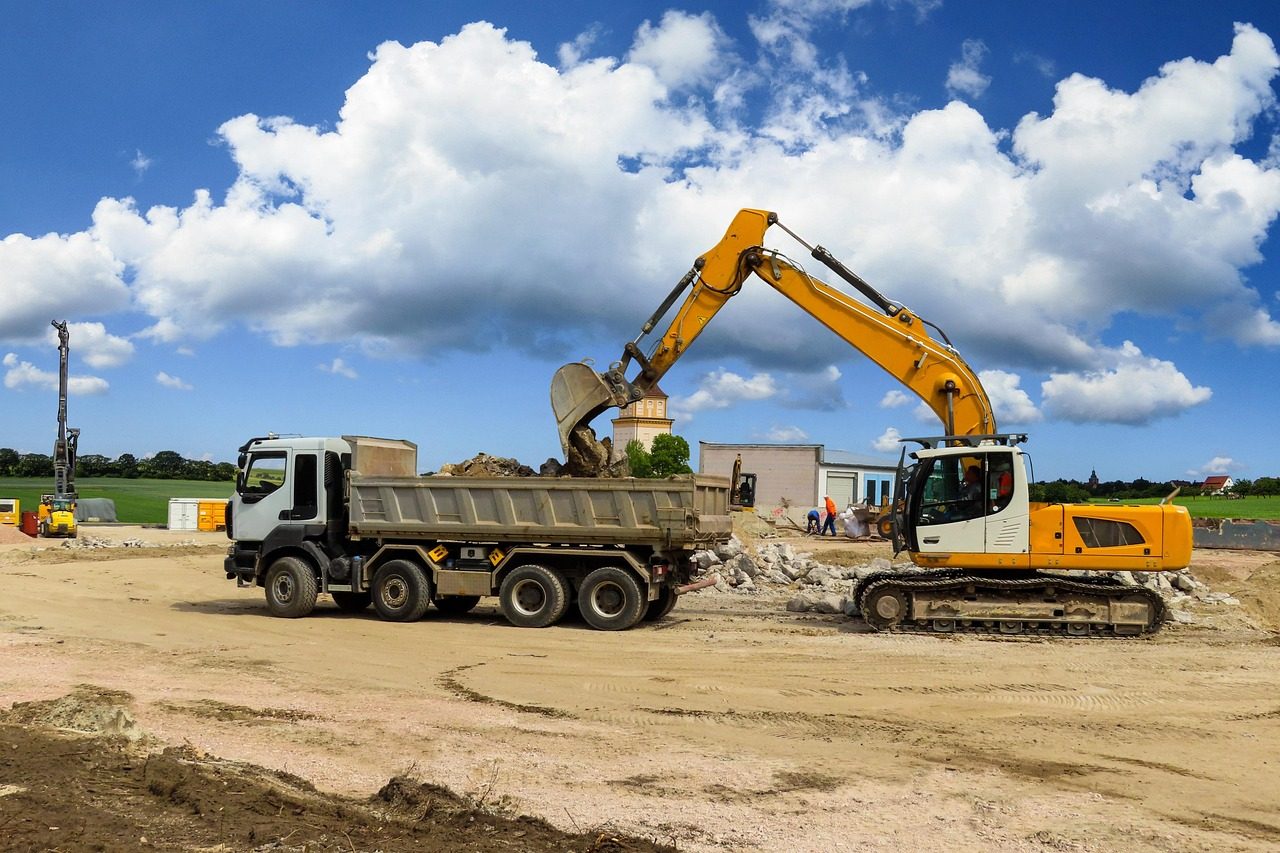
Large excavators earn their keep on volume: big basements, pipeline, and loading a line of trucks all day. The depth column makes the same point as the size chart. A 50 ton machine digs only a few feet deeper than a 31 ton one, but its bucket can be twice as big.
| Model | Operating weight | Max dig depth | Reach at ground level | Bucket range | Net power |
|---|---|---|---|---|---|
| Cat 330 | 69,200 lb | 25 ft 7 in | 36 ft 9 in | 0.66 to 2.58 yd³ | 273 hp |
| Komatsu PC360LC-11 | 78,645 to 80,547 lb | 23 ft 11 in to 26 ft 7 in | 35 ft 10 in to 38 ft 6 in | 0.89 to 2.56 yd³ | 257 hp |
| John Deere 350 P-Tier | 80,985 lb | 26 ft 10 in | 38 ft 3 in | 1.37 to 2.27 yd³ | 271 hp |
| Cat 336 | 81,100 lb | 26 ft 11 in | 38 ft 7 in | 1.24 to 3.53 yd³ | 300 hp |
| Case CX350D | 82,483 lb | 22 ft 1 in to 26 ft 8 in | 34 ft 3 in to 38 ft 5 in | Not published | 268 hp |
| Komatsu PC490LC-11 | 105,670 to 110,220 lb | 25 ft 5 in (up to 30 ft 2 in with the longest arm) | 38 ft 9 in (up to 43 ft 3 in) | 1.47 to 4.15 yd³ | 359 hp |
| Cat 352 | 107,800 to 111,300 lb | 26 ft 11 in | 39 ft 10 in | 2.09 to 5.00 yd³ | 443 hp |
Sources: Cat 330, 336 and 352 with their North American spec sheets; Deere 350 P-Tier spec sheet; Komatsu PC360LC-11 and PC490LC-11; Case CX350D specifications.
The 30 to 36 ton machines are the bridge class. They are big enough for production loading and small enough that many site contractors keep one as their main machine. From the 45 ton class up, you are buying a truck loader, and the cost of moving it between jobs starts to shape where you can use it.
Mass excavation excavators: 50 tons and up
Mass excavation machines live on one site for months: quarries, highway cuts, big commercial pads. The biggest carry buckets of 6 to 9 yd³ and are built to load off road haul trucks. Few contractors in Pennsylvania need one, but they do come up for sale.
| Model | Operating weight | Max dig depth | Reach at ground level | Bucket range | Net power |
|---|---|---|---|---|---|
| John Deere 510 P-Tier | 111,885 lb | 27 ft 2 in | 40 ft 3 in | 1.92 to 3.70 yd³ (heavy duty) | 367 hp |
| Komatsu PC650LC-11 | 140,456 to 145,284 lb | 27 ft 10 in | 42 ft 0 in | 2.05 to 4.98 yd³ | 436 hp |
| John Deere 670 P-Tier | 154,103 lb | 30 ft 0 in | 44 ft 8 in | Not published (4.04 yd³ as weighed) | 463 hp |
| Case CX750D ME | 159,600 lb | 24 ft 2 in | 37 ft 11 in | Not published | 460 hp |
| Cat 374 | 162,900 lb | 31 ft 7 in | 46 ft 7 in | 2.49 to 6.02 yd³ | 484 hp |
| John Deere 870 P-Tier | 188,716 lb | 31 ft 5 in | 48 ft 0 in | Not published (4.57 yd³ as weighed) | 512 hp |
| Komatsu PC900LC-11 | 196,652 to 204,368 lb | 29 ft 7 in | 46 ft 7 in | 3.7 to 8.0 yd³ | 538 hp |
| Cat 395 | 207,400 lb | 31 ft 9 in | 48 ft 3 in | 3.00 to 9.29 yd³ | 542 hp |
Sources: Deere spec sheets for the 510 P-Tier, 670 P-Tier and 870 P-Tier; Komatsu PC650LC-11 and PC900LC-11 brochure; Case CX750D specifications (mass excavator setup, short arm); Cat 374 and 395 with their North American spec sheets. Deere’s 670 and 870 power is net peak.
The Case CX750D shows how setup changes the numbers. Its mass excavator version trades depth for breakout force with a short boom and a 9 ft 9 in arm, so it digs less deep than Cat’s 352. When you compare large machines, check which boom and arm the figure was measured with. For how much each of these weighs with different shoes and counterweights, see how much an excavator weighs.
What size excavator do I need?
Start with the deepest cut you make every week, not the deepest one you made last year. Then think about how much dirt you move per day and how far the machine has to travel between jobs. The cheapest machine to own is the smallest one that does your regular work without straining. Stuck between two classes? Rent the bigger one for a week on real work before you buy. You will know by Friday whether the extra size earned its haul.
| Main work | Usual class | Why |
|---|---|---|
| Utility trenching, water and sewer laterals | Midi, 6 to 10 t | 13 to 15 ft of depth covers most residential utility work, and the machine stays under the legal trailer width. |
| Sewer and water main, storm pipe, trench boxes | 13 to 20 t, or 20 to 30 t for deep runs | You need the weight to set pipe and pull boxes, plus 18 to 25 ft of depth with room to spare. |
| House basements | Midi to 13 to 20 t | A basement is shallow; reach to stockpile spoil and bucket size decide the day, not depth. |
| Commercial basements and foundations | 20 to 36 t | Bigger buckets, more reach to the truck and enough lift for shoring. |
| Site development, grading, ponds | 20 to 30 t | The all around class: digs, loads, lifts and still hauls on a normal lowboy. |
| Demolition | 20 to 36 t with a hammer, shear or grapple | Weight to carry heavy attachments and stability when tearing down. Tall structures call for purpose built high reach machines. |
| Truck loading and mass earthmoving | 30 t and up | Fewer passes per truck. Match the bucket to the truck body so you are not loading a partial last bucket on every truck. |
| Quarry and production digging | 50 t and up | Buckets of 4 yd³ and more, built to load haul trucks all shift. |
❌ Buying a size for the one big job. If you dig a deep storm line twice a year, rent the 30 ton machine for those weeks and own the 15 to 20 ton one that fits the rest of your work.
❌ Comparing dig depth from different arms. On these spec sheets a longer arm adds about 1 to 3 ft of depth, more on the biggest machines, but it cuts bucket size and lift. Check which arm the listed machine actually has.
✅ Sizing to the truck you load. If your trucks are tri-axle dumps, a bucket that fills one in a few even passes saves more time than extra depth.
✅ Pricing the move before the machine. A 22 ton excavator needs a lowboy and an oversize permit for every move, while a midi rides on a gooseneck. Know your hauling cost per class before you choose.
Compare sizes in stock
Pennsylvania dealers list midi to mass excavation machines on Heavy Listing, and every listing shows year, hours and asking price. Find the model number in the tables above and you know its class before you call the dealer.
Browse used excavators in Pennsylvania →Transport by size: what each class means on the road
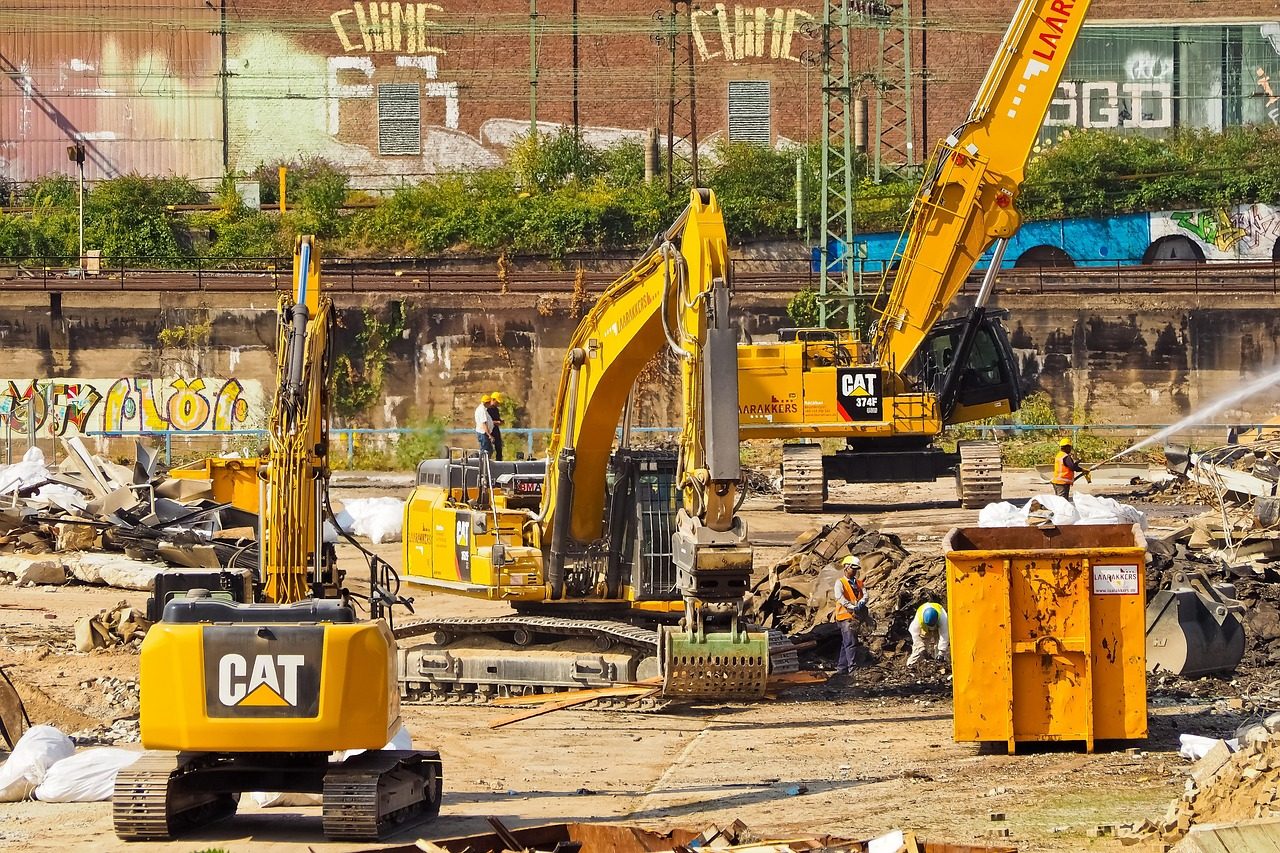
Excavator size decides your trailer, your truck and whether you need a permit. Pennsylvania’s legal limits without a permit are 8 ft 6 in wide, 13 ft 6 in high and 80,000 lb gross for the whole rig. Width is the first limit full size excavators hit; weight comes next.
| Class | Width example | What it usually means |
|---|---|---|
| Midi, 6 to 10 t | Deere 85 P-Tier 7 ft 3 in to 8 ft 1 in; Cat 308 CR 90.6 in | Under legal width. Gooseneck or tag trailer behind a medium duty truck, usually a Class A CDL for commercial use. |
| 13 to 20 t | Cat 313 8 ft 2 in transport width; Deere 130 and 160 P-Tier 8 ft 6 in on 600 mm shoes, 8 ft 10 in on 700 mm | Right at the limit. Shoe width can decide whether you need a permit. |
| 20 to 30 t | Cat 320 9 ft 9 in transport width; Deere 210 P-Tier 10 ft 5 in over the tracks | Over legal width: lowboy and an oversize permit. |
| 30 to 50 t | Cat 336 10 ft 6 in (11 ft 9 in on 33 in shoes); Deere 350 P-Tier 10 ft 10 in to 11 ft 2 in | Oversize, and often overweight: the Deere 350 P-Tier alone weighs 80,985 lb, more than the 80,000 lb gross limit before you add truck and trailer. |
| 50 t and up | Weights of 112,000 to 207,000 lb | Multi-axle lowboy under an overweight permit. Cat builds the 374 and 395 with a counterweight removal system, so the counterweight can travel separately. |
Sources: Cat transport widths on the 313, 320 and 336 product pages; Deere overall widths from the 85, 130, 160, 210 and 350 P-Tier spec sheets linked above; Pennsylvania limits from PennDOT’s size and weight limitations page.
Our guide to hauling heavy equipment in Pennsylvania covers trailer types, the APRAS permit system, travel time limits and what drives a hauler’s quote. If you are buying out of state, get the delivery quote before you agree on the price.
Excavator sizes in stock at Pennsylvania dealers
On November 25, 2026, Pennsylvania dealers had 47 used excavators listed on Heavy Listing (mini excavators are counted separately). We sorted them by model number, which on these brands tracks metric tons, and checked the class against the current model’s official weight. Older models such as a Cat 330CL or Deere 670G LC go in the class of their current successor.
| Class | Machines | Models listed | Asking prices |
|---|---|---|---|
| Midi, 6 to 10 t | 4 | Cat 308E2 CR; Deere 85G (2), 85P | $48,500 to $126,000 (median $52,500) |
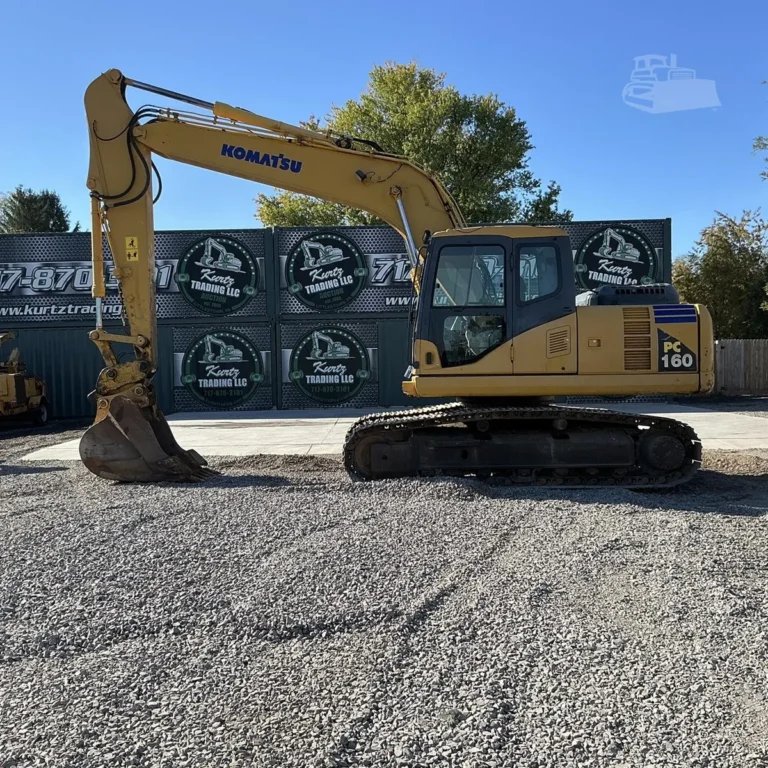
| 13 to 20 t | 13 | Cat 312C, 312CL, 313FL, 313FL GC, 316FL; Deere 135G, 160G LC, 160P; Bobcat E145; Case CX145D SR; Kobelco SK140SRLC-7; Komatsu PC160LC-7; Link-Belt 145X4LC | $36,900 to $172,000 (median $88,500) |
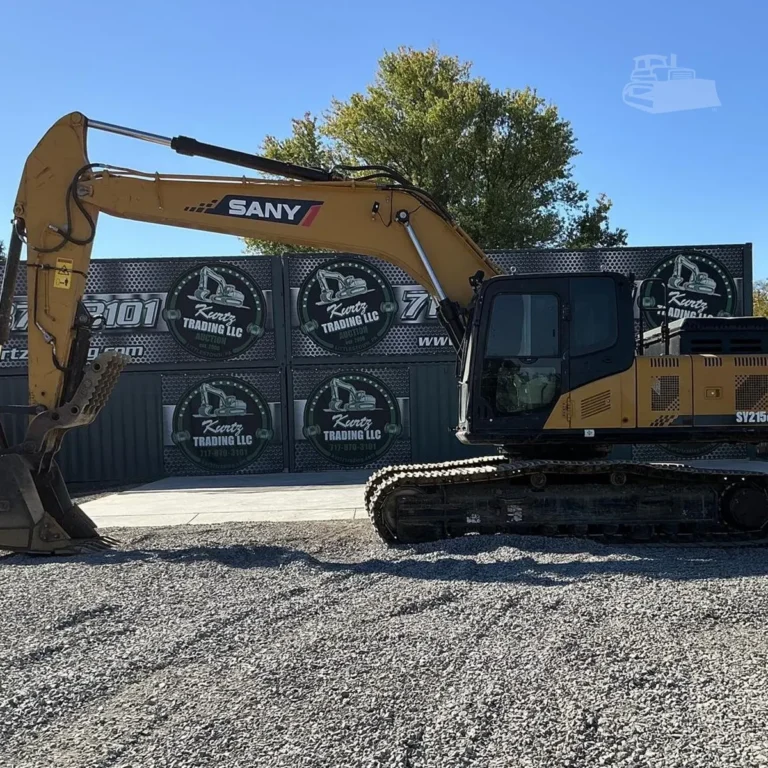
| 20 to 30 t | 10 | Cat 323 (2), 324DL, 326 (2), 328D LCR, 329FL; Deere 245G LC, 250P; Sany SY215C LC | $74,500 to $215,500 (median $115,500) |
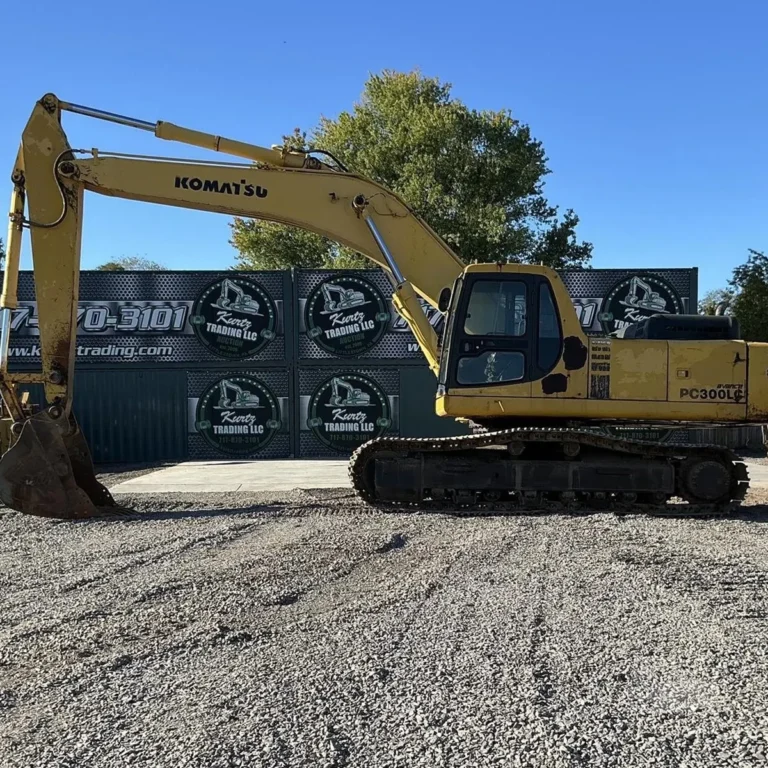
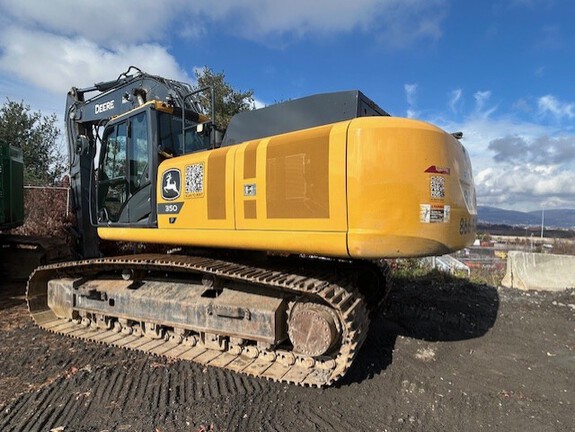
| 30 to 50 t | 16 | Cat 330CL (3), 336DL, 336EL, 336EL H, 336FL, 345CL, 349EL, 349FL (2); Deere 300G LC, 350P; Case CX350D; Komatsu PC300LC-6, PC450LC-6 | $26,500 to $285,000 (median $85,500) |
| 50 t and up | 2 | Deere 670G LC, 870G LC | $405,500 and $455,000 |
| Not classified | 2 | Wacker Neuson EW100 (wheeled), Liebherr R942HD | $35,500 and $21,500 |
Source: Heavy Listing, used excavators listed by Pennsylvania dealers on November 25, 2026 (Old Forge Power Equipment 34, Five Star Equipment 9, Kurtz Trading 3, Keystone Equipment Sales & Service 1). Not classified: no current spec page from the maker to confirm the class.
The 30 to 50 ton class has the most machines and a lower median than the 20 to 30 ton class. That is age, not size: most of the big Cats are 2004 to 2015 models, while the 20 to 30 ton group includes 2022 and 2023 machines. Do not let a lower asking price pull you up a class. An older large excavator still costs large excavator money to haul, to put new undercarriage under and to fuel every day. Our used excavator prices analysis breaks down how year and hours move the price.
A few listings by size: a 2019 Deere 85G midi with 2,878 hours at $52,500, a 2020 Case CX145D SR at $64,900, a 2023 Deere 250P with 2,769 hours at $200,000 and a 2024 Deere 350P at $205,000. Shopping one brand? Go straight to John Deere excavators, Caterpillar excavators or Case excavators for sale.
Excavators listed by Pennsylvania dealers right now:
Buying used: size specific things to check
- Confirm the real configuration. Boom, arm, shoe width and counterweight change depth, width and weight. A long front machine is not the same as a mass excavation front on the same model number.
- Midi and 13 to 20 ton machines: many come from rental fleets and utility contractors. Look at the swing bearing, boom swing or offset pins if fitted, and the undercarriage on reduced swing models that worked against curbs.
- 20 to 30 ton machines: ask whether it ran a hammer. Check the boom and stick for weld repairs and the hydraulic lines for hammer plumbing.
- 30 tons and up: truck loading wears the bucket linkage, the undercarriage and the swing drive. Undercarriage parts on these machines are expensive, so price them into the offer.
- Compare model names carefully. A Deere 245G LC and a 250P sound close, but they are different models from different generations, with different specs. Our Cat excavator models and John Deere excavator models guides decode the numbers.
Our used excavator inspection checklist walks through each item on the lot, and common used excavator problems covers what the symptoms usually mean.
The bottom line on excavator sizes
Excavator sizes come down to operating weight, and every other spec follows it. A midi digs 13 to 15 ft and still rides on a gooseneck. A 13 to 20 ton machine reaches about 20 ft and sits right at the legal trailer width. The 20 to 30 ton class is the all around site machine and the first that needs an oversize permit. From 30 tons up you buy bucket size and production, plus a lowboy and overweight permits to match. Work out your deepest regular dig, your daily volume and your hauling cost, then pick the smallest class that covers all three. On a used machine, check that the arm, shoes and counterweight on the listing match the spec you sized it from.
FAQ
What are the standard excavator sizes?
Above minis, excavators are grouped by operating weight: midi (6 to 10 metric tons), small standard (13 to 20 t), standard (20 to 30 t), large (30 to 50 t) and mass excavation (50 t and up). Each maker uses its own labels: Cat says Mini, Small, Medium and Large, while Deere calls everything from the 85 to the 350 P-Tier mid-size.
What size excavator do I need to dig a basement?
For a house basement, a midi or a 13 to 20 ton machine is plenty: the hole is shallow, and reach and bucket size matter more than depth. Commercial basements usually go to a 20 to 36 ton machine for bigger buckets and reach to the trucks.
How deep can a 20 ton excavator dig?
About 21 to 22 ft on current models: 22 ft 1 in for a Cat 320, 21 ft 10 in for a Deere 210 P-Tier and 21 ft 9 in for a Komatsu PC220LC-12 or Case CX220E. Longer arms add depth where the maker offers them.
What is the biggest excavator for construction?
In the North American construction lineups we checked, the largest weigh about 90 to 94 metric tons: the Cat 395 at 207,400 lb and the Komatsu PC900LC-11 at up to 204,368 lb. Deere’s largest is the 870 P-Tier at 188,716 lb. Bigger machines, such as Komatsu’s PC2000-11, are mining excavators.
Can I haul a 20 ton excavator without a permit in Pennsylvania?
Usually not. Pennsylvania’s legal width is 8 ft 6 in, and current 20 ton excavators are wider: a Cat 320 has a 9 ft 9 in transport width and a Deere 210 P-Tier is 10 ft 5 in wide over the tracks. That makes it an oversize load. Our Pennsylvania hauling guide explains the permit process.
What is a midi excavator?
A machine between mini and full size, roughly 6 to 10 metric tons. Case lists its midis at 16,072 to 20,305 lb. Midis dig 13 to 15 ft and still fit under the legal trailer width, which is why many contractors buy one as their first larger excavator.