How much does an excavator weigh? On the manufacturers’ own spec sheets, full-size crawler excavators start around 29,000 lb for a 13 ton machine like the Cat 313 or John Deere 130 P-Tier and run past 200,000 lb for the biggest construction models. The popular 20 ton class weighs about 45,000 to 55,000 lb. That number decides more than the trailer: it decides whether the machine can move as one piece, whether it needs a permit, and what a hauler will quote. This guide gives the official operating weight of current Cat, John Deere, Komatsu, Case, Volvo and Bobcat excavators, the older Cat models you find for sale used, the weight of the excavators Pennsylvania dealers list on Heavy Listing today, and what each class takes to move.
Excavator weight by class
Ton classes are metric and loose: a “20 ton excavator” is a size family, not a scale reading. Here is what the current models in each class weigh on their own sheets.
| Class | Operating weight | Current models in the range |
|---|---|---|
| 8 to 10 t (midi) | About 18,700 to 20,300 lb | Komatsu PC88MR-11, John Deere 85 P-Tier |
| 13 to 20 t | About 28,900 to 44,100 lb | Cat 313 to 319, Deere 130 and 160 P-Tier, Case CX140E to CX190E, Komatsu PC138USLC-11 and PC170LC-11, Volvo EC140E, Bobcat E145 |
| 20 to 30 t | About 45,100 to 72,100 lb | Cat 320 to 330, Deere 210 to 300 P-Tier, Case CX220E to CX300E, Komatsu PC220LC-12 to PC290LC-11, Volvo EC210 |
| 30 to 50 t | About 77,000 to 116,400 lb | Cat 335 to 352, Deere 350 and 470 P-Tier, Case CX350D to CX490D, Komatsu PC360LC-11 to PC490LC-11, Volvo EC400 and EC500 |
| 70 t and up | About 140,000 to 207,400 lb | Cat 374 and 395, Deere 670 and 870 P-Tier, Case CX750D, Komatsu PC650LC-11, Volvo EC750E |
Sources: manufacturer pages and spec sheets linked under the charts below. The class boundaries are our grouping, not a standard.
If you are still deciding which class fits your work, dig depth and job type matter more than weight; our excavator sizes guide covers that. This guide is about the number the trailer, the bridge and the hauler care about.
Excavator weight chart: Cat and John Deere
Every figure below comes from the manufacturer’s own spec page or sheet. Where the sheet prints a range (different shoes, counterweight or blade), the range is shown. Each brand defines operating weight a little differently, so compare within a brand first.
| Model | Operating weight | What the figure includes |
|---|---|---|
| Cat 313 | 30,400 lb | Long undercarriage, reach boom, 9 ft 10 in stick, 0.69 yd³ bucket, 28 in shoes, 5,445 lb counterweight |
| Cat 315 | 34,000 lb | Long undercarriage, 28 in shoes, 8,440 lb counterweight |
| Cat 317 | 40,200 lb | Configuration not stated on the page |
| Cat 319 | 44,100 lb | Long undercarriage, reach boom and stick, 1.31 yd³ bucket, 28 in shoes |
| Cat 320 / 320 GC | 49,800 / 48,500 lb | Reach boom, 9 ft 6 in stick, bucket; 31 in shoes on the 320, 28 in on the GC |
| Cat 323 | 55,100 lb | Long undercarriage, 1.81 yd³ HD bucket, 31 in shoes, 11,900 lb counterweight |
| Cat 325 (compact radius) | 62,600 lb | 31 in shoes, 18,300 lb counterweight |
| Cat 326 | 56,400 lb | Long undercarriage, 2.01 yd³ HD bucket, 24 in shoes |
| Cat 330 | 69,200 lb | Long undercarriage, 2.30 yd³ HD bucket, 31 in shoes, 14,770 lb counterweight |
| Cat 335 (compact radius) | 77,000 lb | 24 in shoes, 11,202 lb counterweight and an 11 ft 3 in blade |
| Cat 336 / 340 | 81,100 / 83,100 lb | Configuration not stated on the page |
| Cat 352 | 107,800 lb | Configuration not stated on the page |
| Cat 374 | 162,900 lb | Long variable gauge undercarriage, 4.32 yd³ bucket, 35 in HD shoes |
| Cat 395 | 207,400 lb | Long variable gauge undercarriage, 6.8 yd³ bucket, 35 in shoes |
| John Deere 130 P-Tier | 29,007 to 31,502 lb | 24 in steel shoes without blade to rubber pads with blade; 913 lb bucket |
| John Deere 160 P-Tier | 39,526 lb | 28 in shoes, 1,164 lb bucket, 7,055 lb counterweight |
| John Deere 210 P-Tier | 50,391 to 53,483 lb | 24 to 32 in shoes, standard or heavy counterweight; 1,951 lb bucket |
| John Deere 250 P-Tier | 60,600 lb | 32 in shoes, 2,440 lb bucket, 11,270 lb counterweight |
| John Deere 300 P-Tier | 68,674 lb | 32 in shoes, 2,553 lb bucket, 12,346 lb counterweight |
| John Deere 350 P-Tier | 80,985 lb | 32 in shoes, 3,377 lb HD bucket, 15,274 lb counterweight |
| John Deere 470 P-Tier | 112,916 lb | 36 in shoes, 4,478 lb bucket, 18,519 lb counterweight |
| John Deere 670 P-Tier | 154,103 lb | 36 in shoes, 6,892 lb bucket, 21,605 lb counterweight |
| John Deere 870 P-Tier | 188,716 lb | 36 in shoes, 7,845 lb bucket, 27,337 lb counterweight |
Sources: Caterpillar product pages for the 313, 320, 336, 395 and the rest of the medium, small and large excavator lines on Caterpillar’s product content host (cat.com blocks automated access); John Deere spec sheets for the 130, 160, 210, 250, 300, 350, 470, 670 and 870 P-Tier. Deere figures include a full fuel tank and a 175 lb operator.
We left out the Cat 350: its page prints 105,100 lb next to 46,000 kg, and those two numbers do not match. For model numbers, series letters and what GC means, see our guides to Cat excavator models and John Deere excavator models.
Komatsu, Case, Volvo and Bobcat excavator weights
| Model | Operating weight | Notes |
|---|---|---|
| Komatsu PC88MR-11 | 18,739 to 19,224 lb | Midi class, with blade |
| Komatsu PC138USLC-11 | 34,563 to 37,547 lb | |
| Komatsu PC170LC-11 | 38,720 to 43,115 lb | |
| Komatsu PC220LC-12 | 53,352 to 54,675 lb | |
| Komatsu PC240LC-11 | 55,763 to 56,360 lb | |
| Komatsu PC290LC-11 | 70,702 to 72,091 lb | |
| Komatsu PC360LC-11 / PC390LC-11 | 78,645 to 80,547 / 87,867 to 90,441 lb | |
| Komatsu PC490LC-11 | 105,670 to 110,220 lb | |
| Komatsu PC650LC-11 | 140,456 to 145,284 lb | |
| Case CX140E / CX145E SR | 28,900 / 33,300 lb | SR = short radius |
| Case CX170E / CX190E | 38,400 / 41,000 lb | |
| Case CX220E / CX260E | 50,000 / 56,900 lb | |
| Case CX300E / CX350D / CX380E | 67,000 / 82,483 / 83,114 lb | |
| Case CX490D | 109,300 lb | |
| Case CX750D | 158,300 or 159,600 lb | The page prints both |
| Volvo EC140E | 28,880 to 35,620 lb | |
| Volvo EC210 / EC300 | 45,149 to 52,941 / 65,477 to 85,539 lb | |
| Volvo EC400 / EC500 | 86,800 to 91,600 / 106,110 to 116,400 lb | |
| Volvo EC750E | 162,040 to 166,008 lb | |
| Bobcat E145 | 34,946 lb | 16 t class; 102 in wide |
Sources: Komatsu America model pages for the PC88MR-11, PC138USLC-11, PC220LC-12, PC360LC-11, PC490LC-11, PC650LC-11 and the other models on komatsu.com/en-us (bucket, boom, arm, fluids, full fuel and operator included); CASE large excavator pages, e.g. CX220E and CX750D; Volvo CE EC210, EC300 and the other en-us model pages; Bobcat E145.
Two things stand out. First, a “20 ton” machine is not one weight: the Volvo EC210 range starts near 45,000 lb and the Komatsu PC220LC-12 tops out near 54,700 lb. Second, the short or compact radius versions are heavier than the conventional machine of the same size: the Case CX145E SR is 4,400 lb heavier than the CX140E. Cat’s 325 and 335 show the same pattern. Our zero tail swing vs conventional excavator guide explains why: the counterweight has to sit closer in, so it gets heavier.
Older Cat excavators: weights from Cat’s non-current pages
Most excavators for sale used in Pennsylvania are not current models. Cat keeps pages for its earlier C, D, E and F series, and several print a minimum and maximum weight:
| Model | Operating weight on Cat’s page |
|---|---|
| Cat 312C L | 28,970 lb (29,010 lb long undercarriage) |
| Cat 313F L / 313F L GC | 33,080 / 29,300 to 32,200 lb |
| Cat 316F L | 38,410 to 39,710 lb |
| Cat 324E | 55,395 to 64,990 lb |
| Cat 328D LCR | 73,350 to 87,850 lb |
| Cat 329F L | 63,002 to 68,209 lb |
| Cat 330C L | 77,382 lb (standard undercarriage) |
| Cat 336D L / 336E L / 336F L | 78,634 to 82,962 / 79,684 to 85,288 / 80,500 to 88,400 lb |
| Cat 345C L | 99,150 lb |
| Cat 349D L / 349E / 349F | 98,891 to 112,597 / 105,400 to 117,500 / 107,200 to 117,500 lb |
Sources: Caterpillar non-current product pages on h-cpc.cat.com: 312C L, 330C L, 336D L, 336F L, 349F and the other non-current models.
The gap between minimum and maximum is the useful part. A 336F L can be 80,500 lb or 88,400 lb depending on how it left the factory and what it carries now, and that 7,900 lb is more than a mini excavator. A 324E spans almost 9,600 lb.
How heavy are the excavators for sale in Pennsylvania?
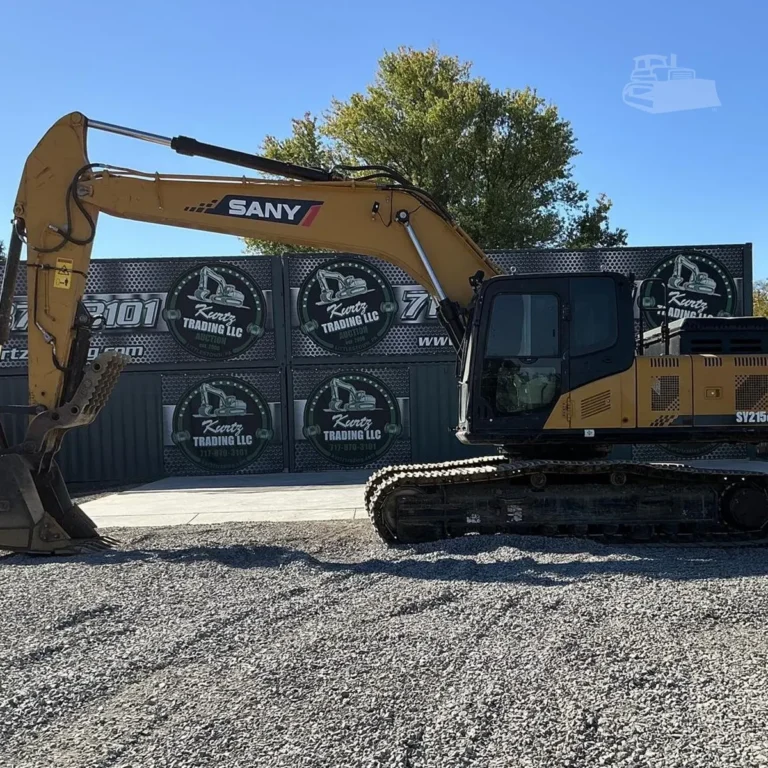
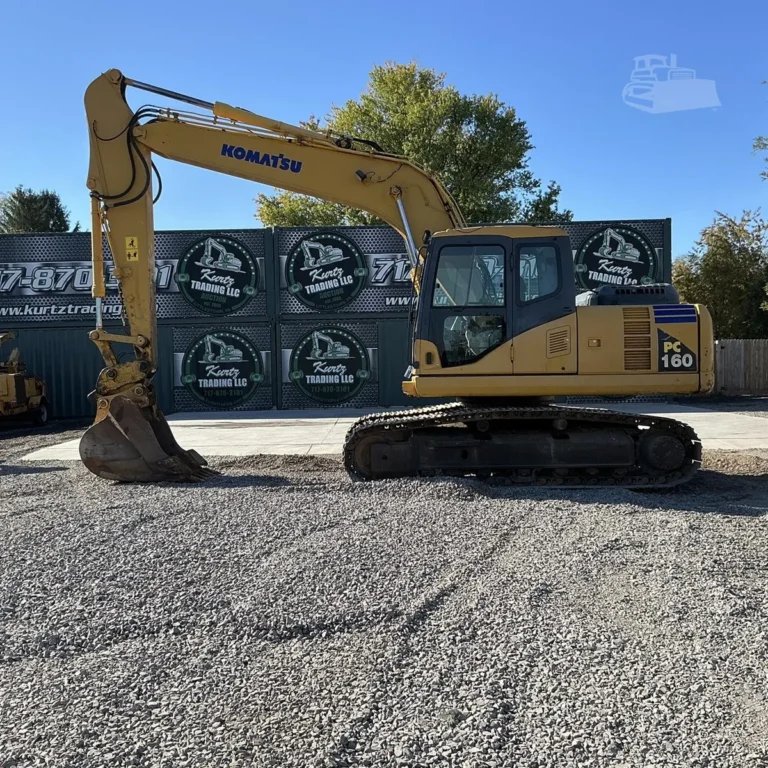
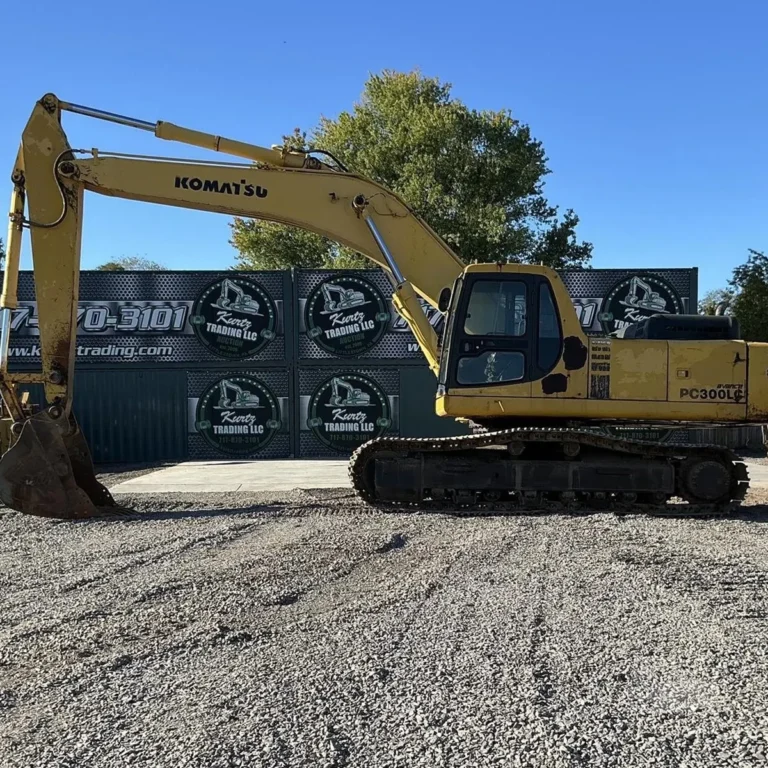
On November 25, 2026, Pennsylvania dealers had 47 excavators listed on Heavy Listing (mini excavators are a separate category), from a 1999 Komatsu PC300LC to a 2025 John Deere 85 P-Tier. The listings do not carry a weight, so we matched each model to its manufacturer’s sheet. We found one for 29 of the 47:
| Machines listed | Sheet weight |
|---|---|
| Cat 308E2 CR (2015), John Deere 85 P-Tier (2025) | 18,519 lb / 19,238 to 20,296 lb |
| Cat 312C and 312C L (2003, 2007), 313F L (2018), 313F L GC (2020) | About 29,000 to 33,100 lb |
| Case CX145D SR (2020), Bobcat E145 (2021) | 32,100 / 34,946 lb |
| Cat 316F L (2016), John Deere 160 P-Tier (2023) | 38,410 to 39,710 / 39,526 lb |
| Cat 323 (2019, 2022), 326 (two, 2022) | 55,100 / 56,400 lb |
| John Deere 250 P-Tier (2023), Cat 329F L (2015) | 60,600 / 63,002 to 68,209 lb |
| Cat 330C L (three, 2004 to 2006) | 77,382 lb |
| Cat 328D LCR, 336D L (2009), 336E L (2013), 336F L (2015) | 73,350 to 88,400 lb across the four |
| John Deere 350 P-Tier (2024), Case CX350D (2021) | 80,985 / 82,483 lb |
| Cat 345C L (2005) | 99,150 lb |
| Cat 349E L (2013), 349F L (2019, 2020) | 105,400 to 117,500 lb |
| 18 others, incl. Deere G-Series (85G, 135G, 160G LC, 245G LC, 300G LC, 670G LC, 870G LC), Komatsu PC160LC-7, PC300LC-6 and PC450LC-6, Cat 324D L and 336E L Hybrid | No official sheet opened: ask the dealer |
Source: Heavy Listing listings from Pennsylvania dealers, November 25, 2026; weights from the manufacturer pages cited above. The Cat 349E L row uses Cat’s 349E page.
So 10 of those 29 reach 80,000 lb or more in at least one configuration on their own sheet. 80,000 lb is Pennsylvania’s gross limit for the whole truck, trailer and load, so these machines are at or over it before the truck and trailer are counted. A 2024 John Deere 350 P-Tier with 2,726 hours at $205,000 is an 80,985 lb machine with its HD bucket. A 2005 Cat 345C L at $62,500 is listed by Cat at 99,150 lb. At the other end, 10 of the 29 weigh under 40,000 lb, like the 2023 John Deere 160 P-Tier at $172,000. Twelve of the 47 are John Deere: see them on the John Deere excavators for sale page. For what each class costs, see our used excavator prices guide.
Operating weight vs shipping weight
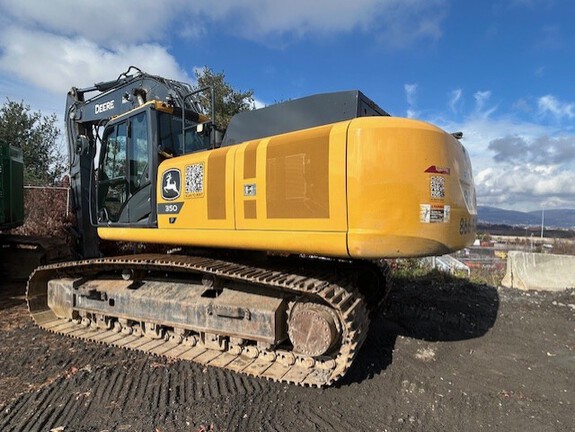
Operating weight is the machine ready to dig: full fuel tank, fluids, usually an operator (175 lb on Deere’s sheets) and a specific bucket, stick, shoe width and counterweight. Each manufacturer picks its own setup and prints it in a footnote, and that is why two “20 ton” machines from different brands can differ by several thousand pounds.
Shipping weight is what actually rides on the trailer. For standard excavators it is usually the operating weight minus the operator, plus or minus whatever bucket goes with it. For the largest machines it can be far less, because they travel in pieces. John Deere’s 870 P-Tier sheet lists packing weights for transport:
| Piece (870 P-Tier) | Weight on Deere’s sheet |
|---|---|
| Base machine, without front attachment and side frames | 63,934 lb |
| Each side frame with 36 in shoes | 28,881 lb |
| Standard counterweight | 29,394 lb |
| Boom (7.1 m mass excavation to 10.0 m) | 16,909 to 20,701 lb |
| Operating weight, assembled | 188,716 lb |
Source: John Deere 870 P-Tier spec sheet, “Packing dimensions and weights for transportation”.
That is why a machine of nearly 189,000 lb can move on public roads at all: it goes on several trucks. Mid-size machines have a version of this too. Deere’s 210 P-Tier sheet lists the counterweight at 9,370 lb and the undercarriage at 16,156 to 17,705 lb. Cat’s pages print a separate shipping height and shipping length for each model, but no separate shipping weight, so for anything under about 80,000 lb plan on the operating weight.
What makes the same model heavier: shoes, undercarriage, counterweight
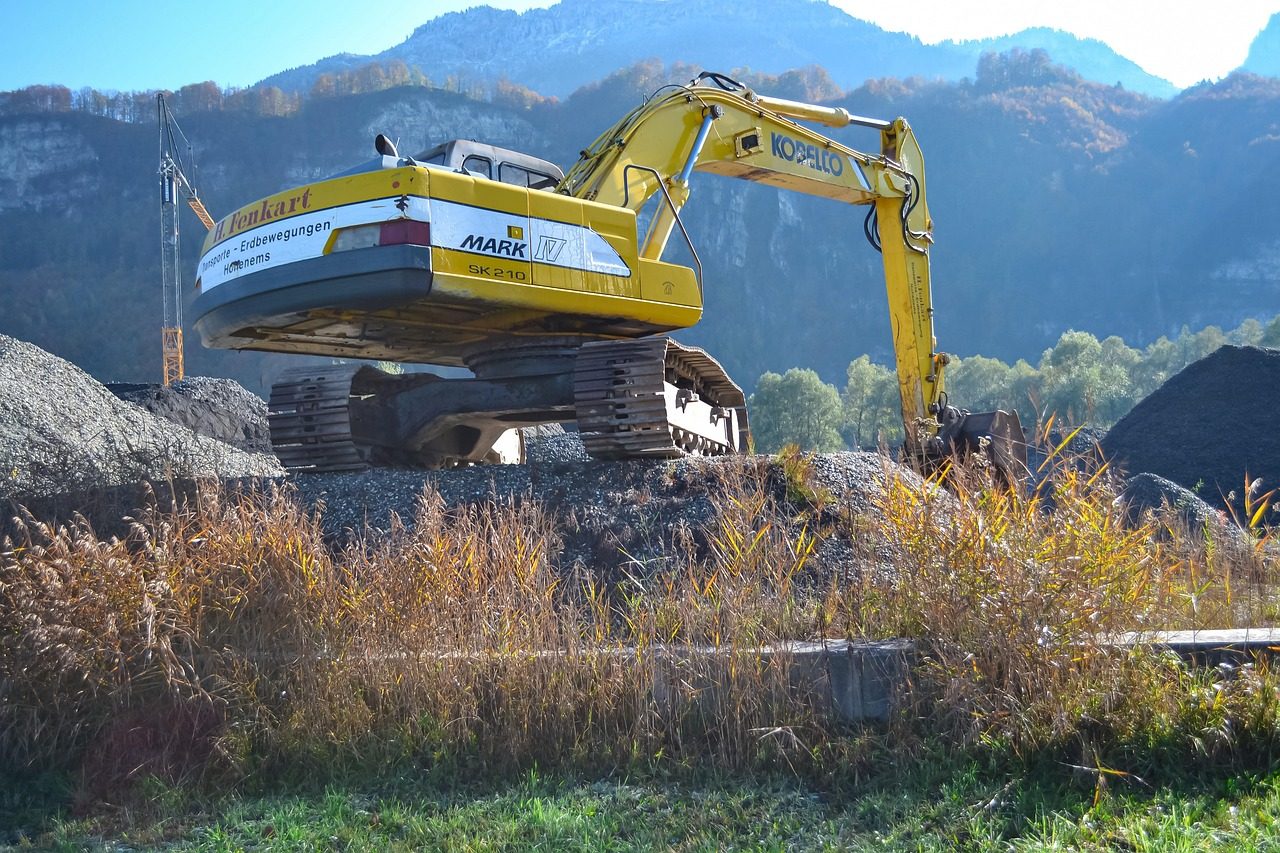
The sheets show where the extra pounds come from:
| Change | Weight it adds | Example from the sheet |
|---|---|---|
| Wider track shoes | About 500 to 1,550 lb | Deere 130 P-Tier 24 to 28 in: +524 lb; Deere 210 P-Tier 24 to 32 in: +1,549 lb |
| Heavy counterweight (and HD boom on the 210) | About 1,300 to 1,550 lb | Deere 210 P-Tier counterweight 9,370 vs 10,692 lb; operating weight +1,543 lb with the HD boom |
| Dozer blade | About 1,000 lb | Deere 130 P-Tier: 29,007 lb without, 30,009 lb with |
| Rubber crawler pads instead of plain steel | About 1,500 lb | Deere 130 P-Tier: 30,500 vs 29,007 lb (24 in) |
| Long (L/LC) undercarriage | Small on the sheets we found | Cat 312C L: 28,970 vs 29,010 lb long; Cat 345C L: the same 99,150 lb for both |
| Short or compact radius design | Several thousand pounds | Case CX140E 28,900 lb vs CX145E SR 33,300 lb |
Sources: Deere 130 and 210 P-Tier spec sheets, Cat 312C L and 345C L pages and Case pages linked above. Differences are our arithmetic from the totals the sheets print.
The long undercarriage surprises people. The “L” or “LC” in a model name changes stability, lifting capacity and track length far more than weight, and on the Cat sheets above the difference is 40 lb or nothing. Shoe width and counterweight are what move the number. Before you pick a row in any chart, check the shoe width on the machine, whether it has a blade, and whether it carries the heavy counterweight.
Attachments: bucket, thumb, coupler and hammer
Most excavator sheets include one bucket in the operating weight, and it is not small. Deere lists the bucket in each figure:
- 130 P-Tier: 913 lb general-purpose bucket
- 210 P-Tier: 1,951 lb general-purpose bucket
- 350 P-Tier: 3,377 lb heavy-duty bucket
- 870 P-Tier: 7,845 lb bucket
Everything else you haul with the machine is on top: a quick coupler, a hydraulic thumb, a second bucket, a hammer, a grapple. None of those are in the operating weight, and a breaker or a big ditching bucket can add thousands of pounds to a load. Get the weight from the attachment’s own plate or sheet, and ask the seller what ships with the machine. A used excavator listing that includes “two buckets and a hammer” is a heavier load than the same machine bare.
❌ Wrong: “The 336 is 81,100 lb on Cat’s page, so with a spare bucket we’re around 82,000.”
✅ Right: “Cat’s 81,100 lb is one setup. This one is an older 336F L, which Cat lists at 80,500 to 88,400 lb. It has the wide shoes and a thumb, and the extra bucket weighs what its plate says. I’ll give the hauler the high number and the attachment weights.”
What it takes to haul each class in Pennsylvania
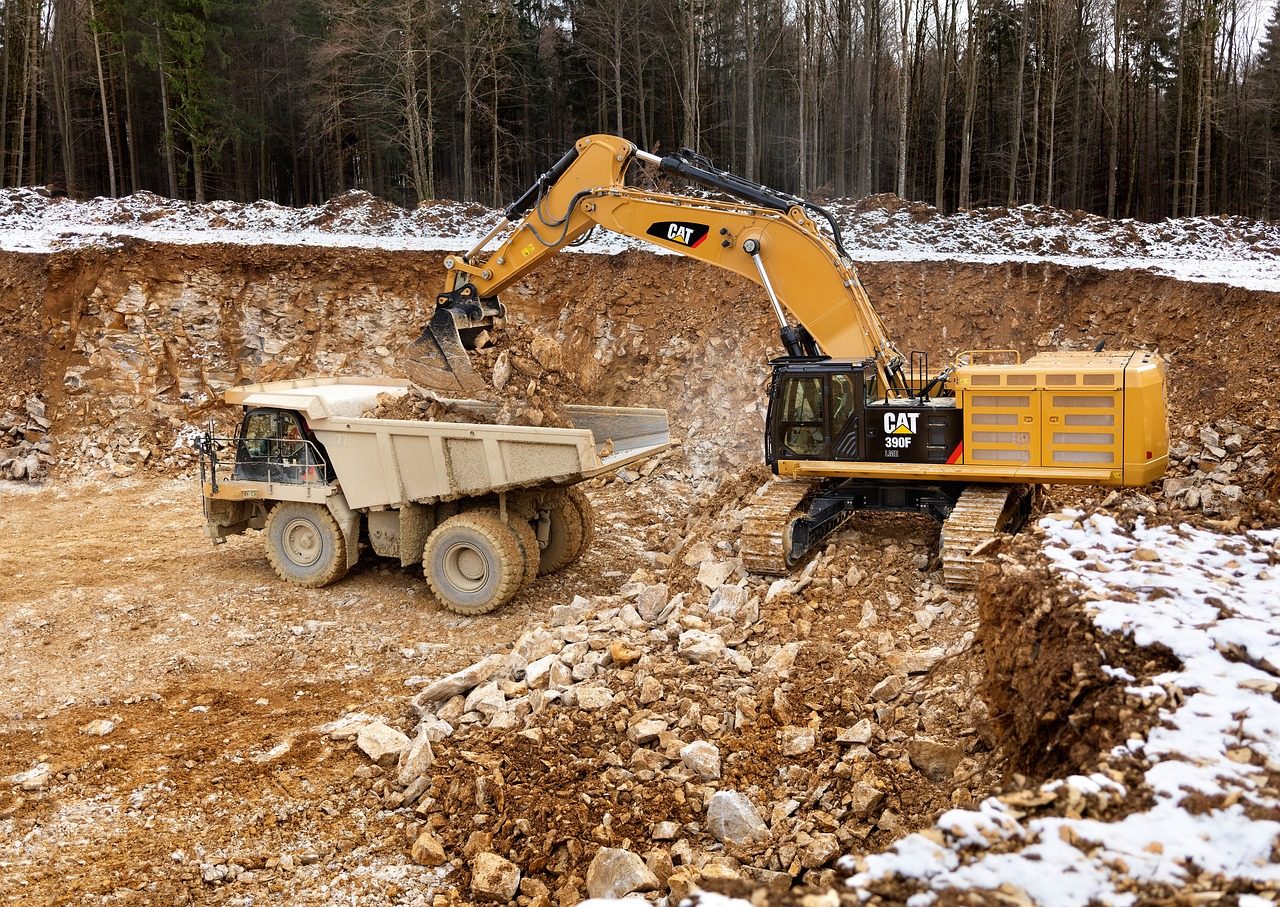
Our guide to transporting heavy equipment in Pennsylvania covers trailers, CDL rules, tie-downs and PennDOT permits in detail. In short: PennDOT’s legal limits without a permit are 8 ft 6 in wide, 13 ft 6 in tall and 80,000 lb gross for the whole vehicle or combination. Here is how the classes line up against them:
| Class | Usual rig | Width vs 8 ft 6 in | Weight vs 80,000 lb gross |
|---|---|---|---|
| 13 to 15 t (29,000 to 34,000 lb) | Semi and lowboy; some heavy goosenecks within their rating | Cat 313 and 315: 8.2 ft transport width; Deere 130 P-Tier: 8 ft 6 in on 24 in shoes, 8 ft 10 in on 28 in | Leaves about 46,000 to 51,000 lb for truck and trailer |
| 16 to 20 t (34,000 to 44,000 lb) | Semi and lowboy | Cat 317 8.8 ft, 319 9.5 ft; Deere 160 P-Tier 8 ft 6 in to 8 ft 10 in; Bobcat E145 102 in | Leaves about 36,000 to 46,000 lb for truck and trailer |
| 20 to 30 t (45,000 to 72,000 lb) | Semi and lowboy | Cat 320 9.8 ft; Deere 210 P-Tier 9 ft 10 in to 10 ft 6 in; Deere 300 P-Tier 10 ft 10 in to 11 ft 1 in: permit | Leaves about 8,000 to 35,000 lb for truck and trailer: the rig’s empty weight decides |
| 30 to 50 t (77,000 to 117,500 lb, older models included) | Heavy haul lowboy, multi-axle | Cat 336 10.5 ft; Deere 350 P-Tier 10 ft 10 in to 11 ft 2 in: permit | Machine alone is at or over 80,000 lb: overweight permit or partial disassembly |
| 70 t and up (140,000 lb and more) | Several trucks; machine broken down | Cat 395 12.9 ft transport width | Moves in pieces (see the 870 P-Tier above) |
Sources: transport and overall widths from the Cat product pages and Deere sheets linked above, Bobcat E145 page; PennDOT limits as cited in our transport guide. Widths depend on shoe width.
Every machine in this guide is over 10,000 lb, so federal rules call for at least four tie-downs with the bucket and boom lowered and secured (49 CFR 393.130). And because the truck and lowboy add their own weight to the 80,000 lb limit, a machine well under that number can still put the whole combination over it. Ask the hauler what their tractor and trailer weigh empty; we do not publish a figure because rigs vary too much. Give the hauler the sheet weight in the heaviest configuration that matches the machine, its shoe width and its attachments, and confirm in writing that permits are in the quote.
Ground pressure: why weight is not the whole story on soft ground
Ground pressure is the machine’s weight spread over its track area, in psi. It decides whether the excavator sinks on wet ground or crushes a driveway, and it rises with weight and drops with wider shoes:
| Model | Ground pressure |
|---|---|
| Komatsu PC138USLC-11 | 4.77 psi (28 in shoes) |
| John Deere 160 P-Tier | 5.95 psi (24 in) / 5.08 psi (28 in) |
| John Deere 210 P-Tier | 6.44 psi (24 in) to 4.98 psi (32 in) |
| John Deere 350 P-Tier | 7.27 psi (32 in) |
| Komatsu PC490LC-11 | 10.38 psi (28 in) |
| John Deere 670 / 870 P-Tier | 10.9 / 12.0 psi (36 in) |
| Komatsu PC650LC-11 | 15.16 psi (24 in) |
Sources: Deere spec sheets and Komatsu model pages linked above.
The 210 P-Tier figures show the trade: going from 24 to 32 in shoes adds about 1,550 lb but drops ground pressure by almost a quarter. Wide shoes also make the machine wider, which can turn a legal load into a permit load. On a used machine, the shoes on it now are the ones that count.
How to find the weight of a specific used excavator
- Read the serial plate for the exact model and series. A 336D L, 336E L and 336F L are three different sheets; a 336E L Hybrid is a fourth. Deere G-Series and P-Tier machines with the same number have separate sheets.
- Find the manufacturer’s sheet for that series and read the footnote. Note the shoe width, counterweight, stick and bucket the figure assumes. The operator’s manual and the decal on the machine often list it too.
- Match the machine in front of you. Measure the shoe width, check for a blade, a heavy counterweight or a long stick. If the sheet prints a range, use the high end unless you can prove otherwise.
- Add what rides with it: extra buckets, thumb, coupler, hammer, chains and binders.
- If the margin is thin, weigh it. A certified truck scale ticket with the machine on the trailer settles it for the hauler and for the permit.
While you are at the machine, our used excavator inspection checklist covers what to check besides weight.
The bottom line
Excavator weight runs from about 29,000 lb for a 13 ton machine to more than 200,000 lb at the top of the construction range, and most of what Pennsylvania dealers sell falls between 29,000 and 117,500 lb. The number that matters is the one for the exact series and setup, with the shoes, counterweight and attachments that come with it. Of the 29 excavators listed in Pennsylvania today with an official sheet, 10 reach 80,000 lb or more on their own, so for a 30 ton machine and up, an overweight permit or partial disassembly is part of the price. Take the figure from the manufacturer’s sheet, use the heavy end of the range, add the attachments, and give that number to the hauler before you agree on a price.
Find an excavator you can plan the haul for
Browse the excavators Pennsylvania dealers have listed right now, with year, hours, price and location on every listing. Check the model against the weight charts above before you call a hauler.
Browse excavators for sale →FAQ
How much does a 20 ton excavator weigh?
About 45,000 to 55,000 lb on the manufacturers’ sheets. Cat lists the 320 at 49,800 lb and the 320 GC at 48,500 lb, John Deere the 210 P-Tier at 50,391 to 53,483 lb, Case the CX220E at 50,000 lb, Komatsu the PC220LC-12 at 53,352 to 54,675 lb and Volvo the EC210 at 45,149 to 52,941 lb.
How much does a Cat 320 excavator weigh?
Cat lists the current 320 at 49,800 lb (22,600 kg) with a reach boom, 9 ft 6 in stick, 1.56 yd³ heavy-duty bucket, 31 in shoes and a 10,400 lb counterweight. The 320 GC is 48,500 lb. Older 320 series have their own sheets, so check the serial plate.
How much does a John Deere 350 excavator weigh?
John Deere lists the 350 P-Tier at 80,985 lb with a full fuel tank, a 175 lb operator, a 3,377 lb heavy-duty bucket, a 13 ft 1 in arm, 32 in shoes and a 15,274 lb counterweight. Its ground pressure is 7.27 psi.
How much does a Cat 336 weigh?
Cat lists the current 336 at 81,100 lb. The older 336D L is 78,634 to 82,962 lb, the 336E L 79,684 to 85,288 lb and the 336F L 80,500 to 88,400 lb, depending on configuration.
Do you need a permit to haul a 30 ton excavator in Pennsylvania?
Usually yes. Most 30 ton machines are wider than 8 ft 6 in over the tracks, like the Deere 300 P-Tier at 10 ft 10 in to 11 ft 1 in, and a machine near 70,000 lb leaves little of the 80,000 lb gross limit for the truck and lowboy. Going over either limit requires a PennDOT special hauling permit.
What is the difference between operating weight and shipping weight?
Operating weight is the machine ready to work, with fuel, fluids, usually an operator and the bucket the sheet specifies. Shipping weight is what rides on the trailer. For most excavators it is close to operating weight; for the largest ones it is split across several loads, like the John Deere 870 P-Tier, whose base machine ships at 63,934 lb out of 188,716 lb assembled.