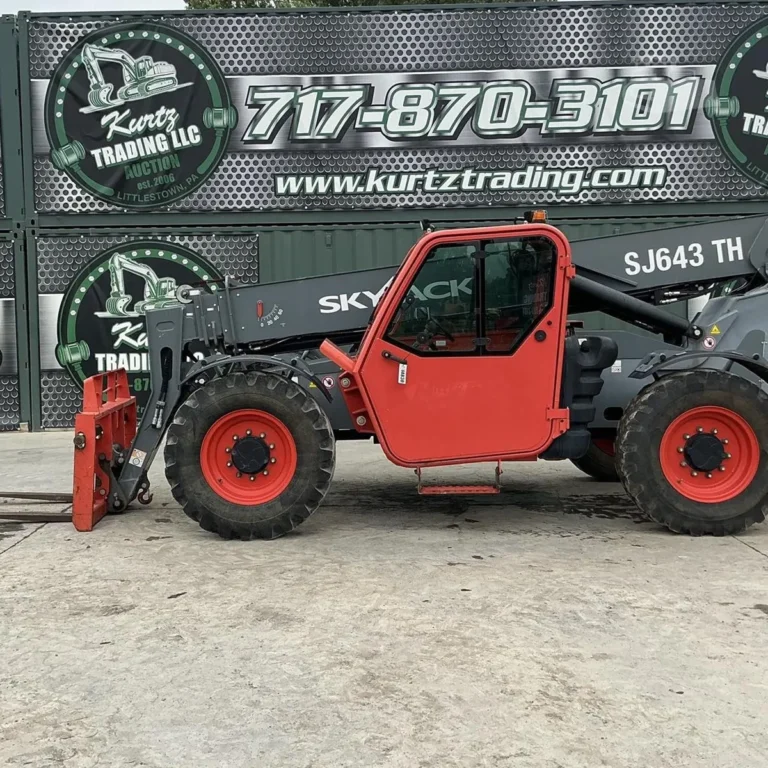
Telehandlers for sale
Pennsylvania dealers have 13 used telehandlers listed here, priced from $17,500 to $95,500, with a median asking price of $42,900. Each listing shows the year, hours and asking price, and you contact the dealer directly: no bidding and no buyer's premium.
Before you compare prices, compare load charts. A telehandler's headline capacity only applies with the boom low and close in, so the right machine is the one that lifts your load to your height and reach.
Shop by make
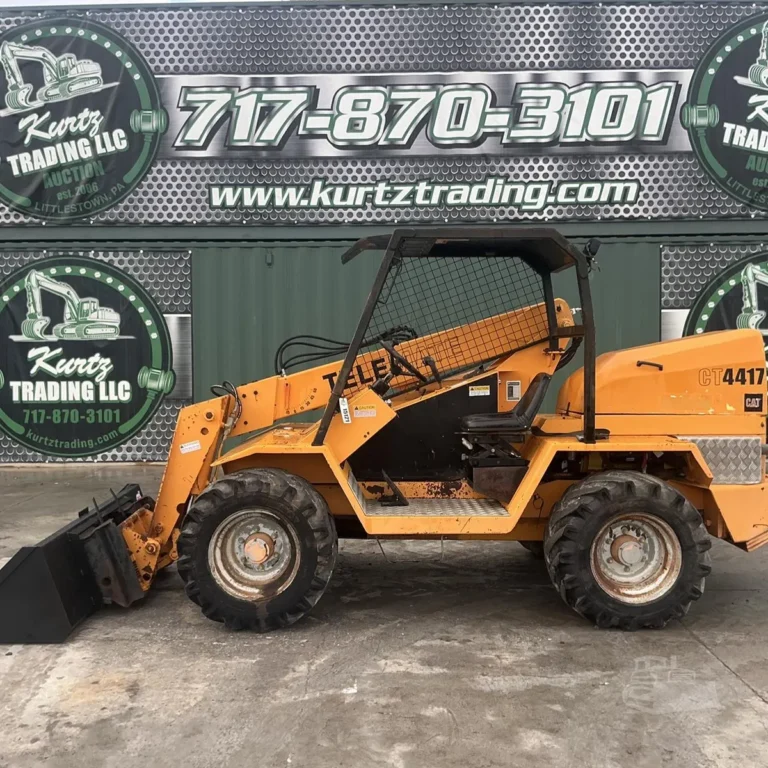
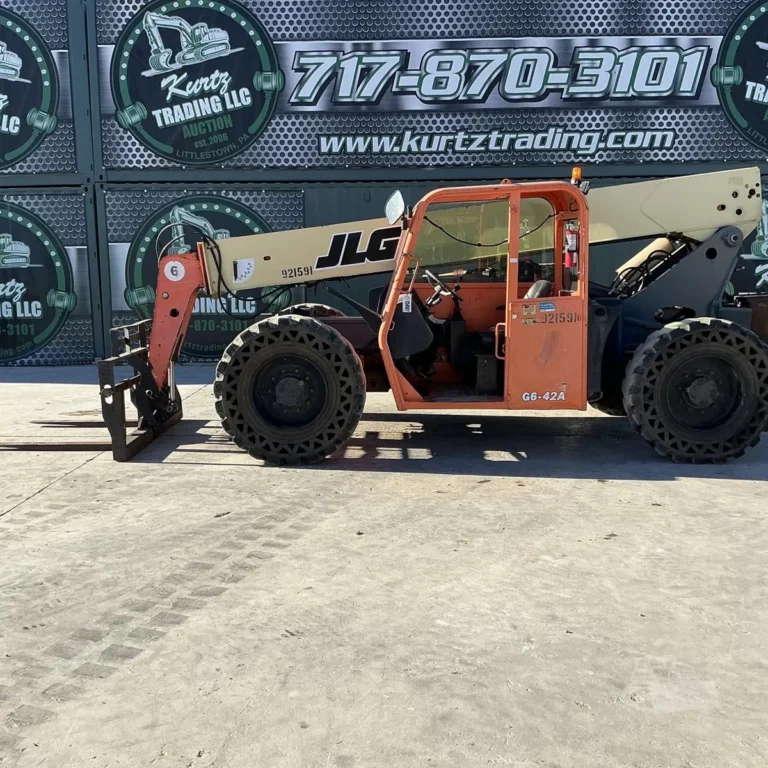
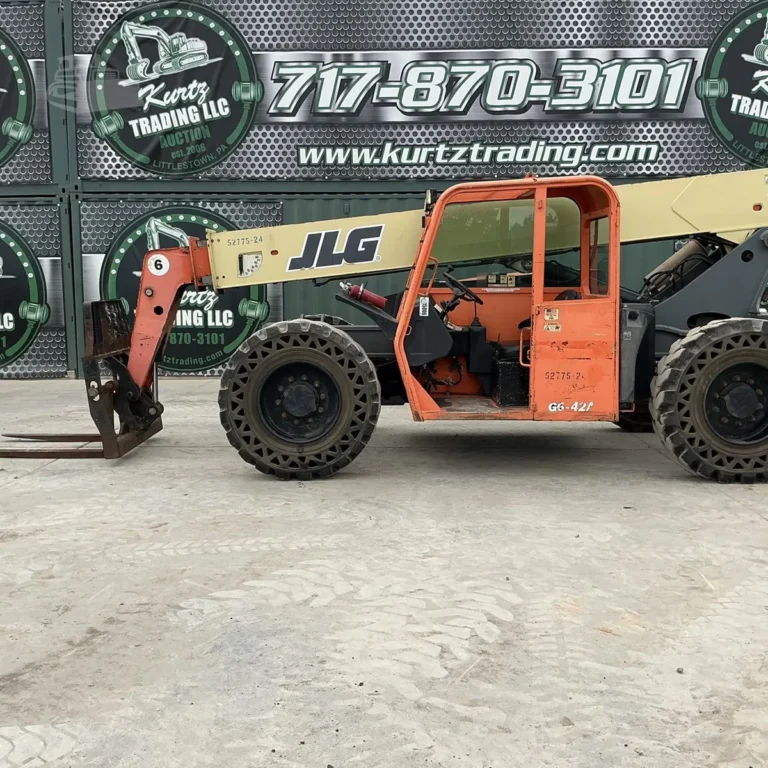
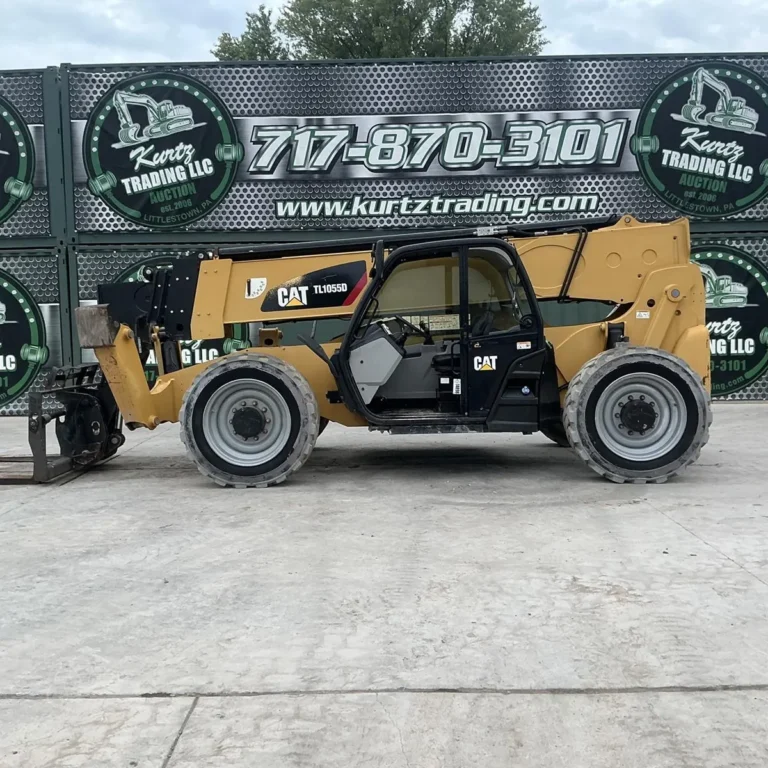
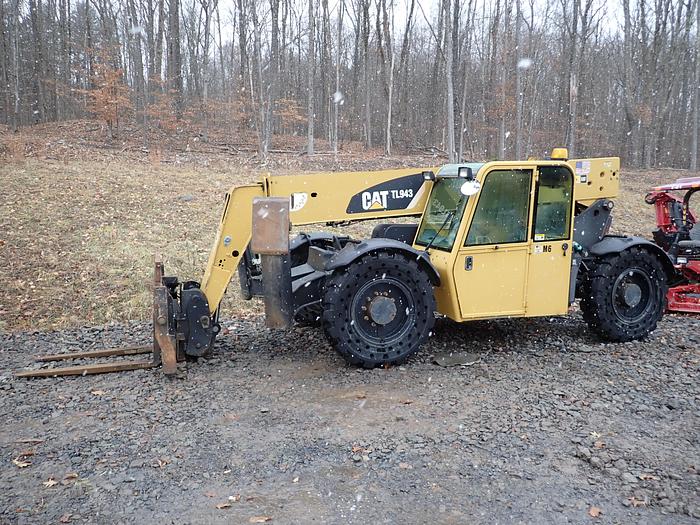
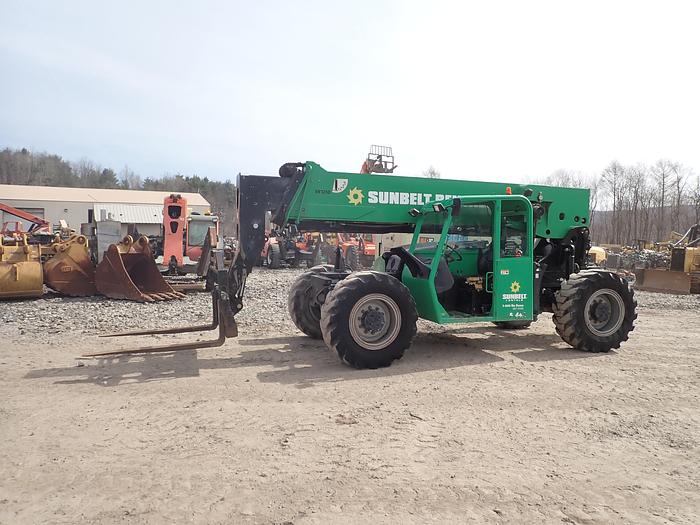
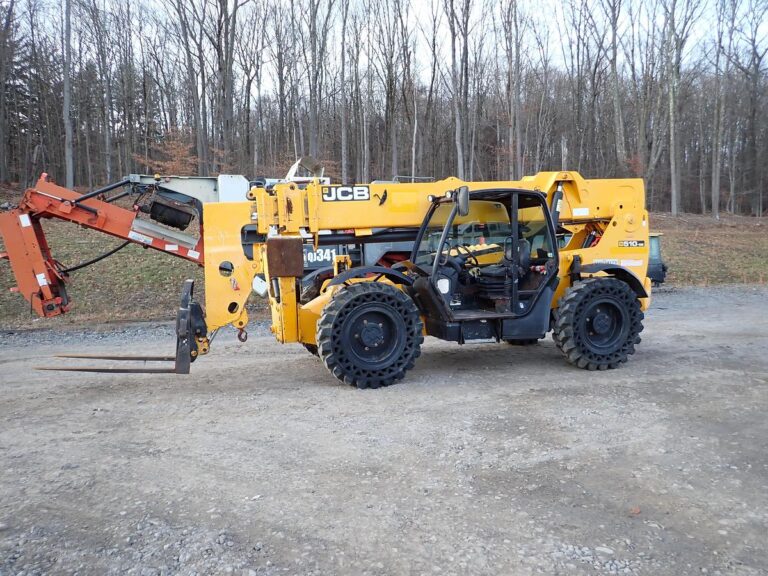
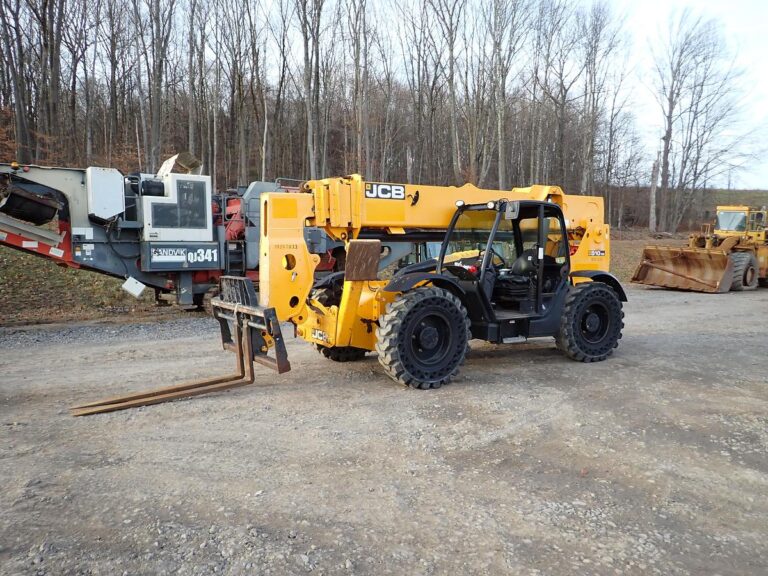

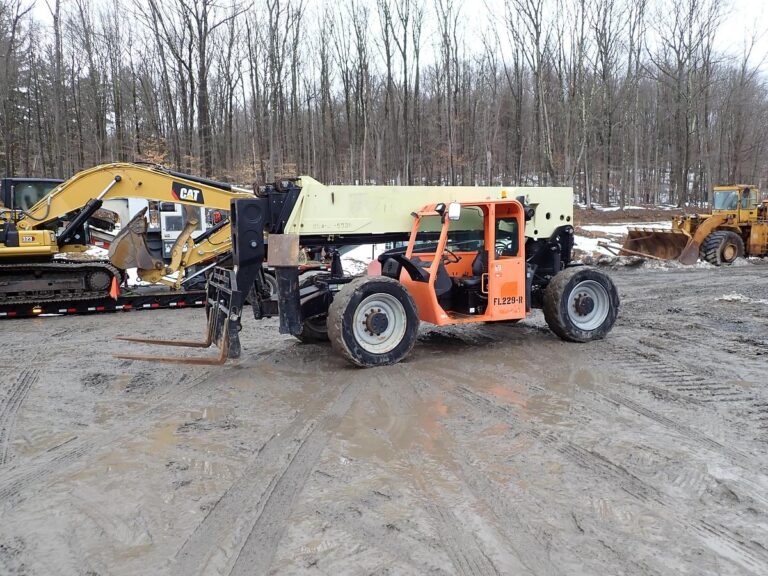

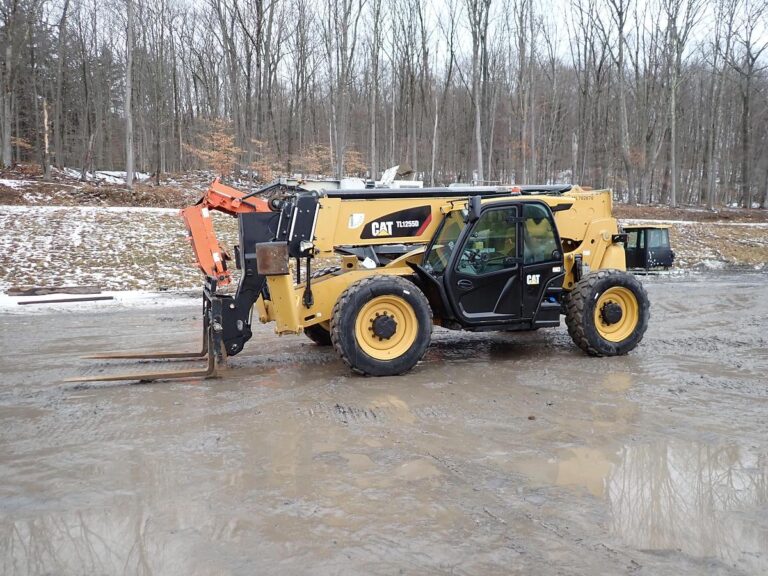
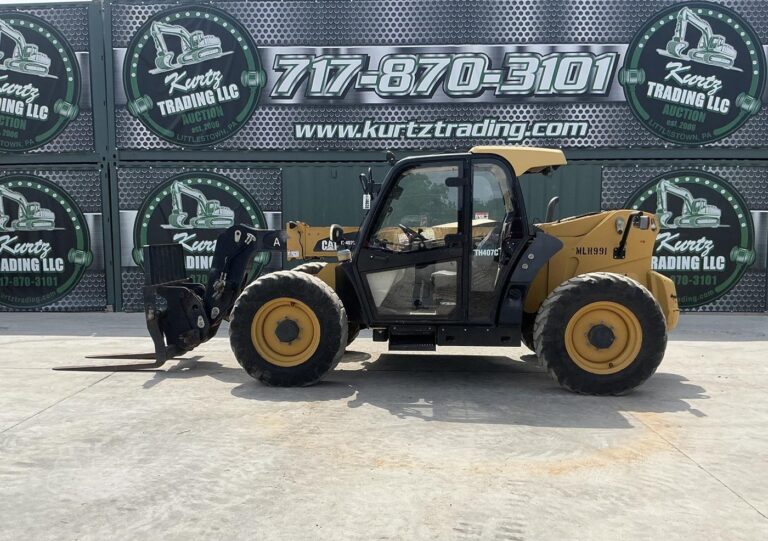
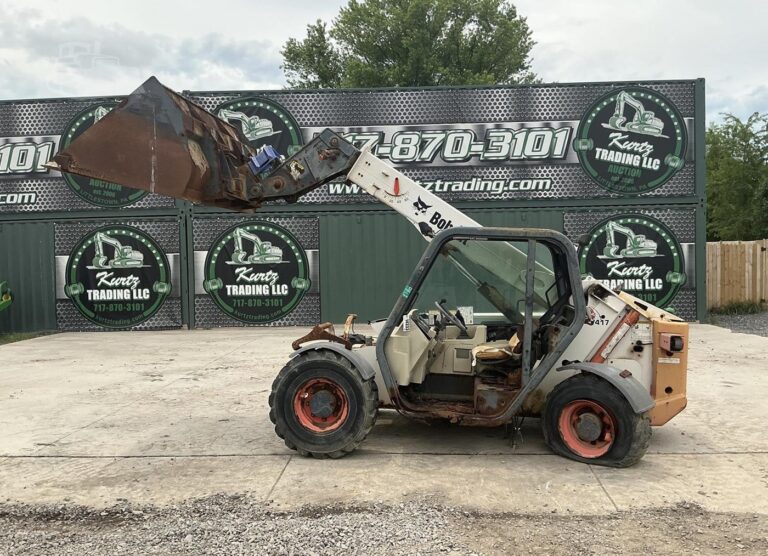
Read the model number, then the load chart
Most telehandler model numbers carry two figures: rated capacity and maximum lift height. As a rule of thumb:
| Model | Usually means |
|---|---|
| SkyTrak 8042 | About 8,000 lb, 42 ft |
| JCB 510-56 | About 10,000 lb, 56 ft |
| JLG G12-55A | About 12,000 lb, 55 ft |
| Caterpillar TL1255D | About 12,000 lb, 55 ft |
Not every model follows the pattern, and the letters mark generations and options, so use the number to shortlist, not as a spec. Then get the load chart for that exact machine.
The chart matters more than the headline because capacity drops as the boom goes up and out. The full rated load is only available with the boom low and close to the frame. At full height, and even more at full forward reach, the safe load is far smaller. If you need to set a pallet of block 30 feet out from the tires, find that point on the chart. Do not assume a bigger number on the side of the boom covers it.
Who buys used telehandlers
- Framers and builders: trusses, sheathing and lumber bunks to upper floors. Height and a truss boom or jib matter most.
- Masons: pallets of block, brick and mortar onto the scaffold. Reach usually matters more than height, so read the chart at full extension.
- Farms: bales, feed and bulk bags, often with a bucket or bale spear. Lift height matters less; size and visibility in a barn aisle matter more.
On a farm, equipment used predominantly and directly in farming can be exempt from Pennsylvania sales tax with Form REV-1220. Our guide to sales tax on heavy equipment in PA explains who qualifies.
Attachments change the deal
Check whether the carriage and forks are included. Buckets, truss booms, jibs and bale spears add value only if they come with the machine and fit it. Three questions to ask:
- What is included? Get the attachment list in writing with the price.
- Will my attachments fit? Couplers differ between brands and generations. Check before you count on the forks or bucket you already own.
- Is there a chart for it? Each attachment changes what the machine can lift. The cab should carry a load chart for every attachment you plan to use.
If most of your work is lifting people rather than material, look at aerial lifts as well.
Hours and price
On a building site a telehandler often works a full day, and the meter shows it. In our November 2026 hours study, the typical used telehandler ran about 440 hours a year, with a typical range of 380 to 580. That is more than a skid steer (190) or a wheel loader (270) and less than an excavator (530). At 5 years old, 1,900 to 2,900 hours is normal; at 10 years, 3,800 to 5,800.
In our November 2026 market report, 10 telehandlers from Pennsylvania dealers had a median asking price of $44,200, from $12,500 to $95,500, with a median model year of 2018. The 8 that showed hours had a median of 3,593. Much of that spread is size: a high-reach 12,000 lb machine and a compact farm unit do not belong in the same comparison, so match capacity and height first, then let the year and hours adjust the price.
What to check before you buy
- Boom sections. Extend and retract fully. Movement should be smooth, with no jerks or noise. Look for scoring, worn or missing wear pads, and weld repairs on the boom. A welded boom needs an explanation and paperwork.
- Play at the tip. With the boom extended and the forks just off the ground, rock the carriage. Visible slop means worn pads or pins.
- Cylinder drift. Raise the boom partway, shut the engine off and watch for a few minutes. A boom that creeps down has a cylinder or valve problem.
- Frame leveling. On a slight slope, level the frame both ways and check the level indicator. If it has stabilizers, lower them and make sure they hold.
- Steering modes. Try two-wheel, four-wheel and crab steer. Each should engage cleanly and the wheels should line up again.
- Cab and paperwork. Load charts and decals should be legible and match the machine. Read the serial plate yourself and run a theft and lien check before you pay.
Auction, financing and transport
Telehandlers also sell at consignment auctions. Add the buyer's premium, any online fee and sales tax (6% in Pennsylvania, plus 1% in Allegheny County and 2% in Philadelphia) before you compare a hammer price with a dealer price. Read how to buy at an equipment auction and check the auction calendar. For loans, leases and Section 179, see financing used heavy equipment.
To haul one, lower and secure the boom on the deck and check the weight on the spec sheet: at 10,000 lb or more, the federal tie-down rule for heavy machinery applies. Our guide to transporting heavy equipment in PA covers trailers, chains and PennDOT permits.
Telehandler dealers in Pennsylvania
- Old Forge Power Equipment, Carbondale, PA: 8 listings on Heavy Listing
- Kurtz Trading, Littlestown, PA: 5 listings on Heavy Listing
Other dealers in the state that sell telehandlers (not on Heavy Listing; check their own sites for stock):
- Cleveland Brothers Equipment Co., Statewide
- Access Lift Equipment, Chambersburg
- Foley, Inc., Bensalem
- Best Line Equipment, Muncy
- Matteson Heavy Equipment, LLC, Centerville
- Stephenson Equipment, Inc., Harrisburg
All equipment dealers in Pennsylvania →
Frequently asked questions
How much does a used telehandler cost?
In our November 2026 market report, 10 used telehandlers from Pennsylvania dealers had a median asking price of $44,200, from $12,500 to $95,500. The live median for the listings on this page is at the top. See the market report for every category.
What do the numbers in a telehandler model name mean?
Usually the rated capacity and the maximum lift height: a SkyTrak 8042 is about 8,000 lb and 42 feet, a JLG G12-55A about 12,000 lb and 55 feet. Treat it as a rule of thumb and check the load chart for the exact machine.
How many hours is a lot on a used telehandler?
The typical used telehandler in our study ran about 440 hours a year, so 3,800 to 5,800 hours is normal at 10 years old. Judge the hours against the age and ask for the service records.
Why can't a telehandler lift its rated capacity at full height?
Capacity drops as the boom goes up and out, because the load moves farther from the machine. The rated capacity applies only with the boom low and close in; the load chart in the cab shows what it can lift at each height and reach.
Is a farm telehandler exempt from Pennsylvania sales tax?
It can be, if it is used predominantly and directly in farming and you give the seller Form REV-1220. See our guide to PA sales tax on heavy equipment.