A 2019 mini excavator for $18,000 under the going rate, a seller who can only meet at a gas station lot, and a story about a divorce. Sometimes that is a real bargain. Sometimes the machine was taken off a job site in another county last month, or a bank still has a claim on it that does not go away when you pay the seller.
This guide shows how to check a used heavy equipment serial number for theft and how to run an equipment lien search in Pennsylvania before you hand over money. It covers the serial plate, the theft databases a buyer can actually use, a UCC search with the PA Department of State, sellers who still owe on the machine, and red flags in private and online deals.
Why it matters: most heavy equipment has no title
When you buy a used pickup in Pennsylvania, the title tells you who owns it and whether a bank has a lien. Most off-road machines have nothing like that. An excavator, dozer, skid steer or wheel loader usually changes hands with a bill of sale, and that piece of paper is only as good as the person who signs it.
There are exceptions. Trucks and most trailers are titled through PennDOT, and some self-propelled machines that travel public roads can be registered with PennDOT as “special mobile equipment”. For those, check the title for a lienholder. For everything else, the proof is on you:
- Theft: if the machine was stolen, the true owner (or the insurer that paid the claim) can take it back. You lose the machine and the money.
- Liens: a lender’s security interest can stay with the machine after a private sale. If the seller stops paying, the lender may come looking for the collateral, and it is now in your yard.
Step 1: Find the serial number plate and read it yourself
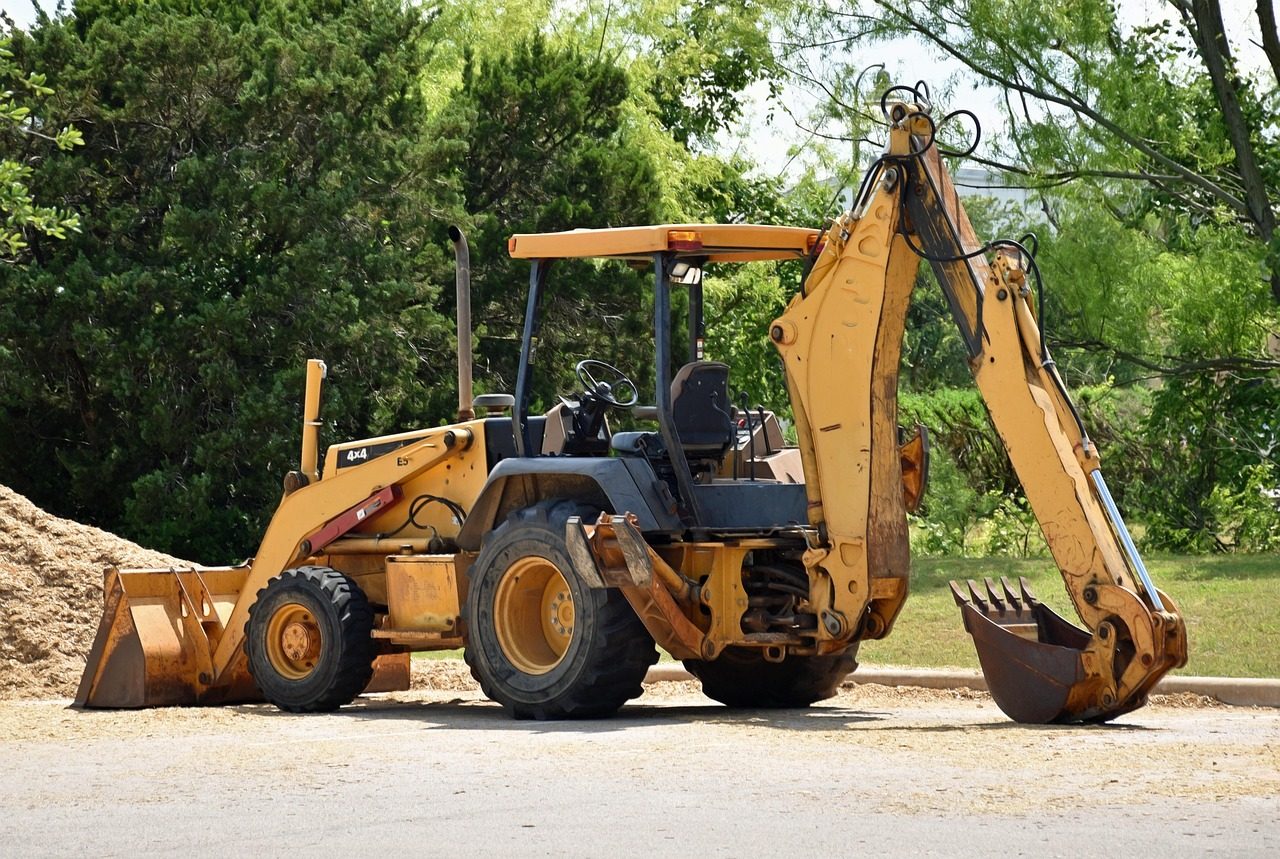
Every machine from a major manufacturer carries a serial number plate, often called the PIN (product identification number). Newer machines from the big brands often use a 17-character PIN; older machines use shorter serials. Where to look:
- Excavators: on the upper structure or main frame, usually near the cab.
- Skid steers and track loaders: on the frame or loader tower, near the cab door or behind the operator.
- Dozers, wheel loaders and tractors: on the main frame; the operator’s manual shows the exact spot.
Signs the serial plate was tampered with
- Plate missing, painted over or “lost in a repaint”
- Rivets that do not match the factory ones, or fresh welds and scratch marks around the plate
- A plate that looks newer or cleaner than the paint around it
- Characters that look ground off, restamped or uneven
- A serial that does not match the model or year the seller gave you (dealers for the brand can usually decode it)
❌ Wrong: Taking the serial number from the seller’s text message or the listing photo.
✅ Right: Reading it off the plate in person, taking a clear photo of the plate, and checking that the same number appears on the bill of sale, the invoice and any lien release.
Step 2: Check the serial against theft records
A lot of online advice overpromises here. There is no free public database where you type in an excavator serial and get a “stolen or not” answer.
National Equipment Register (NER): HELPtech and IRONcheck
The National Equipment Register, now part of Verisk, keeps a database of equipment theft and ownership records. Its about page says it holds “over 100,000 equipment theft reports” and has access to “more than 15 million ownership records” of construction and farm equipment. Two products matter here:
- HELPtech is the owner side. Owners register their machines, and NER’s HELPtech page says “law enforcement, their investigative agents, and NER analysts” can access the information. It is not a public lookup for buyers.
- IRONcheck is a paid report by serial number, the product NER pitches for checking a machine before a deal. NER’s IRONcheck page says it runs a theft database search, an insurance claims history search, a UCC history search and a check of PIN accuracy, with the report within 24 business hours. That page lists $49.95 per search; NER’s FAQ page shows a different figure, so confirm the price when you order.
NER also says plainly that it makes no warranty about the accuracy of its records or about unlisted equipment. A clean report means nothing turned up, not that the machine is guaranteed clean.
Police and NICB
Some local police departments will run a serial number for a buyer; others will not. Ask. You will also see the National Insurance Crime Bureau (NICB) mentioned in theft advice. We could not open its official pages to confirm what a private buyer can search there for off-road equipment, so check nicb.org yourself rather than relying on a summary, including ours.
Step 3: Run a UCC lien search in Pennsylvania
When a bank, a dealer’s finance company or an equipment lender takes a machine as collateral, it usually files a UCC financing statement. For untitled equipment, that filing is how the world finds out about the lien. A UCC search shows filings against a person or company, not against a serial number, so you search the seller’s name.
Per the PA Department of State’s UCC page:
- Search fee: $12.00 per debtor name searched; copies are $3.00 per page, and certified copies cost an additional $28.00.
- How to ask: the page gives a phone line for UCC questions and searches (717-787-1057, option 3) and a mailing address (Uniform Commercial Code, PO Box 8721, Harrisburg, PA 17105-8721). It also links the UCC-11 Information Request form.
- Online: lenders can file UCC financing statements and amendments online through the Department’s Business Filing System. Check that system for its current search options; the UCC page itself does not describe an online search tool.
Search in the right state, under the right name
The filing goes where the debtor is “located” (13 Pa.C.S. § 9307), not where the machine sits:
- Individual seller: the state of their principal residence. A Maryland contractor selling a machine parked in York County is searched in Maryland.
- Company seller: the state where the LLC or corporation is organized. A Delaware LLC’s liens are filed in Delaware, even if the company only works in Pennsylvania.
- Exact legal name: search the name exactly as it appears on the business registration, plus obvious variations. You can confirm a Pennsylvania company’s registered name in the Department of State’s business name search.
Read every result. A filing that lists “all equipment” or “all assets” covers the machine you are buying, even if the serial number is not listed. If you see one, ask the seller for the lender’s name and get a written release before you pay.
Farm equipment liens
Tractors, combines and other farm machines are financed just like construction equipment: by banks, farm credit lenders, manufacturer finance arms and government farm loan programs. They usually have no title either, so the same UCC search applies. A few things are different on the farm:
- Blanket filings are common. An operating loan may cover “all equipment, crops and livestock”. Your tractor is in there even if it is not named.
- Search every name. The individual farmer, the spouse, and any farm LLC or partnership. Machines often sit in one name while the loan is in another.
- Dispersal sales help. At a farm auction run by an established auctioneer, ask how liens on the sale items are handled. Our guide to farm equipment auctions in Pennsylvania lists where most used tractors change hands.
What to ask the seller before you pay
An honest seller will not be offended by any of these.
- Proof they own it: their original bill of sale or dealer invoice, with the same serial number as the machine.
- Is there a loan on it? Ask straight out. Then check with the UCC search, whatever the answer.
- If there was a loan: a lien release letter from the lender on the lender’s letterhead, naming the machine by serial number, or a UCC-3 amendment showing the filing was terminated.
- If there is a loan now: a written payoff statement from the lender, with a good-through date.
- ID that matches: the seller’s name on their driver’s license should match the paperwork. For a company, the person signing should have the authority to sell.
- Service records: stolen machines rarely come with a service history.
Selling a machine yourself? The same list works in reverse; our guide on how to sell used heavy equipment covers the paperwork a seller should have ready.
Buying from a seller who still has a loan on the machine
This is common and not a red flag on its own. Plenty of contractors sell a machine before it is paid off. The danger is paying the seller and hoping they pay the bank. Do it this way:
- Get the lender’s contact yourself. Look up the lender’s main number on its own website or from the UCC filing, not from a number the seller gives you.
- Get a payoff statement directly from the lender, with the exact amount and the date it is good through.
- Pay the lender the payoff amount directly. Pay the seller only the difference between your price and the payoff.
- Get the release in writing, naming the machine by serial number, and confirm later that the UCC filing was terminated or amended to release the machine.
- Do not take delivery on a promise. If the payoff is more than your price, the seller has to bring the difference to the lender before the deal can close.
On a large purchase, let an attorney or your bank handle the closing. It is cheap next to losing the machine.
Red flags in private and online equipment deals
Online equipment scams follow a pattern: real photos, a price that looks like a steal, and a reason you cannot see the machine.
- ❌ A price far below what similar machines bring. ✅ Check it against real dealer asking prices, like our guides for used excavators and skid steers. A machine far under the market needs a reason you can verify.
- ❌ “Another buyer is coming tonight, I need a deposit now.” ✅ Take the time to run the checks. A real seller will wait a day for a UCC search.
- ❌ Payment by wire to a third party, a relative or a “shipping company”. ✅ Pay the owner of record, or the lender for the payoff, through a method you can trace.
- ❌ No in-person viewing: the machine is “already at the shipper” or “in storage out of state”. ✅ See it, run it and read the plate, or send someone you trust.
- ❌ An escrow service the seller picks, with a website you have never heard of. ✅ Use your own bank, your attorney or an escrow company you chose and verified independently.
Buying from a dealer or an established auction lowers the risk
An established dealer has a business address, a reputation in the area and its own interest in not selling stolen or encumbered machines, because it answers for the bill of sale. Our guide to used heavy equipment dealers in Pennsylvania lists them by region.
Established auctioneers publish their terms, collect payment through set channels and handle titles on trucks and trailers. Our guides to equipment auctions in Pennsylvania and repo equipment auctions explain how liens work when a lender sells a machine. Read the terms for any title disclaimer, and still match the serial on sale day.
Dealer or auction, the tax side applies either way; see PA sales tax on heavy equipment before you budget.
Buy from Pennsylvania dealers you can visit
Heavy Listing lists used construction and farm equipment from Pennsylvania dealers with a real address and phone number. Call the dealer, see the machine and ask for the paperwork, with no buyer’s premium on top.
See PA dealers →Document checklist: what you should have when you drive away
| Document | What it proves | When you need it |
|---|---|---|
| Photo of the serial (PIN) plate | The machine you bought is the one on the paperwork | Always |
| Bill of sale with serial, make, model, year, hours, price, date, both names and signatures | Transfer of ownership for untitled equipment | Always |
| Seller’s proof of ownership (prior bill of sale or dealer invoice) | The seller had the right to sell | Private sales |
| UCC search results on the seller’s name | No recorded lien, or which lender to deal with | Private sales; worth it on any large purchase |
| Theft/history report (for example, IRONcheck) | No match in that database’s theft and claim records | Private and online deals |
| Lender payoff statement | The exact amount to clear the loan | When there is a loan |
| Lien release letter or UCC-3 termination | The lender gave up its claim on the machine | When there was or is a loan |
| Certificate of title, signed over | Ownership and any lienholder | Trucks, trailers and titled machines |
| Copy of the seller’s ID (or company registration) | Who you dealt with | Private sales |
| Payment record (check, ACH, wire confirmation) | What you paid and to whom | Always |
The bottom line
To check if used heavy equipment is stolen or has a lien in Pennsylvania, start with the plate: read the serial yourself and match it to every document. Order a theft and history report, ask the police, and run a UCC search on the seller’s name in the state where the seller is located. If a loan exists, pay the lender, not the seller, and leave with a written release. A machine that cannot pass those checks is not a bargain at any price.
Shopping now? Compare what you are offered against used equipment listed by Pennsylvania dealers on Heavy Listing.
This article is general information, not legal advice. For a large purchase or a lien you do not understand, ask an attorney to review the search results and the closing.
Frequently asked questions
How do I check if a piece of heavy equipment is stolen?
Read the serial (PIN) off the machine, look for signs of plate tampering, and order a history report such as NER’s IRONcheck, which searches theft and insurance claim records. You can also ask your local police department whether it will run the serial. No free public database covers all off-road equipment.
Can I search a heavy equipment serial number for free?
Not in a way that settles the question. NER’s HELPtech database is accessed by law enforcement and NER analysts; buyers order a paid IRONcheck report. Police access varies by department.
How do I check for a lien on equipment in Pennsylvania?
Run a UCC search on the seller’s name in the state where the seller is located: the state of residence for an individual, the state of organization for a company. The PA Department of State lists a $12 fee per debtor name searched. For titled trucks and trailers, check the lienholder on the title.
Does a lien stay with the equipment after it is sold?
It can. In a private sale, a lender’s security interest may follow the machine to the new owner. That is why you pay off the loan through the lender and get a written release before you take the machine.
Does heavy equipment have a title in Pennsylvania?
Most off-road construction and farm machines do not; they sell with a bill of sale. Trucks and most trailers are titled through PennDOT, and some machines that travel public roads can be registered as special mobile equipment.