
A Cat excavator model number tells you more than most buyers use it for. The three digits put the machine in a size class, the letter after them tells you which generation it belongs to, and the letters at the end describe the undercarriage or the tail. Read it right and a listing that says “2013 336EL H” already tells you it is a 36 ton class, E series, long undercarriage hybrid, before you open the photos.
This guide decodes the numbers with figures from Caterpillar’s own product pages and spec sheets: the current lineup from the 313 to the 395, the suffixes, the B through F series and the Next Generation machines that dropped the letter. Then it shows the 24 used Cat excavators Pennsylvania dealers had listed on Heavy Listing on November 25, 2026, sorted by generation.
How to read a Cat excavator model number
Take a real listing title from our inventory, “336EL H”, and split it.
| Part | Example | What it tells you |
|---|---|---|
| First digit | 336 | Cat hydraulic excavator line. Every crawler model from the 300.9D mini to the 395 starts with 3. Wheeled excavators add an M in front (M314, M318, M322). |
| Last two digits | 336 | Size class. On current models it lands near the operating weight in metric tons: the 336 is listed at 36,800 kg. |
| Series letter | 336E | Generation: B, C, D, E or F. No letter on a current machine means Next Generation. |
| Undercarriage or radius | 336EL | L long undercarriage, LN long and narrow, CR or LCR compact radius. |
| Variant | 336EL H | H is the hybrid: Cat’s archive files it as the “336E H Hybrid”. GC is a lower cost version of the same size class. |
Sources: Cat excavator product listing, US (Caterpillar product content site), current and non-current products; Cat 336 US product page.
The size digits are a class, not a scale reading. Cat does not publish a decoder for them, and the spec pages show the gap: the 320 is 22.6 t, the 323 is 25.0 t, the 325 with its heavy duty undercarriage is 28.4 t while the 326 is 25.6 t. Its UK dealer Finning describes the 320, 320 GC and 323 together as “20-ton size class excavators”. Use the number to find the class, then check the operating weight on the sheet for that exact machine before you book a trailer. Our guide on how much an excavator weighs covers the weights and hauling.
What L, LN, CR, GC and the other suffixes mean
| Suffix | Meaning | Example in Cat’s lineup |
|---|---|---|
| L | Long undercarriage. Older spec sheets list weights and roller counts “with Long Undercarriage”. | 320D L, 330C L, 349F L |
| LN | Long and narrow undercarriage, for narrower transport width | 320B LN, 336E L/LN |
| CR / LCR | Compact radius: the counterweight stays closer to the tracks when the house swings | 321D LCR, 328D LCR, current 335 |
| GC | Same size class, lower power and simpler spec, sold on low cost per hour | 313 GC, 320 GC, 330 GC |
| H | Hybrid | 336E H |
| UHD, Straight Boom, Long Reach | Demolition and long reach versions of a base machine | 340 UHD, 352 Long Reach |
| No letter (current) | Next Generation model. Cat lists the standard undercarriage configuration without an L. | 320, 323, 336 |
Sources: Cat product pages for the 320B LN (“Long and narrow (LN) undercarriage”), 320D/320D L, 328D LCR (“compact radius (CR) excavators”), 313F L GC, 335, and the Cat demolition and long reach groups.
Dealers do not write suffixes the same way. You will see “330CL”, “330C L” and “330 CL” for the same machine, and some listings drop the L entirely. If the undercarriage matters for your trailer or your job, confirm it with the serial number, not the ad title.
Cat excavator generations: B, C, D, E, F and Next Generation
Each letter is a full redesign of the line, and in the US the later letters line up with the EPA emissions tiers. The table uses the spec versions Cat keeps in its own product archive: the year and tier in the “Cat archive” column are how Cat labels that spec sheet, not a model year you can apply to every serial number.
| Generation | Example models | Cat archive label / emissions on Cat’s page | What to expect used |
|---|---|---|---|
| B series | 320B, 325B, 330B | No year or tier on the archive page; 320B with a Cat 3066 T engine | Mechanical simplicity, oldest units; parts availability is the question |
| C series | 312C L, 330C L, 345C L | 345C L page: meets EPA Tier 3 | Common in older fleets; C9 engine in the 330C L |
| D series | 320D, 324D L, 336D L, 328D LCR | 336D L: “2008, Tier 3”; 328D LCR: “2012, Tier 3” under EPA flexibility rules | Pre Tier 4: no DEF system to maintain |
| E series | 320E, 324E, 336E, 349E | 349E: “2010, Tier 4”; 320E and 324E: “2011, Tier 4 Interim” | Diesel particulate filter with automatic regeneration |
| F series | 313F L, 320F L, 336F L, 349F | 336F and 349F: “2014”, Tier 4 Final; 320F L: “2015, Tier 4 Final”; Cat cites lower DEF use than Tier 4 Interim | Tier 4 Final aftertreatment; the 320F and 336F pages describe DEF use |
| Next Generation (no letter) | 313 to 395, plus GC versions | Launched with the 320, 320 GC and 323 at the 2017 Cat press event; current pages state EPA Tier 4 Final and EU Stage V | Factory technology (grade, payload), longer service intervals per Cat |
Sources: Cat product archive pages for the 320B, 345C L, 336D L, 349E, 320E L, 336F L, 320F L; Finning (Cat dealer), Caterpillar Press Launch Malaga 2017; Cat 320 brochure AEXQ4143-01 (10-2025).
Two things trip up used buyers. First, a new generation did not stop the old one overnight: our inventory has a 2020 313F L GC and a 2020 349F L, both F series machines with model years after the Next Generation launch. The model year on a listing does not tell you the generation; the letter does. Second, the Next Generation is a full replacement, not a facelift: Cat’s 320 brochure compares the current 320 against “the previous 320F”, citing lower fuel use and up to 25% less CO2. Those are Cat’s claims for new machines; on a used one, condition and hours matter more.
For what Tier 4 Interim and Final mean for maintenance and resale, see our guide to Tier 4 Final on used equipment.
Current Cat excavator lineup: specs by model
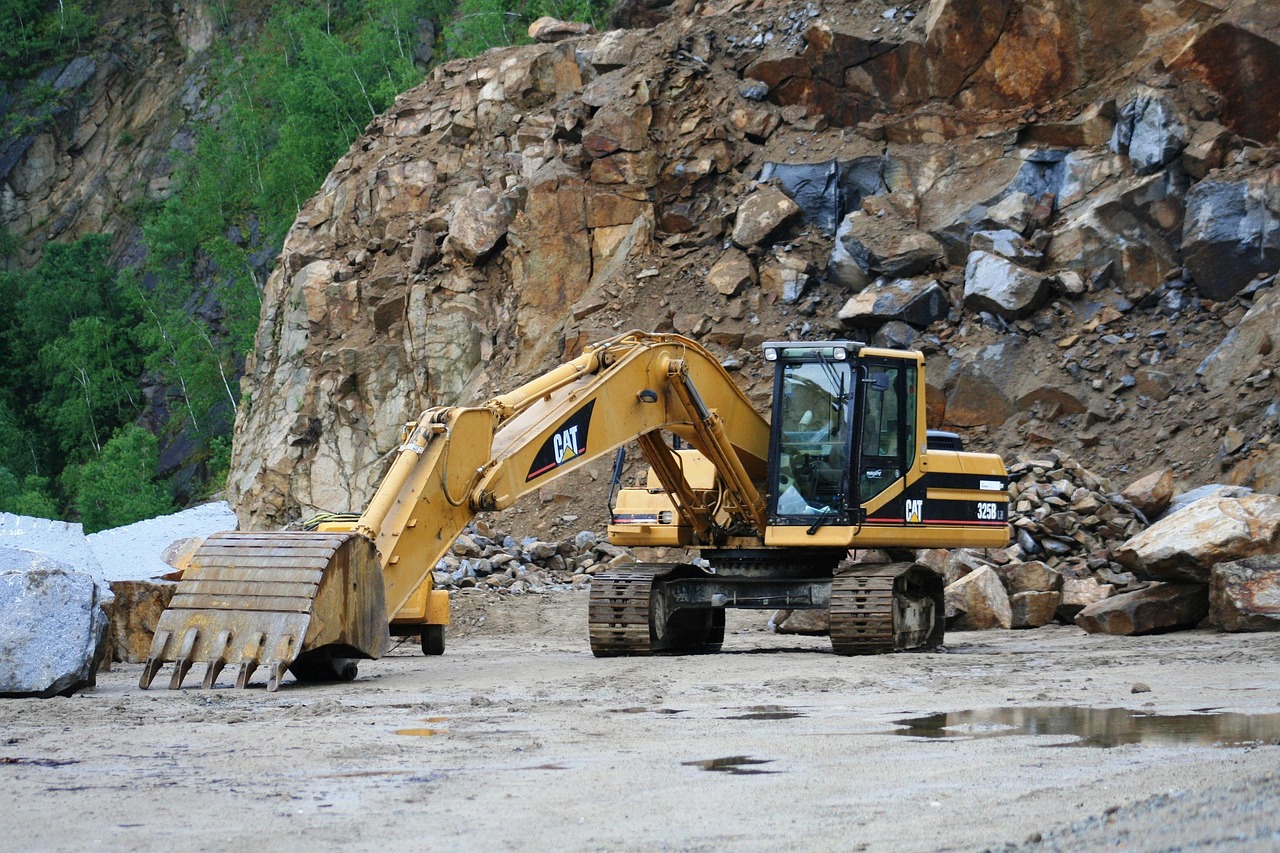
These are the crawler excavators on Cat’s current US product listing, from the small excavators to the large ones, with the three figures most buyers compare. Every number comes from Cat’s own US product page for that model. The mini excavators (300.9D to 310) are left out here; see the end of this guide.
| Model | Cat class | Operating weight | Net power (ISO 9249) | Max dig depth |
|---|---|---|---|---|
| 313 GC | Small | 30,400 lb (13,800 kg) | 73 hp | 19 ft 10 in (6,040 mm) |
| 313 | Small | 30,400 lb (13,800 kg) | 108 hp | 19 ft 2 in (5,840 mm) |
| 315 GC | Small | 34,000 lb (15,400 kg) | 98 hp | 19 ft 8 in (5,990 mm) |
| 315 | Small | 34,000 lb (15,400 kg) | 108 hp | 19 ft 8 in (5,990 mm) |
| 317 GC | Small | 38,000 lb (17,200 kg) | 119 hp | 21 ft 0 in (6,400 mm) |
| 317 | Small | 40,200 lb (18,200 kg) | 133 hp | 21 ft 0 in (6,400 mm) |
| 319 | Small | 44,100 lb (20,000 kg) | 133 hp | 21 ft 6 in (6,550 mm) |
| 320 GC | Medium | 48,500 lb (22,000 kg) | 146 hp | 22 ft 1 in (6,720 mm) |
| 320 | Medium | 49,800 lb (22,600 kg) | 172 hp | 22 ft 1 in (6,720 mm) |
| 323 | Medium | 55,100 lb (25,000 kg) | 172 hp | 22 ft 1 in (6,730 mm) |
| 325 (HD undercarriage) | Medium | 62,600 lb (28,400 kg) | 172 hp | 22 ft 0 in (6,700 mm) |
| 326 | Medium | 56,400 lb (25,600 kg) | 201 hp | 22 ft 5 in (6,820 mm) |
| 330 GC | Medium | 68,100 lb (30,900 kg) | 201 hp | 23 ft 10 in (7,260 mm) |
| 330 | Medium | 69,200 lb (31,400 kg) | 273 hp | 23 ft 9 in (7,240 mm) |
| 335 (compact radius) | Medium | 77,000 lb (34,900 kg) | 273 hp | 22 ft 11 in (6,990 mm) |
| 336 | Large | 81,100 lb (36,800 kg) | 300 hp | 26 ft 11 in (8,210 mm) |
| 340 | Large | 83,100 lb (37,700 kg) | 346 hp | 26 ft 11 in (8,210 mm) |
| 350 | Large | 105,100 lb (see note) | 413 hp | 26 ft 11 in (8,210 mm) |
| 352 | Large | 107,800 lb (48,900 kg) | 443 hp | 26 ft 11 in (8,210 mm) |
| 374 | Large | 162,900 lb (73,890 kg) | 484 hp | 28 ft 1 in (8,570 mm) |
| 395 | Large | 207,400 lb (94,000 kg) | 542 hp | 31 ft 9 in (9,670 mm) |
Sources: Cat US product pages, “Current Products”, read November 25, 2026: small excavators, medium excavators, large excavators. Dig depths converted to feet and inches from Cat’s millimeter figure. Operating weight depends on boom, stick, shoes and counterweight; the headline figure is one configuration. Note: the 350 page lists 105,100 lb and 46,000 kg, which do not convert to each other; check the spec sheet for your configuration. The 349, still common on the used market, is now in Cat’s non-current list (2019 spec: 105,200 lb, 424 hp, 25 ft 2 in).
GC or standard: same number, different machine
The GC models share a size class with the standard machine and sometimes the same weight, but not the same power. The 313 GC and 313 are both listed at 30,400 lb; the GC makes 73 hp against 108 hp. The 320 GC makes 146 hp against 172 hp on the 320, and the 330 GC 201 hp against 273 hp. Cat’s pages sell the GC versions on fuel savings, longer maintenance intervals and low cost per hour; the standard models get the extra power.
For a used buyer the GC is not a lesser machine; it is a different fit. A GC suits trenching, utility and site work where the operator is not fighting the clock on every bucket. Mass excavation and truck loading on a production job are where the extra horsepower of the standard model earns its price. When you compare two listings, make sure both are GC or both are standard before you compare prices.
❌ Wrong: “This 320 GC is $15,000 cheaper than the 320 down the road, so it’s the better deal.”
✅ Right: “The GC has 26 hp less, so I compare it against other 320 GCs, and I only buy it if my work is trenching and grading, not loading trucks all day.”
Which Cat size class fits which work
The model number gives you the class; the job tells you which class. In broad strokes, from Cat’s own grouping:
- Small, 313 to 319 (about 14 to 20 t): utility, residential site work, tighter jobsites. Cat describes them for “smaller jobs and applications with space constraints”.
- Medium, 320 to 335 (about 22 to 35 t): the general construction core. It is also the biggest group in our own listings: 10 of the 24 used Cats below are 320 to 335 class machines.
- Large, 336 and up: bulk earthmoving, quarry and truck loading.
For a full breakdown of size classes across all brands and the jobs each one fits, read our guide to excavator sizes. If you are comparing Cat against Deere’s numbering, our John Deere excavator models guide decodes the 135, 210, 350 and the rest.
Used Caterpillar excavators for sale in Pennsylvania
On November 25, 2026, Pennsylvania dealers had 24 Caterpillar excavators listed on Heavy Listing, all from Old Forge Power Equipment. Asking prices ran from $36,900 to $285,000, with a median of $85,500. Here they are by generation, with each model linked to its listing.
| Generation | Units | Models and years (listing) | Price range |
|---|---|---|---|
| C series | 6 | 312C (2003), 312C L (2007), 330C L (2004, 2005, 2006), 345C L (2005) | $36,900 to $75,500 |
| D series | 3 | 324D L (2006), 336D L (2009), 328D LCR (year not listed) | $69,900 to $92,500 |
| E series | 4 | 308E2 CR (2015), 336E L (2013), 336E L H hybrid (2013), 349E L (2013) | $48,500 to $102,500 |
| F series | 7 | 313F L (2018), 313F L GC (2020), 316F L (2016), 329F L (2015), 336F L (2015), 349F L (2019, 2020) | $85,500 to $285,000 |
| Next Generation | 4 | 323 (2019, 2022), 326 (2022, 2022) | $115,500 to $215,500 |
Source: Heavy Listing inventory, available units in the excavators category, November 25, 2026. Prices are dealer asking prices. Only 9 of the 24 listings publish hours. The 308E2 CR sits in our excavators category, but Cat files the 308 under its mini excavators.
What the table shows: the F series is the largest group and spans the widest price range, because it runs from a 13 ton 313F L to two 49 ton class 349F Ls. The four Next Generation machines start at $115,500, so a Next Gen 323 asks more than any C, D or E series unit listed. Two 2022 326s list at $155,500 and $215,500: same model and year, $60,000 apart. When a gap is that wide, ask the dealer for hours, attachments, undercarriage condition and options before you compare. Our used excavator prices guide covers what moves the number.
What to check on a used Cat, by generation
- C and D series (Tier 3 and older): no DPF or DEF, which some buyers prefer. Expect high hours: the five C series units that publish hours show 5,469 to 18,567. Check the undercarriage, swing bearing and pin and bushing wear, and ask about parts availability for the oldest units.
- E series (Tier 4 Interim): ask for the regeneration history and whether the diesel particulate filter has been cleaned or replaced. On the 336E H hybrid, ask what has been serviced on the hybrid system and who can work on it near you.
- F series and Next Generation (Tier 4 Final): check the aftertreatment and DEF system for fault codes and any derate history. Ask whether the machine carries a Cat Product Link or VisionLink history the dealer can show you.
- All generations: confirm the model and suffix from the serial plate, because ad titles drop letters. Only 9 of our 24 Cat listings publish hours, so ask for them.
Walk through our used excavator inspection checklist before you go see the machine, and read common used excavator problems to know what the symptoms point to.
See every used Caterpillar excavator in Pennsylvania
C, D, E, F and Next Generation Cat excavators from Pennsylvania dealers, with year, price and location on every listing. Contact the dealer directly, with no buyer’s premium on top.
Browse Caterpillar excavators →Cat mini excavators: 301 to 310
The same numbering runs down into Cat’s mini excavators: 301.5, 302.7 CR, 303.5 CR, 305 CR and so on up to the 310, which Cat files under mini excavators. Cat’s mini excavator brochure groups the 307.5 to 310 in its 7 to 10 ton range. We cover them separately: for the lineup and how Cat compares to Deere, Bobcat and Kubota, read mini excavator brands; for sizes and dig depth by class, see mini excavator sizes.
The bottom line
Read a Cat model number in three parts: the size digits tell you the class (check the actual weight on the sheet), the letter tells you the generation and with it the emissions system, and the suffix tells you the undercarriage or the variant. A current machine with no letter is a Next Generation model. A listing title with a letter missing needs the serial plate. And when you compare used prices, compare within the same generation and the same GC or standard version, or the numbers mean nothing.
FAQ
What do the numbers on a Cat excavator mean?
The 3 marks Cat’s hydraulic excavator line and the next two digits are the size class, which on current models lands near the operating weight in metric tons. The 320 is listed at 22,600 kg, the 336 at 36,800 kg. It is a class, not an exact weight, so check the spec sheet for the machine you are buying.
What size is a Cat 320 excavator?
The current Cat 320 is listed at 49,800 lb (22,600 kg) with 172 hp and 22 ft 1 in of maximum dig depth. Cat’s dealer Finning calls it a 20 ton size class machine. The 320 GC has the same dig depth at 48,500 lb and 146 hp.
What does L mean on a Cat excavator?
Long undercarriage. LN is long and narrow, and LCR is long undercarriage with compact radius. Current Next Generation models are listed without the L.
What is the difference between a Cat 320 and a 320 GC?
Same size class, different spec. Cat lists the 320 at 172 hp and the 320 GC at 146 hp, with weights of 49,800 lb and 48,500 lb. The GC is sold on lower fuel use and cost per hour; the standard 320 adds power.
When did Cat start the Next Generation excavators?
The first three, the 320, 320 GC and 323, were revealed at Caterpillar’s 2017 press launch in Málaga, Spain, as Cat’s UK dealer Finning documents. Larger models followed; Cat’s archive has a 2019 spec for the Next Generation 349. Next Generation models carry no series letter.
Which Cat excavators are Tier 4 Final?
The F series and the Next Generation models. Cat’s pages list the 336F and 349F under 2014 Tier 4 Final specs and the 320F L under 2015, and current models state EPA Tier 4 Final and EU Stage V. The E series was Tier 4 Interim and the D series Tier 3, though exact timing varies by model.