A buyer scrolling for a used excavator decides from the first photo or two whether your machine is worth a phone call. If the first picture is a blurry shot of a muddy machine in the back row and the description says “runs good, call for details,” the buyer moves on to the next one. If the listing shows the hour meter, the undercarriage, the serial plate and a cold start, and says what has been done and what hasn’t, the phone rings.
This guide is for the person who actually builds the listings: the salesperson or yard manager at a dealership, and the owner selling a single machine. It covers the equipment listing tips that actually get calls: a numbered shot list for how to photograph heavy equipment for sale, how to write the title, which specs to include for each machine type, how to write a used equipment listing description that buyers trust, and how to show the price. At the end there is a weak listing and a strong one, side by side.
What buyers look for before they call
A buyer looking at a listing is trying to answer three questions before spending a phone call on it:
- Is it the right machine? Size class, configuration and attachments. A skid steer without high flow is no use to someone running a mulcher.
- Is it worth the trip? Hours, condition of the expensive wear parts and anything known to be wrong. Nobody wants to drive three hours to find out the tracks are done.
- Is the price in range? No price means a call to find out, and many won’t make it.
Every part of the listing below answers one of those questions before the buyer has to ask.
Before the camera comes out: prep the machine
Twenty minutes of prep changes how every photo looks.
- Wash it. A clean machine photographs better and shows there is nothing hiding under the dirt. A leak shows too, and that is fine: you are going to mention it anyway.
- Clean the cab. Coffee cups and paperwork out, glass and dash wiped, floor vacuumed. The buyer is picturing himself sitting there all day.
- Bucket or blade flat on the ground. Arms down, cab level, nothing hanging in the air.
- Charge the battery. You need the machine to start on video, and a jump start on camera says something you didn’t mean to say.
- Fix the cheap things. A broken work light or a missing step costs little and makes the whole machine look neglected.
Lighting and background: where to shoot
You don’t need a studio. You need the right spot in the yard and the right time of day.
- Bright overcast is best. Even light, no hard shadows under the boom. On a sunny day, shoot in the morning or late afternoon with the sun behind you. Never shoot into it: the machine turns into a dark shape.
- Pick a clean background. An open stretch of gravel, a plain wall or an empty part of the lot. Not between two other machines, not in front of the scrap pile, not with a pickup parked in the frame.
- Use the same spot for every machine. Your whole inventory then looks like one well-run yard.
- Shoot landscape, at chest height. For the corners, stand back far enough that the whole machine fits, bucket and counterweight included.
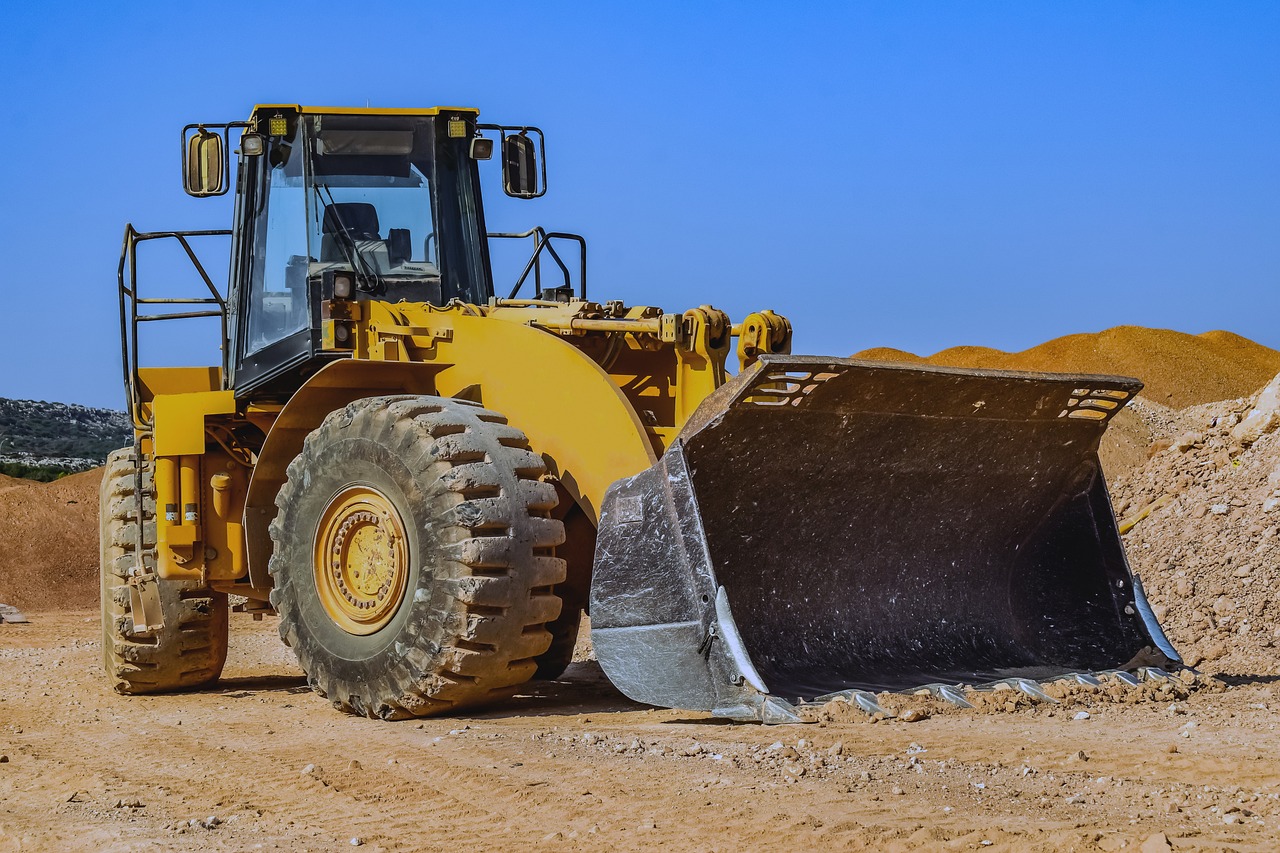
The photo shot list: 20 shots in order
This is the order we suggest for heavy equipment photos. It follows the way a buyer walks around a machine: the whole thing, the numbers, the wear parts, then the cab and engine. Shoot them all every time, even on an older, cheaper machine.
| # | Shot | What the buyer is checking |
|---|---|---|
| 1 | Front three-quarter, left side (main photo) | Overall look and condition at a glance |
| 2 | Front three-quarter, right side | The other side: dents, missing panels, glass |
| 3 | Rear three-quarter, left | Counterweight, rear lights, rear panels |
| 4 | Rear three-quarter, right | Damage the seller might not mention |
| 5 | Straight side view | Size and proportions, boom or loader arm geometry |
| 6 | Hour meter, readable, key on | That the hours in the listing are real |
| 7 | Serial plate (PIN) | Year, model and that the machine is what you say it is |
| 8 | Undercarriage, each side: tracks, rollers, idlers, sprockets | The most expensive wear item on a tracked machine |
| 9 | Tires, each side, with tread visible | Remaining tread on wheeled machines |
| 10 | Bucket or blade, straight on | Cutting edge, teeth, wear and cracks |
| 11 | Quick coupler or attachment plate | Type of coupler and whether their attachments will fit |
| 12 | Pins and bushings at the main pivots | Play and grease, a sign of how it was kept |
| 13 | Hydraulic cylinders, rods visible | Pitted rods or leaking seals |
| 14 | Auxiliary hydraulic couplers | Whether it has aux and high flow plumbing |
| 15 | Cab interior from the door | Seat, floor, general wear |
| 16 | Controls and monitor, key on | Warning lights, fault codes, control type |
| 17 | Engine bay, each side | Leaks, oil residue, how clean it was kept |
| 18 | Each attachment included in the sale | What exactly comes with the machine |
| 19 | Any known damage, close up | That you aren’t hiding anything |
| 20 | Cold start and walkaround video (1 to 3 min) | How it starts, smoke, noises, every function working |
Two shots do more than the rest. The hour meter photo (6) turns a number into proof. The cold start video (20) answers the question every buyer asks on the phone: “How does it start?” Film it cold, with the exhaust in view, then run every function: boom, arm, bucket, swing, travel, aux. Our used excavator inspection checklist shows what a buyer will look for in that video, so it’s worth reading before you film one.
The title formula: year, make, model, one key spec, location
The title is what shows in search results, on Google and on every equipment site. It has one job: tell the right buyer this is the machine they are looking for. The formula:
Year + Make + Model + Type + one key spec + Location
- 2019 Kubota SVL75-2 Compact Track Loader, 1,850 hrs, Cab with Heat and AC, Lancaster PA
- 2017 Deere 50G Mini Excavator, Thumb and 2 Buckets, York PA
- 2015 Cat 938K Wheel Loader, Ride Control, New Tires, Harrisburg PA
These illustrate the format; they are not machines in stock. Pick the key spec buyers of that machine search for: hours, cab, high flow, thumb, new undercarriage, ripper. Spell the model the way the manufacturer does, because that is how buyers type it. Leave out “Great deal!!”, “Must see” and all caps.
Example:
❌ Wrong: “NICE EXCAVATOR FOR SALE, READY TO WORK!!!”
✅ Right: “2018 Takeuchi TB290 Mini Excavator, 2,400 hrs, Hydraulic Thumb, Lancaster PA”
Spec checklist by machine type
Year, make, model, hours, serial number and location go on every listing. Beyond that, each machine type has the specs buyers filter by. If one is missing, most buyers skip to a listing that has it.
| Machine | Specs to include |
|---|---|
| Skid steer / compact track loader | Rated operating capacity, standard or high flow, cab (open or enclosed, heat, AC), controls (hand-foot or joystick, pattern selectable), coupler type, track or tire condition, two-speed, attachments included |
| Excavator (mini and full size) | Operating weight, boom and stick length, thumb (hydraulic or manual), quick coupler, aux hydraulics, track width and undercarriage condition, buckets included, blade (on minis), zero or reduced tail swing |
| Wheel loader | Bucket size, coupler type (and which pattern), ride control, tire size and tread, third valve, cab with heat and AC, scale if fitted, forks or other attachments |
| Dozer | Blade type (straight, semi-U, PAT/six-way) and width, ripper or winch, undercarriage percentage and when it was last done, LGP or standard track, GPS or grade control ready, cab |
| Tractor | Engine horsepower and PTO horsepower, 2WD or 4WD/MFWD, transmission type, remotes (number of rear hydraulic outlets), 3-point hitch category, loader and model if fitted, cab or ROPS, tire size and tread |
Give hours a line of context. A buyer reading 4,000 hours on a skid steer wants to know if that is high for its age. Our guide to how many hours is a lot on heavy equipment has typical hours by machine type, which helps you explain where your machine sits.
How to write the description
The description is where you earn the call. Keep it in this order, in short lines a buyer can scan on a phone:
- One-line summary. What it is and who it suits: “Low-hour 6-ton excavator with thumb, set up for utility and landscaping work.”
- Key specs. The ones from the table above, as a short list.
- What has been done. Recent service and repairs, with dates or hours: “Undercarriage replaced at 2,900 hours. All fluids and filters changed October 2026. New cutting edge.”
- Known issues. Anything a buyer will find on inspection: “Small weep at the right swing motor. AC needs a recharge. Seat cover torn.”
- What’s included. Buckets, forks, manuals, spare keys, service records.
- Logistics. Where the machine is, whether you can load it on the buyer’s trailer, whether you can arrange delivery, and when someone can come and see it.
Why the known issues line gets you more calls
It sounds backwards, but “AC doesn’t work, small leak at the swing motor” tends to bring more serious calls than “runs great, no issues.” Experienced buyers know every used machine has something. When a listing claims nothing, they assume the seller is hiding it. When it names the problems, they price them in before calling, and the conversation starts from trust.
It saves time too. The buyer who calls after reading “leak at the swing motor” has already decided he can live with it. The one who finds it on the lot after you said “no issues” walks away.
Example:
❌ Wrong: “Runs and works good. No issues. Call for more info.”
✅ Right: “Starts easy cold, no smoke after warm-up. Tracks about 60%. Right travel motor seal weeping, priced in. Service records since 1,200 hours.”
Showing the price
Put the price on the listing. A buyer comparing three similar machines tends to call the ones with prices first. A price also filters out people hoping for half your number.
- Price it where you will negotiate from. Leave room, but not so much that the number looks out of line next to similar machines. Our guides to used skid steer prices and used excavator prices show what Pennsylvania dealers are asking for comparable units.
- Say what the price includes. Attachments, delivery, a warranty period if you offer one. Two machines at the same price are not the same deal if one comes with two buckets and a thumb.
- “Call for price” has a place. On a machine that just came in and hasn’t been appraised, or a high-value unit where you’d rather talk first. Use it on the exception, not on the whole lot.
- Keep the price current. If you drop it, change it everywhere the machine is listed, the same day.
Before and after: a weak listing and a strong one
The example below is made up. It shows the same machine written two ways.
Weak listing
Title: TRACK LOADER FOR SALE GOOD CONDITION
Photos: 3. One wide shot from 50 feet away with the sun behind the machine, one of the cab door, one of the bucket.
Price: Call for price
Description: Nice machine, runs and works good, ready to go to work. Low hours. Cab. Call or text for more info, serious buyers only.
No make, year, hours, location, price or track condition. To find out, the buyer has to call. Most won’t.
Strong listing
Title: 2019 Kubota SVL75-2 Compact Track Loader, 1,850 hrs, Cab with Heat and AC, Lancaster PA
Photos: 20 following the shot list, plus a two-minute cold start and walkaround video.
Price: $41,500. Includes 74″ bucket and pallet forks.
Description:
- 2019 Kubota SVL75-2, 1,850 hours (photo of the meter included). Enclosed cab with heat and AC, two-speed, standard flow aux.
- Done: tracks replaced at 1,600 hours. Engine oil, hydraulic oil and filters changed at 1,800 hours. Records available.
- Known issues: driver’s door latch is stiff. Small scrape on the left rear panel (photo 19). No leaks.
- Included: 74″ bucket, pallet forks, operator’s manual, two keys.
- Located in our Lancaster yard. We load on your trailer and can quote delivery in PA. Come see it running Monday to Saturday.
Same machine. With the second listing, the call is about when to come see it, not about what it is.
Rather not shoot and write every listing yourself?
On Heavy Listing, we load your inventory for you: all your photos, specs and video, on your own dealer page, with buyers calling and emailing you directly. Flat monthly plan, no commission, and the first month is free with no card.
See dealer plans →Common listing mistakes
- ❌ Four photos of a machine worth $60,000. The buyer is about to spend real money. Give him the 20 shots.
- ❌ A main photo of the back of the machine, or of a pile of attachments. The first photo is the front three-quarter view, every time.
- ❌ Hours in the description but no photo of the meter. Buyers have seen too many listings where the number didn’t match.
- ❌ “No issues” on a machine with 5,000 hours. Nobody believes it, and it costs you the buyers who would have accepted the real issues.
- ❌ Sold machines left online. Every call about a machine that’s gone is a buyer who feels his time was wasted.
- ✅ Twenty photos in the same order, the same spot and the same light for every machine.
- ✅ Year, make, model, key spec and location in every title.
- ✅ The specs buyers filter by for that machine type, all filled in.
- ✅ What has been done and what is wrong, in plain words.
- ✅ A price, and what it includes.
- ✅ A cold start video on every unit.
- ✅ Listings marked sold the same day the machine sells.
Where your listing goes next
A strong listing works wherever you post it: your website, equipment marketplaces, Facebook groups, a text to a regular customer. Build it once and reuse it. If you are deciding where to list your inventory, our guide to selling used equipment online compares the main options for dealers, and the general guide on how to sell used heavy equipment covers dealer sales, consignment and private sales.
On Heavy Listing, each machine shows its year, hours, price or “call for price,” stock number, location, the full photo gallery and a video link, and buyers contact the dealer directly. Everything in this guide maps onto those fields.
The best equipment listing tips come down to one idea: answer the buyer’s questions before he asks them. The listing that does that gets the calls.
Frequently asked questions
How many photos should a used equipment listing have?
Aim for about 20: four corners, a side view, hour meter, serial plate, undercarriage or tires, bucket, coupler, cab, engine bay, attachments and any known damage, plus a cold start video.
How do you photograph heavy equipment for sale with just a phone?
A phone is enough. Wash the machine, park it on a clean open spot, shoot in overcast light or with the sun behind you, and hold the phone horizontally at chest height.
Should I list the problems a machine has?
Yes. Buyers will find them on inspection anyway. Naming them up front, with a photo, brings calls from buyers who have already accepted the issue and avoids deals that fall apart on the lot.
Is it better to show the price or write “call for price”?
Show the price on most machines. Keep “call for price” for exceptions, like a machine that hasn’t been appraised yet.
What should a used equipment listing description include?
A one-line summary, the key specs for that machine type, recent service and repairs, known issues, what is included in the sale, and where the machine is and how the buyer can see it, load it or get it delivered.