
Most used excavator problems announce themselves before they get expensive: functions that slow down once the oil is hot, a boom that creeps down with a load, a track that sags more every week, a clunk when the upper stops swinging, or a regeneration light that keeps coming back. The trick is knowing which symptom points to a filter and which one points to a pump, a swing bearing or a full undercarriage.
This guide covers the common problems on standard and large crawler excavators, system by system: symptom, likely cause, what to look at on a used machine and how big the repair tends to be. We grade repairs as minor, moderate or major instead of quoting dollars: manufacturers do not publish repair prices, and shop rates vary too much. Service intervals come from John Deere’s maintenance planner for the 210G and Komatsu’s undercarriage guidance. The step-by-step walkaround and function test is in our used excavator inspection checklist; this page is about reading what you find.
Hydraulic problems: slow, weak, drifting or hot
An excavator is a hydraulic machine with an engine attached, so this is where most complaints start. The useful question is whether the problem hits every function or just one. Everything slow points upstream: the pump, the pilot system, the oil, the engine. One function slow points to that circuit: its valve section, its cylinder, its hoses or its relief valve.
| Symptom | Likely cause | What to check on a used machine | Repair scale |
|---|---|---|---|
| All functions slow, worse when hot | Worn main pump, pump control fault, low or wrong oil, engine down on power | Oil level and condition, cooler condition, codes; ask for pump flow and pressure test results | Moderate to major |
| All functions sluggish or unresponsive to the joysticks | Clogged pilot filter, low pilot pressure, pilot control valve problem | Pilot filter service record, codes, pilot pressure test by a shop | Minor to moderate |
| One function slow or weak | That valve section, a relief valve set low or stuck, cylinder bypassing | Compare boom, stick and bucket speed; drift test on that cylinder | Minor to moderate |
| Boom or stick drifts down under load | Cylinder piston seals leaking inside, control valve spool leakage, holding valve | Drift test with a loaded bucket, then isolate cylinder vs valve | Moderate |
| Oil on a cylinder rod or under the machine | Rod seal, often after a scored or pitted rod; hose, fitting or O-ring leak | Rod surface, hose covers, fresh oil on the frame after the test | Minor (hose) to moderate (rod and seals) |
| Hydraulic oil overheats | Plugged cooler, low oil, cooling fan or fan drive fault, a function held against relief | Cooler fins, fan operation, temperature gauge during a long test | Minor to moderate |
| Whine or growl from the pump area | Low oil, air in the oil, restricted suction, worn pump | Oil level, foam in the sight glass, noise that changes with load | Minor to major |
Repair scale is Heavy Listing’s general grading, not a quote. Filter and oil intervals: John Deere 210G/210GLC Uptime Maintenance Planner.
The pump is the bill everyone fears, and it is also the part that gets blamed too early. A machine that is slow everywhere may only have a plugged pilot filter, a dirty cooler or an engine that is short on fuel. Deere’s planner for the 210G replaces the pilot oil filter and the hydraulic tank oil filter every 1,000 hours, takes a hydraulic oil sample every 500 hours, and drains and refills the hydraulic tank every 5,000 hours. If the seller cannot show any of that, the pump has been working with whatever was in the tank.
Our view: never price a machine on the seller’s “it just needs a pump” or “it’s only a seal kit.” Ask for a shop pressure and flow test. And a scored rod is a trap: new seals on a damaged rod soon leak again, so the real fix is a rechromed or new rod.
Undercarriage problems: chains, rollers, idlers and sprockets
On a crawler excavator the undercarriage is a wear item that eventually costs a large share of the machine’s value to renew. Komatsu puts it plainly: “Undercarriage elements are costly.” Most undercarriage problems are wear that was never measured, not sudden failures.
- Track chain stretch. As the pins and bushings wear, the chain gets longer, rides higher on the sprocket and wears the teeth faster. Komatsu recommends “timely pin-and-bush turns” based on wear measurements. A chain that was never turned and is worn out is a major repair.
- Hooked or pointed sprocket teeth. A sign the sprocket and the chain wore together. Replacing one without the other usually shortens the life of the new part.
- Rollers with flat spots, leaks or that do not turn. A seized bottom roller gets ground flat by the chain. Oil weeping from a roller or idler seal means it is running dry. One roller is minor to moderate; a full set is part of a major undercarriage job.
- Idler wear and a tired recoil or adjuster. If the track sags and will not hold tension after greasing, the adjuster cylinder seal may be leaking. If the adjuster is at the end of its travel, the chain is near the end of its life.
- Loose or missing shoe bolts and bent shoes. Loose hardware lets shoes shift and wallow out the bolt holes. Deere’s 210G planner calls for inspecting and re-torquing track hardware every 100 hours.
Tension matters more than most owners think. Komatsu: “Tracks that are too loose or too tight increase wear and fuel use. Always ensure your tracks are adjusted to the specifications outlined in your operation and maintenance manual.” Deere’s planner lists checking and adjusting track sag “as required.” The sag figure differs by model, so measure it against that machine’s manual, not a rule of thumb.
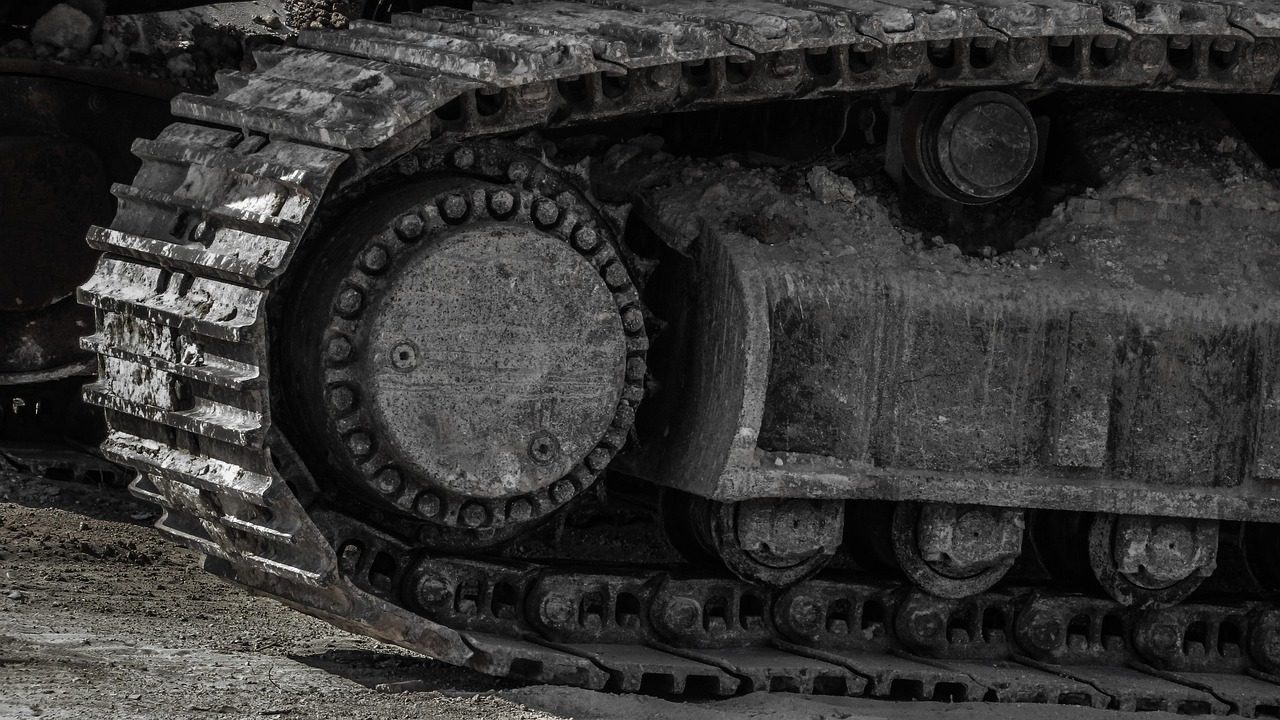
Komatsu also says “Dirt, mud, and debris build-up accelerate wear” and that “Tracks last longer when moving forward.” A machine that spent years tramming back and forth on a trench line in clay will show it.
You do not have to guess the remaining life. Komatsu recommends an undercarriage inspection with its product support representative “at least every six months.” Ask the seller for the last undercarriage report; if there is none, a dealer or undercarriage shop can measure it before you buy, and the number goes straight into your offer.
Travel and final drive problems
Each track is driven by a hydraulic travel motor through a gear reduction, the final drive. Its problems can pass for undercarriage problems, so separate them.
- Machine will not travel straight. One side weaker than the other: a travel motor, its relief, the center swivel joint that feeds oil to the lower structure, or simply one track much tighter or more packed than the other. Check tension and cleanliness first.
- Oil around the final drive hub. A leaking seal. Cheap if caught early; if the gears ran low or took in dirt, it becomes a major repair.
- Grinding or knocking that follows track speed. Bearings or gears in the final drive. Major.
- Travel slow in both speeds on both sides. Usually upstream: the pump or pilot system, covered above.
Deere’s 210G planner checks the travel gear case oil level every 250 hours, takes a sample every 500 and drains and refills it every 2,000 hours. A gear case sample with metal in it tells you more than a test drive on a lot.
Swing problems: bearing play, swing motor and gearbox
The swing system is the bearing the whole upper structure sits on, a swing motor and a gearbox that drives a pinion against the gear on the bearing. Its problems come in two kinds.
- Play or a clunk at the swing bearing. The upper rocks on the lower when you load the bucket, or knocks when swing starts and stops. That is bearing wear or loose bearing bolts. Loose bolts are moderate if found early. A worn bearing is a major repair because the upper structure has to come off.
- Slow, jerky or noisy swing. The swing motor, its relief or the gearbox. A whine or grinding from the swing drive, or a swing that drifts after you release the lever, needs a closer look.
- Swing will not hold on a slope. The swing brake or motor holding circuit. Moderate, but a safety issue first.
- Oil around the swing drive. A seal on the gearbox or motor. Minor to moderate, more if the gearbox ran low.
Missed grease is a common reason swing bearings wear early. Deere’s 210G schedule lubricates the swing bearing and the swing bearing gear every 500 hours, checks the swing gear case oil level every 250 hours, samples it every 500 and drains and refills it every 1,000 hours. Dry, rusty grease at the bearing seal and no swing oil samples on file are reasons to ask harder questions.
Boom, stick and bucket: pins, bushings, cracks and welds
The front end takes every digging, prying and breaking load, and the damage shows up in two places: the pivots and the steel.
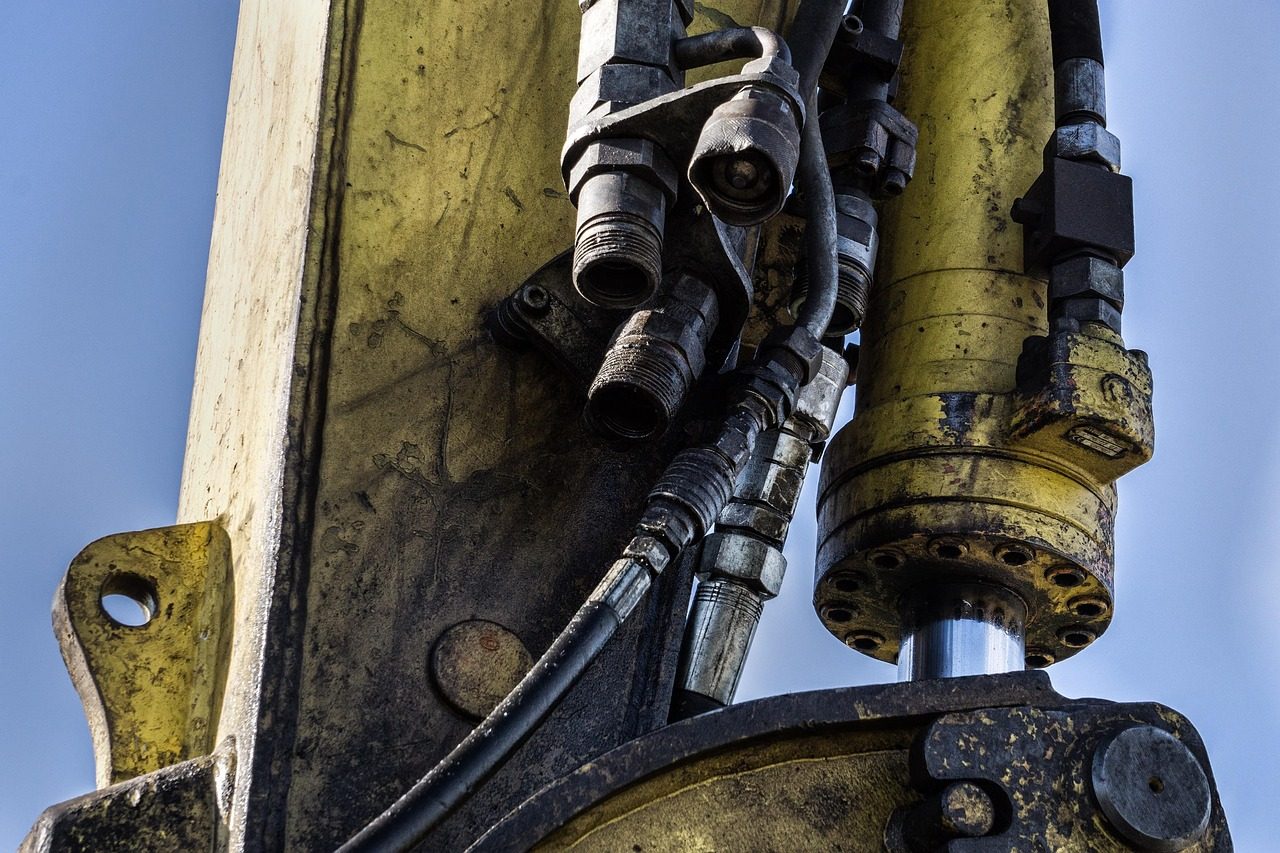
- Play in pins and bushings. Lost motion and a clunk at the start of each movement. Deere’s 210G planner lubricates the working tool pivots every 100 hours and the front end pin joints every 500 hours. Missed greasing wears the bushing, then the pin, then the bore. Pins and bushings are minor to moderate; an oval bore needs line boring or weld and machine work, which is moderate to major.
- Bucket linkage wear. Play in the bucket link and side link shows as a bucket that rattles on the stick. Usually moderate.
- Cracks in the boom and stick. Look at the boom foot, the cylinder mounting bosses, where the boom meets the stick and the stick nose. A crack that is growing on a structural member is a major problem even if it looks small.
- Weld repairs. A clean, properly done repair with paperwork is not a deal killer. Fresh paint over one spot, a repair plate with no explanation or rough welds across a highly loaded area are.
- Quick coupler and thumb mounts. A coupler that does not lock fully is a safety issue. An aftermarket thumb welded on adds loads to the stick: check around the mount for cracks.
Machines that ran a hydraulic hammer for years tend to show it here first, in the bushings, the stick nose and the boom welds. Ask what attachments the machine ran, and look harder at the front end if the answer includes a breaker.
Engine problems and Tier 4 Final aftertreatment
Blue smoke that stays and heavy blow by point to internal engine wear, the top of the repair scale. Black smoke and low power under load start with the air filter, fuel filters and water in the fuel, all minor; Deere’s 210G planner drains the fuel filters and water separators every 50 hours or weekly. Overheating in dusty work usually starts with a packed radiator and cooler.
Newer machines add an exhaust aftertreatment system to meet the EPA’s Tier 4 Final rules: a diesel particulate filter (DPF) that traps soot, and on many engines selective catalytic reduction (SCR) that uses diesel exhaust fluid (DEF) to cut NOx. Their faults usually show as a warning on the monitor and a power derate.
- Frequent regeneration requests. Soot builds faster than the system can burn it off: a lot of idling and light work, or an engine fault upstream making extra soot. Minor if it is how the machine was used, moderate if it is an injector, turbo or sensor.
- Plugged DPF. A forced regeneration with the dealer’s tool may clear it. Ash does not burn off, so eventually the filter needs cleaning or replacement. Moderate to major.
- DEF warnings and derates. Low or contaminated fluid, crystallized deposits, a failed DEF pump, heater, doser or sensor. In a Pennsylvania winter, a heater fault shows up fast. Minor to moderate in most cases.
- “Delete” or bypass. A machine with the DPF or SCR removed or defeated in software. See the red flags below.
DEF derates have been a policy fight. In a February 2, 2026 release, the EPA said that under its guidance to manufacturers on DEF software, “Nonroad equipment has no impacts for the first 36 hours before a slight torque reduction then takes effect.” That depends on the engine maker updating the software, so ask whether that machine has had the update and ask for the regeneration and fault history. Our guide to Tier 4 Final on used equipment explains what each component does and the dates by engine size.
Electrical problems and monitor fault codes
On most modern excavators, electronics control the pump, the engine and many valves, so plenty of “hydraulic” or “engine” problems turn out to be electrical.
- Fault codes. Write down every active and stored code before anyone clears it, and ask the dealer to print the history. Codes cleared the morning you arrive fixed nothing.
- Batteries and grounds. Low voltage and corroded grounds cause false sensor faults, random derates and functions that cut out. Minor.
- Harnesses, sensors and solenoids. Wires chafed along the boom or past the swing area, or a failed pressure sensor or proportional solenoid, can make a healthy pump look tired. A shop with the brand’s software can tell the difference. Minor to moderate.
- Monitor or controller. Moderate to major, and on older models it depends on whether the part is still available.
Cab and structure problems
The cab is rarely where the money is, but check a few things. A cab or guard that has been bent, drilled or welded should be replaced, not patched. Cracks in the upper frame, counterweight mounts or track frames are structural and usually major. Joysticks that stick or a hydraulic lockout that does not stop the machine are safety repairs. And a worn seat and pedals tell you whether the hour meter is believable.
Compare excavators with the history in hand
Every listing on Heavy Listing shows year, hours when the dealer publishes them and the asking price. Pick a few, call the dealer for service records and a cold start, and use this guide to know what each symptom will cost.
Browse used excavators →The service intervals behind most failures
Most problems on this page are cheaper to prevent than to fix, and a service history tells you which ones are likely. As an example of what a manufacturer expects, here is part of Deere’s published planner for the 210G and 210GLC. Intervals differ by model and serial number, so the manual for the exact machine wins.
| Item | Deere 210G / 210GLC interval | What it protects |
|---|---|---|
| Hydraulic tank oil level | Every 10 hours or daily | Pump and all hydraulics |
| Lubricate working tool pivots; inspect and re-torque track hardware | Every 100 hours | Pins, bushings, track shoes |
| Check swing and travel gear case oil levels | Every 250 hours | Swing drive, final drives |
| Lubricate swing bearing, swing bearing gear and front end pin joints | Every 500 hours | Swing bearing, front end |
| Oil samples: engine, hydraulic, swing, travel, pump drive | Every 500 hours (engine oil every 250) | Early warning of internal wear |
| Replace hydraulic tank oil filter and pilot oil filter; change swing gear case oil | Every 1,000 hours | Pump, pilot system, swing drive |
| Drain and refill travel gear case oil | Every 2,000 hours | Final drives |
| Drain and refill hydraulic tank oil | Every 5,000 hours | Whole hydraulic system |
| Check and adjust track sag | As required | Undercarriage |
Source: John Deere 210G and 210GLC Uptime Maintenance Planner (T343605). Deere notes that intervals may need adjusting based on fluid analysis and operating conditions.
Excavator problems by symptom: quick table
| Symptom | Most likely cause | First check | Repair scale |
|---|---|---|---|
| Everything slow when hot | Pump wear, pilot system, oil or cooler | Pilot filter, cooler, codes, then pump test | Minor to major |
| Boom or stick drifts down | Cylinder seals or control valve | Drift test, then isolate | Moderate |
| Oil on cylinder rods | Rod seals, damaged rod | Rod surface | Minor to moderate |
| Track sags, will not hold tension | Adjuster seal or worn chain | Adjuster travel, chain wear measurement | Minor to major |
| Will not travel straight | Tension or packing difference, travel motor | Clean and tension both sides, then test | Minor to major |
| Grinding from one track | Final drive bearings or gears, seized roller | Oil at the hub, rollers turning | Moderate to major |
| Upper rocks or clunks on the lower | Swing bearing wear or loose bolts | Bearing play under load, bolts | Moderate to major |
| Swing slow or noisy | Swing motor, relief or gearbox | Swing gear case oil and sample | Moderate |
| Clunk at the start of each move | Pin and bushing wear | Play at each joint, grease | Minor to moderate |
| Frequent regens or derate | DPF loading, DEF fault, engine fault | Codes, regen history, DEF quality | Minor to major |
Red flags that should end the deal
Most problems on a used excavator are a price adjustment. These are the ones where we would walk away unless the price already assumes a major repair, or the seller fixes it first:
- ❌ A cracked boom, stick or frame with a growing crack or a hidden repair. ✅ A documented, professional repair you can see is a different story.
- ❌ Slow hydraulics everywhere and a seller who will not allow a pressure test.
- ❌ Swing bearing play you can see from the ground.
- ❌ Metal in the final drive, swing or hydraulic oil, or an oil sample report the seller will not share.
- ❌ Heavy blue smoke and blow by on an engine being sold as healthy.
- ❌ A DPF or DEF “delete” or emissions bypass. The EPA says “The CAA prohibits tampering with emissions controls, as well as manufacturing, selling, and installing aftermarket devices intended to defeat those controls,” and it applies that to nonroad engines. A deleted machine can also be hard to finance and resell.
- ❌ A serial plate that is missing, altered or does not match the paperwork. ✅ Check that it is not stolen and has no lien before money changes hands.
How hours relate to these problems
Hours tell you which of these repairs to expect, not whether a machine is good. On November 25, 2026, Pennsylvania dealers listed 47 used excavators on Heavy Listing. Thirty one showed hours online, with a median of 5,366 hours; 17 had 5,000 hours or more and four had passed 10,000. The highest was a 2005 Caterpillar 330CL at 18,567 hours, listed at $48,900. Sixteen listings did not show hours: ask for them, and for a photo of the meter.
Our study of how many hours is a lot on heavy equipment found used excavators ran about 530 hours a year. At that pace, a machine past 5,000 hours has likely had pins, bushings and at least part of the undercarriage done once, or is due. Past 10,000 hours, ask what has been done to the pump, the swing bearing and the final drives, and look for records of an engine or hydraulic overhaul. Low hours with no service history are not automatically better: a machine that sat can come with dried seals and stale fuel.
Then price it. Take the asking price, subtract your repair estimate for what you found, and compare with our used excavator prices from PA dealers. Size changes the math too: a bigger machine means bigger parts and bigger bills, and our guide to excavator sizes shows what each class is built for. Parts and dealer support differ by make, which is covered in our comparison of excavator brands.
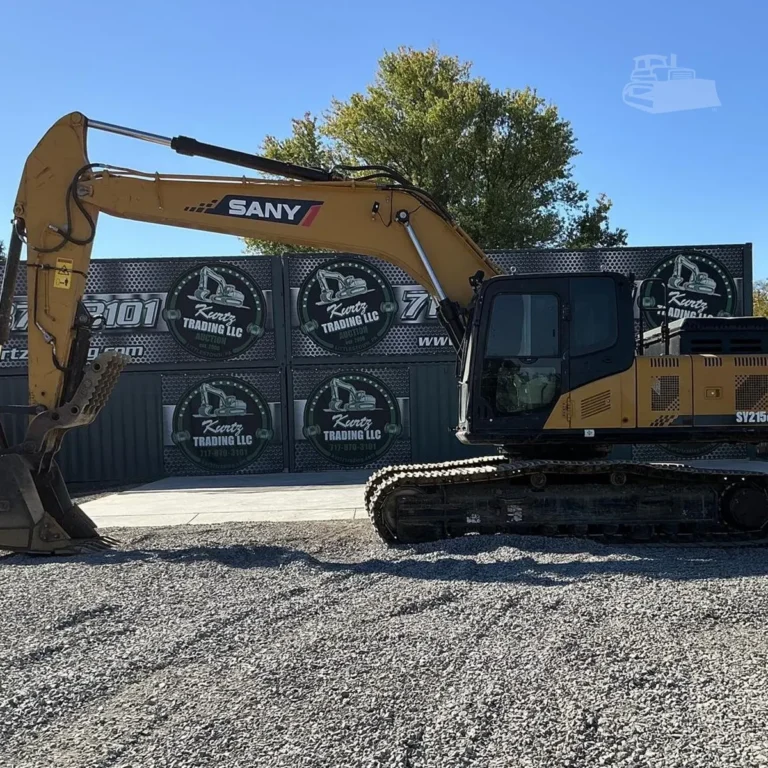
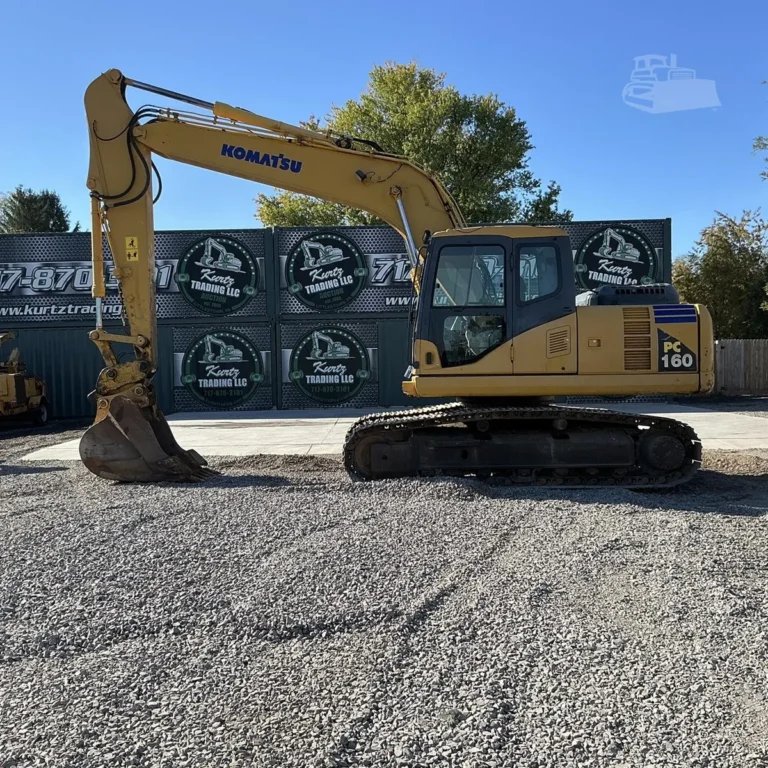
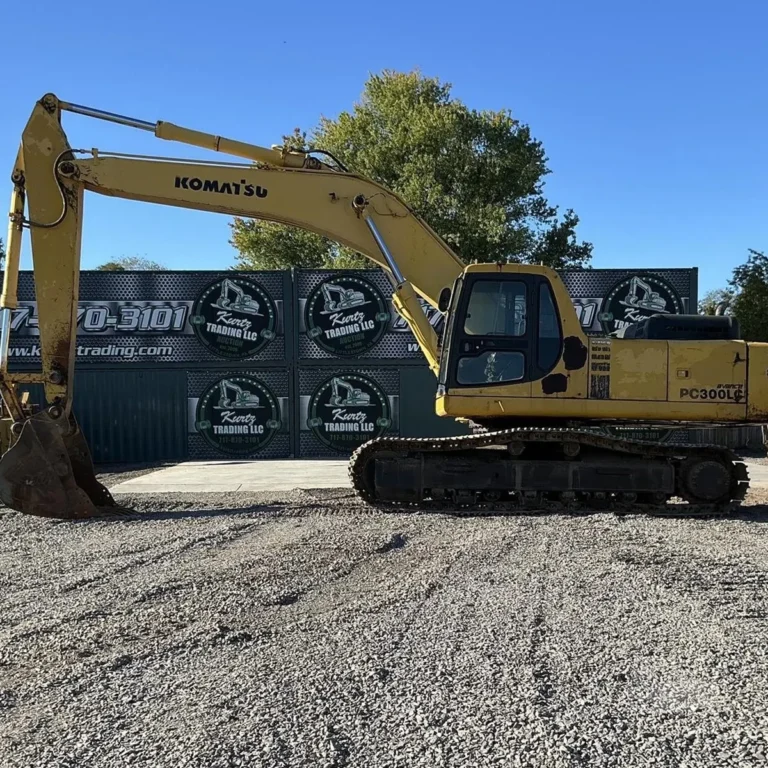
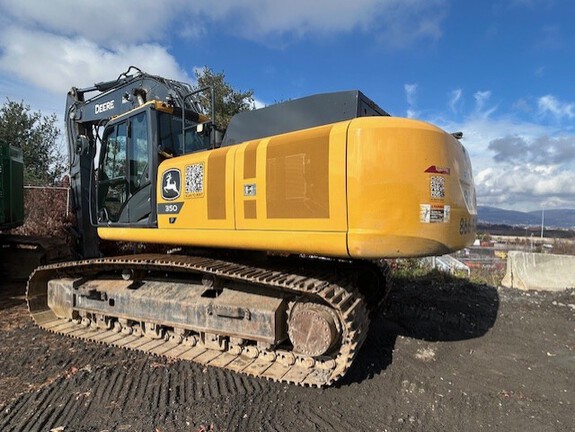
Excavators Pennsylvania dealers have listed on Heavy Listing right now:
The bottom line
The big used excavator problems sit in the same few places on every machine: hydraulics, undercarriage, swing, the front end, and the engine with its aftertreatment. Most start as something minor that nobody fixed: a filter, a grease point, a track that was never adjusted, a weeping seal. Read the symptoms, ask for oil samples and service records, price the major items before you talk numbers, and walk away from cracked structure, a deleted emissions system or a seller who will not let you test it. For the walkaround and function test itself, use our excavator inspection checklist.
Find your next excavator
Used Caterpillar, John Deere, Komatsu, Case and more from Pennsylvania dealers, with hours and asking prices on each listing.
Browse used excavators →FAQ
What are the most common excavator problems?
Slow or weak hydraulics, boom and stick drift, hose and cylinder seal leaks, undercarriage wear, swing bearing play, worn pins and bushings, cracks in the front end and, on Tier 4 Final machines, DPF and DEF faults. Most start with missed service: filters, grease, track tension and oil samples.
Why is my excavator slow?
If every function is slow, check the hydraulic oil level, the pilot filter, the oil cooler and the fault codes, and make sure the engine is making power, before suspecting the main pump. If only one function is slow, look at that circuit: its valve section, relief valve or cylinder.
What causes an excavator boom to drift down?
Oil leaking past the piston seals inside the boom cylinder, or leaking through the control valve or a holding valve. A drift test with a loaded bucket shows the problem; a shop then isolates the cylinder from the valve.
What is the most expensive thing to fix on a used excavator?
The major repairs are the main hydraulic pump, the swing bearing, final drives, a complete undercarriage, an engine overhaul and cracked structure. These are the areas to price before you make an offer.
How do I know if an excavator swing bearing is bad?
With the stick out, load the bucket against the ground and watch where the upper meets the lower. Rocking or a clunk means wear or loose bearing bolts. Missed grease is a common cause: Deere’s 210G planner lubricates the swing bearing every 500 hours.
How many hours is too many for a used excavator?
There is no fixed limit. Used excavators in our study ran about 530 hours a year, and the dealer listings on November 25, 2026 had a median of 5,366 hours. Condition and records matter more: a well serviced high hour machine can be a better buy than a low hour one with no history.