
“How many hours is a lot on heavy equipment?” is the question every used equipment buyer asks, and the usual answer is a single number: 5,000, 8,000, 10,000. A single number does not work, because a compact track loader and an articulated dump truck live very different lives. So we looked at the hour meters of 233 used machines listed by Pennsylvania dealers on Heavy Listing and worked out how many hours each type of machine really runs per year.
Below you will find what is normal for eight common machine types, what counts as high for a machine of a given age, how hours move the price, and when the hour meter should not be trusted.
Where these numbers come from
On November 9, 2026, Pennsylvania dealers on Heavy Listing had 297 used machines listed. 233 of them showed both hours and a model year, which is what you need to work out hours per year of age. The dealers were Kurtz Trading, Old Forge Power Equipment, Five Star Equipment and Keystone Equipment Sales & Service.
We counted age as 2026 minus the model year, so a 2021 machine is five years old. Two caveats. Hours per year of age is a rough measure: a machine may have worked hard for three years and then sat. And the hours are what the listing shows, so ask the dealer to confirm them. We only report machine types with at least seven listings.
How many hours is a lot? Normal hours per year by machine type
The “typical range” below is the middle half of the machines of each type: a quarter ran fewer hours per year, a quarter ran more.
| Machine type | Machines | Median hours per year | Typical range |
|---|---|---|---|
| Skid steers | 19 | 190 | 80 to 420 |
| Wheel loaders | 28 | 270 | 170 to 700 |
| Compact track loaders | 50 | 280 | 200 to 460 |
| Mini excavators | 15 | 360 | 210 to 590 |
| Dozers | 21 | 380 | 270 to 580 |
| Telehandlers | 7 | 440 | 380 to 580 |
| Excavators | 34 | 530 | 380 to 730 |
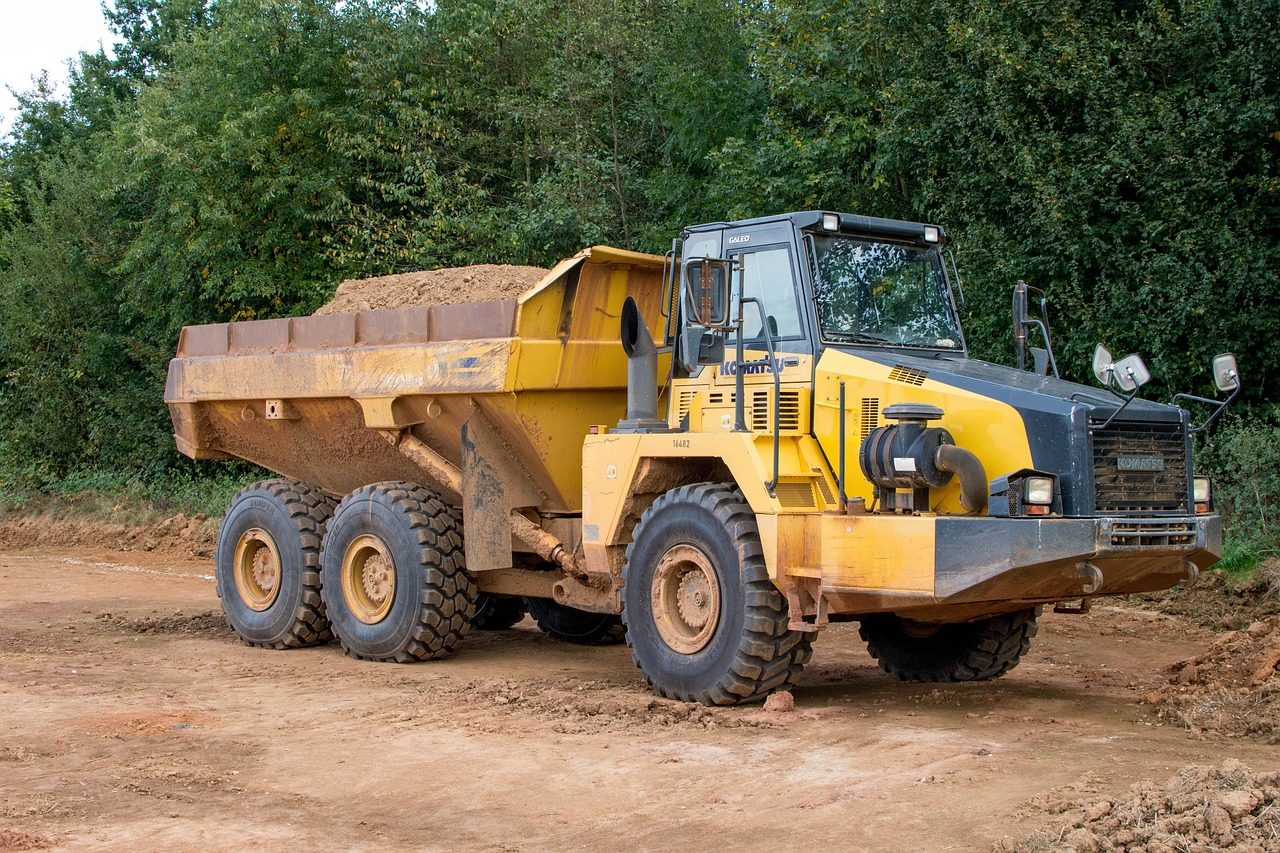
| Articulated dump trucks | 9 | 810 | 660 to 1,020 |
The pattern makes sense once you think about how each machine is used. Skid steers on farms and small jobs often run an hour here and there. Excavators and haul trucks on production sites run full shifts. The wheel loader range is the widest because it covers both: a small loader at a farm or yard and a big one feeding a quarry.
How many hours is a lot for a 5- or 10-year-old machine?
Multiply the typical range by the machine’s age and you get a quick reality check for any listing:
| Machine type | Typical at 5 years | Typical at 10 years |
|---|---|---|
| Skid steer | 400 to 2,100 | 800 to 4,200 |
| Wheel loader | 900 to 3,500 | 1,700 to 7,000 |
| Compact track loader | 1,000 to 2,300 | 2,000 to 4,600 |
| Mini excavator | 1,100 to 2,900 | 2,100 to 5,900 |
| Dozer | 1,400 to 2,900 | 2,700 to 5,800 |
| Telehandler | 1,900 to 2,900 | 3,800 to 5,800 |
| Excavator | 1,900 to 3,700 | 3,800 to 7,300 |
| Articulated dump truck | 3,300 to 5,100 | 6,600 to 10,200 |
So 4,000 hours is a lot for a 5-year-old compact track loader, well above anything in its typical range, but about average for a 5-year-old articulated dump truck. And 6,000 hours on a 10-year-old excavator is inside the normal range, while the same 6,000 on a 10-year-old skid steer is high.
How hours move the price
Hours matter most when you compare machines of the same type and similar age. Two examples from the listings:
- Compact track loaders from 2018 to 2021: the 9 with under 2,000 hours had a median asking price of $47,500. The 10 with 2,000 hours or more had a median of $34,500.
- Excavators of 10 to 17 tons: the 6 with under 3,000 hours had a median of $87,200, against $51,200 for the 6 with 3,000 to 6,999 hours. Our guide to used excavator prices has the full breakdown.
Across a whole machine type, hours and age move together, so the hour meter alone does not set the price. Wheel loaders show it: the 12 with under 3,000 hours had a median price of $195,500, but they were also only about two years old at the median. The 8 with 7,000 hours or more had a median of $36,000 and were about 22 years old.
Four listings, checked hour by hour
Here is the method applied to real listings from the sample:
| Listing | Hours | Hours per year | Typical range for the type | Asking price |
|---|---|---|---|---|
| 2023 Kubota SVL97-2 track loader | 1,000 | 333 | 200 to 460 | $67,900 |
| 2023 Kubota SVL97-2 track loader | 2,066 | 689 | 200 to 460 | $52,500 |
| 2018 Bobcat S570 skid steer | 1,763 | 220 | 80 to 420 | $26,500 |
| 2018 Bobcat S570 skid steer | 3,658 | 457 | 80 to 420 | $19,500 |
The two Kubotas are the clearest case: same model, same year. One has run about 330 hours a year, inside the typical range; the other about 690, well above it, and it is listed $15,400 lower. The two 2018 S570s are the same model and year; the one with roughly twice the hours is $7,000 cheaper.
Small differences barely register. Two 2019 John Deere 85G excavators, one with 2,878 hours and one with 3,117, were both listed at $55,000. A few hundred hours apart on machines of the same age is not worth haggling over; doubling the normal rate is.
For the full picture on loaders, see used skid steer prices and our skid steer vs compact track loader guide.
Is 10,000 hours too many? Not on a big machine
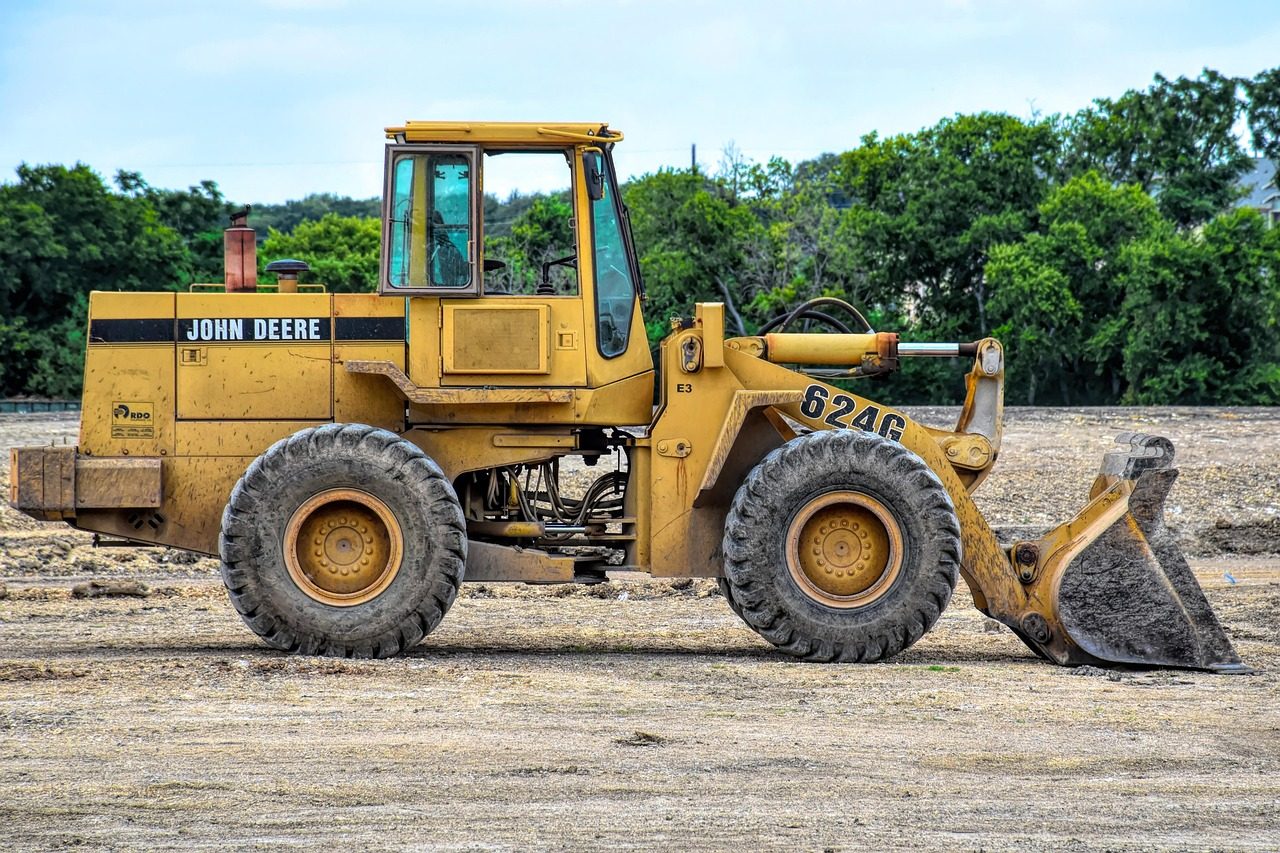
Of the 241 listings that showed hours, 22 had 10,000 or more. Not one was a skid steer, a compact track loader or a mini excavator. They were wheel loaders, articulated dump trucks, dozers, excavators, motor graders, water trucks, haul trucks, a skidder and a tractor. On compact equipment the highest readings were 9,813 hours on a skid steer, 7,825 on a mini excavator and 3,945 on a track loader.
High hours do not end a large machine’s working life. Production equipment is designed to be rebuilt: engines, transmissions and undercarriages get overhauled, and the machine goes back to work. The listings show it:
- A 2012 Caterpillar 980K wheel loader with 21,266 hours, about 1,520 a year, was listed at $112,500.
- A 1996 Kawasaki 115Z IV wheel loader with 24,755 hours was still for sale at $35,500.
- Eight machines in the sample had more than 18,000 hours: large wheel loaders, haul trucks, a water truck and an excavator. A Euclid R35 haul truck with no listed year shows 39,904.
On a machine like that, the question is not “how many hours” but “what has been rebuilt, and when”. Ask for the records of any major overhaul and the hours at which it was done.
When very low hours are a warning sign
Low hours are not always good news. A few cases to watch for:
- Hours that do not fit the age. One 1978 dozer in our sample showed 2,361 hours, about 49 hours a year for 48 years. That can happen on a machine that sat for decades, but it is also what a replaced or reset meter looks like. Ask.
- A replaced meter or display. Gauges and displays get replaced. A good dealer will tell you, and the service records should show the hours before and after.
- A machine that sat. Equipment that sat unused for years can have dried-out seals, old fluids and stiff hydraulics. Low hours on an old machine are a reason to inspect, not to relax.
- Missing hours. 56 of the 297 listings did not show hours online. That is common and not a red flag by itself, but always ask before you make an offer.
Check the hours on every listing
Heavy Listing shows the year, hours and asking price of each machine, with a direct line to the dealer.
Browse used equipment →What matters more than the hour meter
Two machines with the same hours can be in very different shape. These tell you more:
- Service records. Regular oil and filter changes, fluid samples and repair invoices show how the hours were spent.
- The work it did. A loader that moved mulch on a farm and one that loaded shot rock in a quarry age differently, even with equal hours.
- Undercarriage, tires and wear parts. On tracked machines, have the undercarriage measured. Worn tracks, rollers and sprockets are one of the biggest repair bills on a used machine, and the hour meter says nothing about them.
- How it runs. A cold start, blow-by, smoke, hydraulic speed under load, and play in pins and bushings.
- Idle time. Engine hours count idling too. Some newer machines report idle hours separately; ask if the dealer has that number.
- Who owned it. A one-owner machine with its paperwork is easier to judge than one that passed through several fleets. Ask how many owners it had.
For an excavator, our used excavator inspection checklist turns these points into a step-by-step walkaround and function test.
How to judge the hours on a listing
- Divide the hours by the age. A 2019 machine with 3,500 hours has run 500 hours a year.
- Compare it with the typical range for that machine type in the table above.
- If it is high, ask why. Rental fleets and production sites run more hours; check that the price reflects them.
- If it is very low, ask why. Confirm that the meter is original and that the machine was stored well.
- Ask for the records and, on big machines, the history of major rebuilds.
- Compare prices only within the same type, size and age, then let the hours adjust the number.
Common mistakes when judging equipment hours
- ❌ Using one cutoff, like 5,000 hours, for every machine. ✅ Judge hours against the machine type and its age.
- ❌ Treating low hours as proof of a good machine. ✅ Make sure the meter is original and the machine did not sit for years.
- ❌ Walking away from a big machine because of five-figure hours. ✅ Ask what has been rebuilt and when.
- ❌ Comparing hours without comparing age. ✅ Work out hours per year first.
- ❌ Ignoring the kind of work. ✅ Ask what the machine did and where.
- ❌ Skipping the inspection because the hours look good. ✅ Inspect anyway: hours are a starting point, not a verdict.
Buying at auction? The same rules apply, with less time to ask questions. Our guide on how to buy at an equipment auction covers inspection days, and the auction calendar lists the next sales in Pennsylvania.
The bottom line on used equipment hours
So how many hours is a lot on heavy equipment? Above the top of the typical range for that machine type and age is on the high side; at twice that rate or more, the machine has worked far harder than most in its class. 3,500 hours on a 3-year-old track loader is a lot; 18,000 on a 20-year-old haul truck may not be. Work out hours per year, check it against the tables above, and let the records and an inspection explain anything unusual. Hours far outside the range, high or low, are a reason to ask questions and adjust the price, not automatically a reason to walk away.
Find used equipment with the hours up front
Browse machines from Pennsylvania dealers, compare year, hours and price, and contact the dealer directly.
Browse used equipment →Frequently asked questions
How many hours is a lot on a used skid steer?
In our sample, the typical used skid steer ran about 190 hours per year, with the middle half between 80 and 420. For a 10-year-old skid steer, anything above about 4,200 hours is on the high side.
How many hours is a lot on a compact track loader?
The typical track loader ran about 280 hours per year, with the middle half between 200 and 460. At 5 years old, 1,000 to 2,300 hours is normal. None of the 50 track loaders listed had 4,000 hours or more.
How many hours is a lot on a used excavator?
Excavators run more than compact equipment: about 530 hours per year in our sample, with the middle half between 380 and 730. That puts a normal 10-year-old excavator at about 3,800 to 7,300 hours.
Is 10,000 hours too many for heavy equipment?
It depends on the machine. None of the skid steers, track loaders or mini excavators in our sample had reached 10,000 hours, but 22 larger machines had, and all of them were listed for sale. On a big loader, dozer or haul truck, what has been rebuilt matters more than the number.
Are low hours always better?
No. Very low hours for the age can mean a replaced meter or a machine that sat unused for years. Confirm the meter is original and check seals, fluids and hydraulics.
Do engine hours include idle time?
Yes. The hour meter counts the time the engine runs, idling included. Some newer machines track idle hours separately, so ask the dealer if that figure is available.